

Tooth-colored cavity fillings in Lower Manhattan, NYC
Caught early, a cavity is one short visit — the decay out, the tooth rebuilt to its own shape.
- 1.55%
- annual failure rate, posterior composite (per 100 restoration-years)
- 1–3%
- annual failure range, Class I/II composites
- 4.9 ★
- 226 Google reviews
A cavity rarely announces itself — until it does.
Cold and sweet set it off
A sharp zing when you sip something cold or bite into something sweet — the classic early sign that decay has reached the sensitive layer beneath the enamel.
Something feels off
A rough edge, a catch when you floss, a dark spot you can see in the mirror — small signals that the tooth's surface has broken down.
You're worried it's worse
The dread that a small filling has quietly become a root canal or a crown. Waiting almost always makes the fix bigger, not smaller.

It stops the decay and rebuilds the tooth so it works like it did before.
Understand it fully
From the first cavity to the finished tooth
At a glance
- 1.55%1
- annual failure rate, posterior composite (per 100 restoration-years)
- 1–3%2
- annual failure range, Class I/II composites
What a cavity actually is
A cavity — clinically, dental caries — is tooth structure that has been dissolved by acid.
The acid comes from bacteria in dental plaque. They ferment the sugars in what you eat and drink, and mineral gets pulled out of the tooth. That process is called demineralization.
It begins in the enamel, the hard mineralized outer shell. If nothing stops it, it advances into the softer dentin beneath, where it spreads faster and sits closer to the nerve.
That's the honest reason a small spot shouldn't wait. Enamel decay is often shallow and simple to restore. Once it crosses into dentin, the cavity widens and your options narrow.
Dr. Shi restores it here using the process we call the Centre Method.
How do you know you have a cavity?
Usually you don't see it. You notice something else first.
A sharp zing when you sip something cold or bite into something sweet is the classic early sign — decay has reached the sensitive layer beneath the enamel.
Or your tongue keeps finding a rough edge, floss catches in the same spot, or there's a dark mark you can see in the mirror.
Plenty of cavities give you nothing at all. Those are the ones a digital X-ray turns up at a hygiene visit, hiding between teeth, long before they hurt.
Should you fix a small cavity now, or wait?
Fix it now, essentially always.
Decay only moves in one direction — deeper. And the cost of waiting isn't measured in dollars first. It's measured in how much of your own tooth you keep.
A shallow cavity in enamel is a small, quick filling. Give the same tooth six months to reach the nerve and it may need a root canal and a crown instead.
We show you the X-ray and the actual extent of the decay before anything is decided, so you're not taking our word for it.
Why we place tooth-colored composite, not amalgam
Composite resin is a tooth-colored material that bonds chemically to enamel and dentin. That's the practical difference: we remove only the decayed structure and leave the healthy walls of the tooth intact.
Traditional amalgam — silver — fillings are held in mechanically. They require undercuts cut into the tooth to lock the filling in place, which sacrifices additional healthy structure, and they contain mercury bound in a metal alloy.
Composite needs no undercuts and carries no mercury. That sits inside a wider global shift: the Minamata Convention on Mercury, an international treaty in force since 2017, is phasing down amalgam use in dentistry.
Neither material is perfect, and it's worth being straight about that. A Cochrane systematic review found the two behave differently under load — composite is more prone to recurrent decay at the margins over time, while amalgam is bulkier and less conservative (Worthington HV et al., Cochrane Database Syst Rev 2021). Which is precisely why placement technique and follow-up matter as much as the material does.
Centre Dental no longer places amalgam.
Do your old silver fillings need replacing?
Not on principle, no.
Existing amalgam fillings are left alone unless they actually fail, or decay develops underneath them. Routine "amalgam removal" without a clinical reason isn't something we recommend or push.
If an old silver filling is cracking, leaking, or has decay around it, that's a genuine reason to replace it with bonded composite — and we'll show you why on the X-ray rather than just telling you.
Does getting a filling hurt?
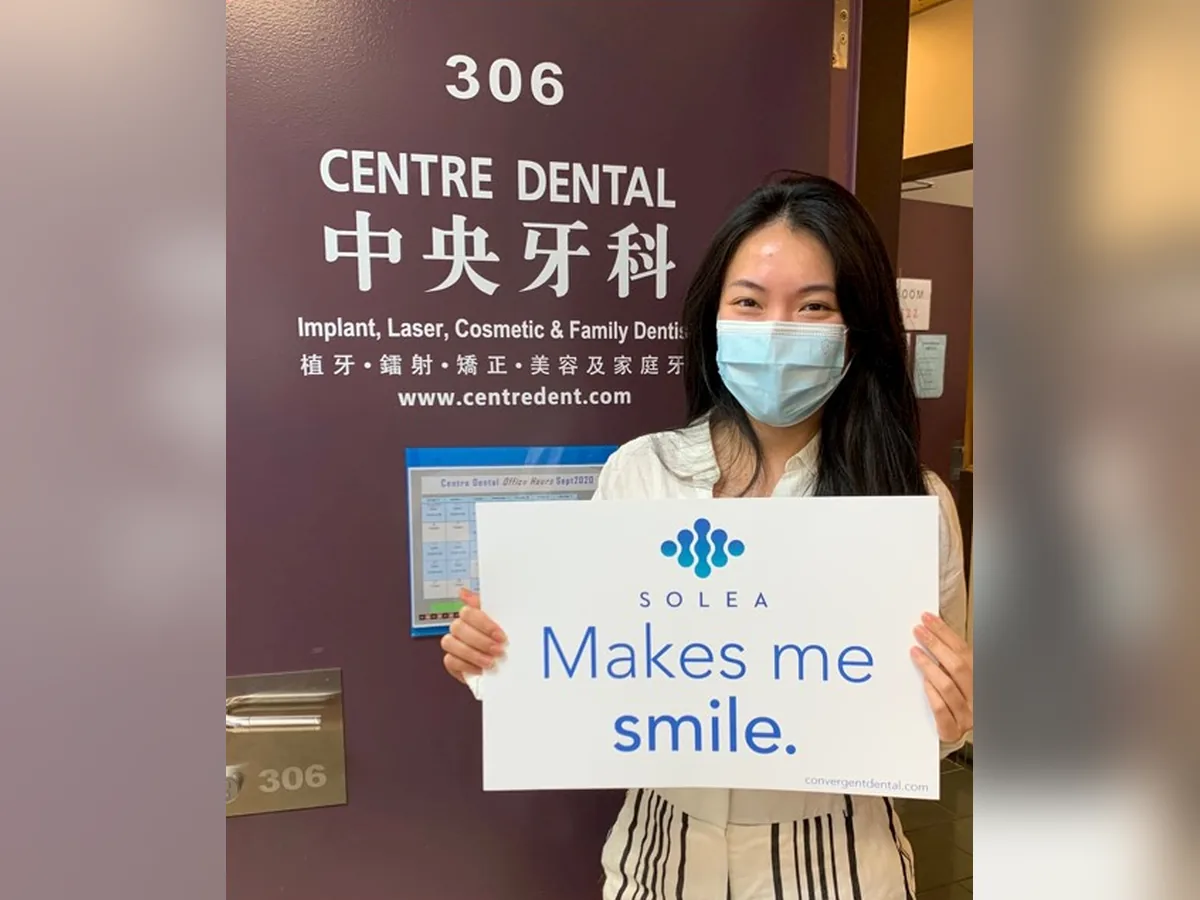
Not really, according to Dr. Shi at Centre Dental. We use the NIRI function of the iTero Lumina scanner to accurately detect cavities while they are still small, and we use the Solea laser to remove decay without removing the good part of your tooth structure.
It is not only more conservative, sparing undamaged tooth cells, but also painless, thanks to the analgesic effect of the 9,300 nm laser energy.
When anesthesia is needed — how we make injections easy
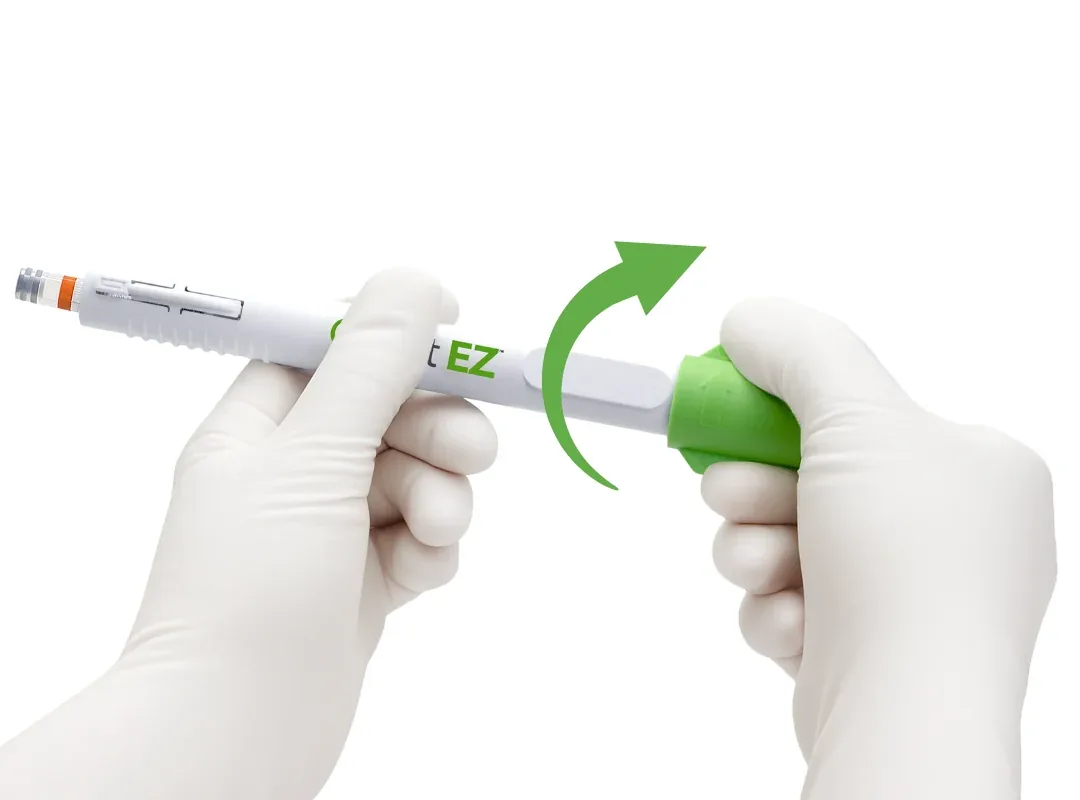
For very deep decay or super-sensitive teeth, anesthesia may still be necessary. Centre Dental uses special techniques to make injections easy:
- Compounded topical numbing gel on the gum first
- Buffered anesthetic — Onset changes the anesthetic's pH from about 3 to 7.4
- The smallest needle possible
- Slow, incremental injections
2 mm
What actually happens in the chair
Once the decay is removed, a desensitizing agent is applied to the treated area, followed by a self-etching bonding agent and layers of tooth-colored resin.
The composite itself goes in as thin 1 to 2 mm layers, each hardened with a curing light before the next. That technique is called incremental layering, and it limits the shrinkage stress that can otherwise pull a filling away from the wall.
Last, the restoration is carved back to the tooth's natural grooves and contact points, polished, and your bite is checked and adjusted with articulating paper.
Most single-surface fillings take 30 to 45 minutes. Multi-surface fillings run 45 to 60 minutes.
Your next step
Wondering if cavity fillings is right for you?
A free consultation includes an exam and a written plan — no pressure, no upsell.
The bond is the whole game
What makes a modern filling last isn't the composite alone. It's the seal between the composite and the tooth.
Enamel and dentin are bonded using an adhesive system that penetrates the etched surface and forms a resilient interface. When that seal is clean, dry, and complete, bacteria can't sneak underneath it.
Which is why isolation matters so much. Keeping the tooth free of saliva and moisture during bonding is one of the strongest predictors of how long the filling holds.
It's also why a rushed filling in a hard-to-isolate back tooth fails at the margin years later. The material was fine. The seal wasn't.
When decay sits deep and near the nerve, isolation and bonding matter more, not less. That's the moment where an experienced hand genuinely changes the outcome.
When a filling is the wrong answer
Not every cavity should be a filling, and part of an honest exam is saying so.
When decay reaches into or very close to the pulp — the living nerve and blood supply at the tooth's core — the right treatment is a root canal, not a deeper filling that risks flaring into pain and an emergency visit.
When more than roughly half the tooth structure is gone, a large composite can flex under bite force and fail at the edges. An onlay or a same-day crown distributes that load far better and lasts longer.
We show you the X-ray and the actual extent of the decay, and decide together. The conservative choice is the one that lasts — a filling that's too small for a tooth that's too broken is simply a redo waiting to happen.
Can you eat right after a filling?
Yes. Composite is fully cured with the curing light before you leave the chair, so there's no waiting for the material to set.
The only thing to wait out is the anesthesia. Eat once the numbness wears off — typically two to four hours — so you don't bite your cheek or your tongue without feeling it.
If the tooth feels a little tender that first day, chew on the other side. It settles quickly.
Sensitivity afterward — what's normal, and what isn't
Mild cold sensitivity for the first one to three weeks is common. The dentin was insulated by the decay, and it takes a little time to recalibrate. That kind of sensitivity fades.
What isn't normal: discomfort that sharpens instead of easing, pain that lingers after the cold is gone, or pain when you bite down.
That last one usually just means the filling is sitting a hair high, and a two-minute bite adjustment with articulating paper resolves it.
Postoperative sensitivity after a posterior composite is a recognized but generally transient finding in the clinical literature, most often tied to bite height or bonding technique rather than to the material itself (Worthington HV et al., Cochrane Database Syst Rev 2021).
If it persists past three to four weeks, we re-examine the tooth for deeper pulp inflammation instead of waiting it out.
How long a well-placed filling lasts
A properly bonded composite filling is a durable, long-term restoration, not a temporary patch.
A systematic review of posterior composite restorations found an overall failure rate of 1.55 restorations per 100 restoration-years — meaning the large majority of fillings are still functioning well many years out (Ástvaldsdóttir Á et al., J Dent 2015).
A separate long-term review reported annual failure rates in the 1–3% range for Class I and II composites, depending on tooth position, the operator, and patient factors like grinding (Demarco FF et al., Dent Mater 2012).
In plain terms: many fillings do a decade or far longer when hygiene is consistent and grinding is controlled.
What actually makes a filling fail
Not the composite wearing out. Across the evidence, the number-one reason a filling eventually fails is recurrent decay at the margin — the line where the filling meets the tooth.
That single fact drives how we practice. We inspect every filling margin at each hygiene visit, and replace a filling before it leaks rather than after.
If you grind your teeth, a night guard protects both your fillings and your natural enamel from the forces that shorten their life.
What it costs, and what insurance actually covers
Cost depends on which tooth and how many surfaces are involved. A single-surface filling is a smaller restoration than a two- or three-surface one, so a range quoted over the phone won't match your tooth.
You get an itemized written estimate before any treatment begins, and we process your insurance claim as a courtesy.
One thing worth knowing before it surprises you: most PPO plans cover composite on front teeth at the same percentage as amalgam. For back teeth, some plans reimburse only up to the amalgam fee and leave the difference for composite to you. It varies by plan, so we verify your specific benefits first.
Centre Dental is non-participating with most PPO plans. You pay us directly, and we give you an itemized receipt with all the codes you need to submit for out-of-network reimbursement. We'll walk through your insurance coverage at the visit.
Who does your filling
Your filling is placed by Dr. John Shi, who trained at Columbia University.
He shapes every filling to the original anatomy of the tooth — the grooves, the contact with the tooth next to it, the way it meets your bite. A flat-top filling functions. A properly contoured one keeps the surrounding teeth and gum where they belong long-term.
That's the part you can't see and can't check yourself, which is exactly why it's done by hand rather than rushed. More about Dr. Shi.
Booking a cavity check
If a tooth keeps reacting to cold, or a hygienist flagged a spot on an X-ray, the next step is a short exam with digital X-rays so you can see the actual extent of it yourself.
You'll leave knowing what's involved, what it costs in writing, and what your insurance covers. If the honest answer is that the tooth needs more than a filling, you'll hear it at the exam rather than partway through.
Keeping cavities small is what routine hygiene visits and preventive care are for — the X-rays find decay long before it hurts.
We see patients in English and 中文.
Related at Centre Dental
What patients say
Reviewed, on Google
I came for an emergency root canal treatment and I did not regret choosing this place. It was quick and painless. Plus, everyone was very quite friendly.
I recently had a dental cleaning at Centre Dental, and I had a wonderful experience. The staff was friendly, professional, and welcoming. The cleaning was very thorough yet gentle, and everything was explained clearly th…
A skillful Dentist who goes the Extra Miles I have been flying to NYC from Florida multiple times to this dental office. Dr. Shi has been working on my upper full mouth teeth transplant for over half a year. So far I ha…
Concerned about comfort, bone, or cost?
These are the questions a consultation answers directly. Dr. Shi reviews your 3D CBCT scan, evaluates your bone and candidacy, and outlines your options, treatment timeline, and estimated cost — including what your insurance may cover.
Thinking about it
The questions we hear first
How much does a cavity filling cost in NYC?
Does insurance cover tooth-colored fillings?
How long will a filling last?
Will I need anesthesia for a filling?
Why is my tooth still sensitive after a filling?
Can I eat right after a filling?
Do you still place silver (amalgam) fillings?
Is it better to fix a small cavity now or wait?
The path
Your journey, start to finish
Exam and X-ray diagnosis
Remove only the decay
Bond and layer the composite
Polish, check the bite, done
Explore Further
Related Services
Same-Day Crowns (CEREC)
Single-visit ceramic crowns when decay or fracture is too extensive for a filling.
Learn moreTeeth Cleaning
Routine hygiene visits where small cavities are caught early on X-ray, before they hurt.
Learn morePreventive Dentistry
Risk assessment, sealants, and fluoride to reduce future decay.
Learn moreRoot Canal Therapy
The right treatment when decay has reached the nerve and a filling is no longer enough.
Learn moreCavity Fillings Near You in NYC
Start here
Schedule your consultation
In a single visit, Dr. Shi reviews your 3D scan, assesses your candidacy for cavity fillings, and provides a written treatment plan with cost and insurance details — so you can decide with all the facts.
Extensive full-arch reconstruction experience by Dr. Shi
3D-guided precision, placed by an experienced surgeon
Bilingual — English, Mandarin, Cantonese
Live clinic hours · 139 Centre St, Lower Manhattan, NYC