
Teeth Whitening NYC | Professional Zoom | Centre Dental - Professional Zoom in-office whitening and custom take-home trays at Centre Dental NYC

Professional Zoom in-office whitening and custom take-home trays at Centre Dental NYC

Teeth Whitening NYC — Zoom Professional Results in One Visit

Teeth whitening in NYC at Centre Dental uses the Zoom in-office system to activate clinically formulated hydrogen peroxide gel with a specific light wavelength, producing measurabl...

InvisalignGuided
  • DDS

    Columbia University 1998

  • 22+

    Years on Centre St

  • 5.0

    150+ Google reviews

Overview

Teeth Whitening (Zoom)

Teeth whitening in NYC at Centre Dental uses the Zoom in-office system to activate clinically formulated hydrogen peroxide gel with a specific light wavelength, producing measurable shade change in approximately one hour. Both in-office treatment and custom take-home tray systems are available, with protocols matched to your starting shade and sensitivity history.

  • Zoom in-office whitening system
  • Custom take-home whitening trays
  • 3–8 shades lighter in approximately 1 hour
  • Sensitivity-reducing formula
  • Safe for enamel under clinical conditions
  • Results visible the same day
  • Touch-up kits available
  • Bilingual care (English / 中文)
The two things patients most commonly do not know before whitening: sensitivity is common — clinical data puts it at 43–80% depending on concentration — and certain stains simply cannot be whitened. Tetracycline staining, fluorosis, and trauma-related discoloration are intrinsic; no peroxide concentration resolves them. Setting that expectation before treatment prevents a lot of disappointment.
Centre Dental clinical team

How It Works

The Process

01 / 03

What Whitening Can and Cannot Do

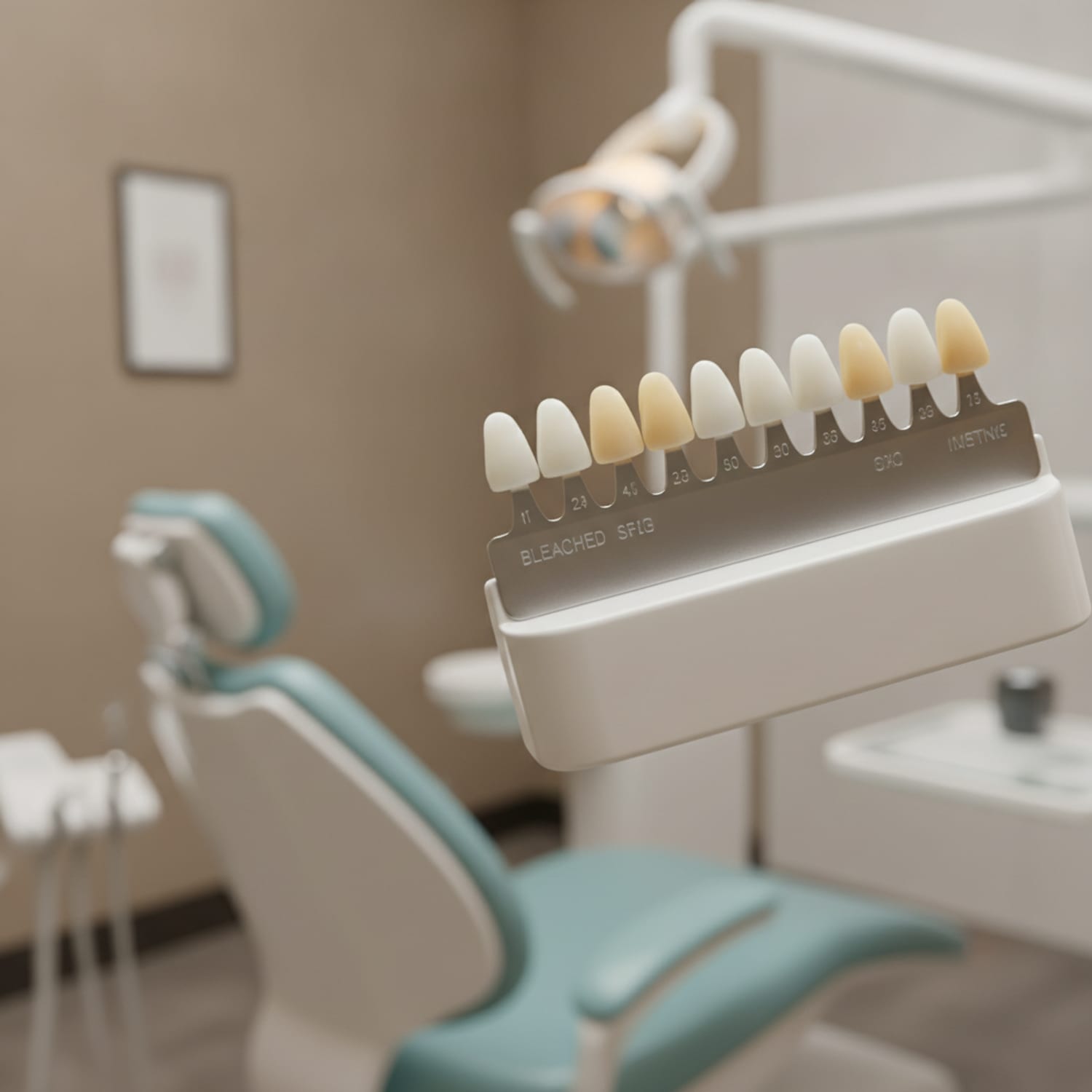
Professional whitening works by oxidizing pigment molecules embedded in the enamel with hydrogen peroxide gel — the result is a lighter internal tooth color, not a surface coating. What it can do well: lighten extrinsic staining from coffee, tea, wine, and aging by 3–11 shades depending on protocol. What it cannot do: whiten intrinsic stains from tetracycline antibiotics, fluorosis, or trauma-related discoloration. Competitors rarely clarify this distinction, which leads to patients booking whitening for stains it cannot resolve. Before any whitening treatment, we examine the nature of your staining to confirm the treatment will produce meaningful results. Existing restorations — crowns, veneers, composite fillings — do not respond to peroxide and should be mapped before treatment so shade expectations account for them. Whitening should always be completed before veneer or bonding fabrication so the restoration shade can be matched accurately to the whitened tooth color.

02 / 03

The Zoom Process: What Actually Happens

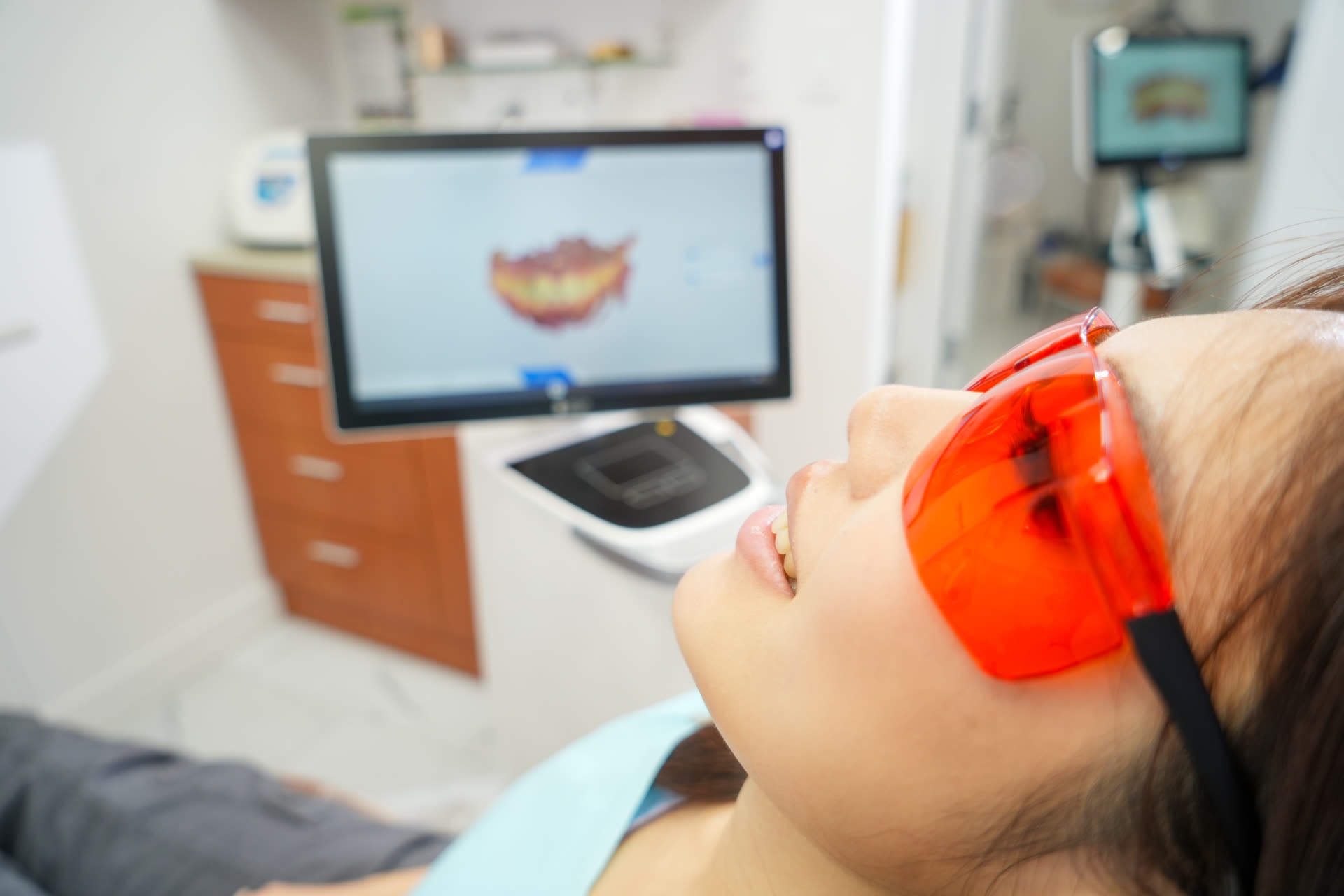
The in-office Zoom appointment begins with a standardized shade assessment, photographed for before-and-after comparison. Gum tissue is isolated with a retractor and light-cured barrier to prevent gel contact. The 40% hydrogen peroxide Zoom gel is applied in three to four 15-minute increments, with the activating light directed at the teeth during each interval. Clinical data shows in-office 40% HP produces an immediate shade change of approximately Delta-E 3.3; at-home 16% carbamide peroxide produces Delta-E 2.0 over time — comparable long-term outcomes through different mechanisms. The Zoom Ultimate protocol, which combines the in-office session with custom take-home trays, averages 11.1 shades of improvement. After the final gel interval, a post-whitening fluoride gel is applied to reduce sensitivity and help remineralize enamel. Sensitivity affects 43–80% of patients depending on concentration and exposure — it peaks within 24–48 hours and resolves without treatment for most people. The entire appointment runs approximately 90 minutes.

03 / 03

Maintenance: The Five-Year Cost Reality

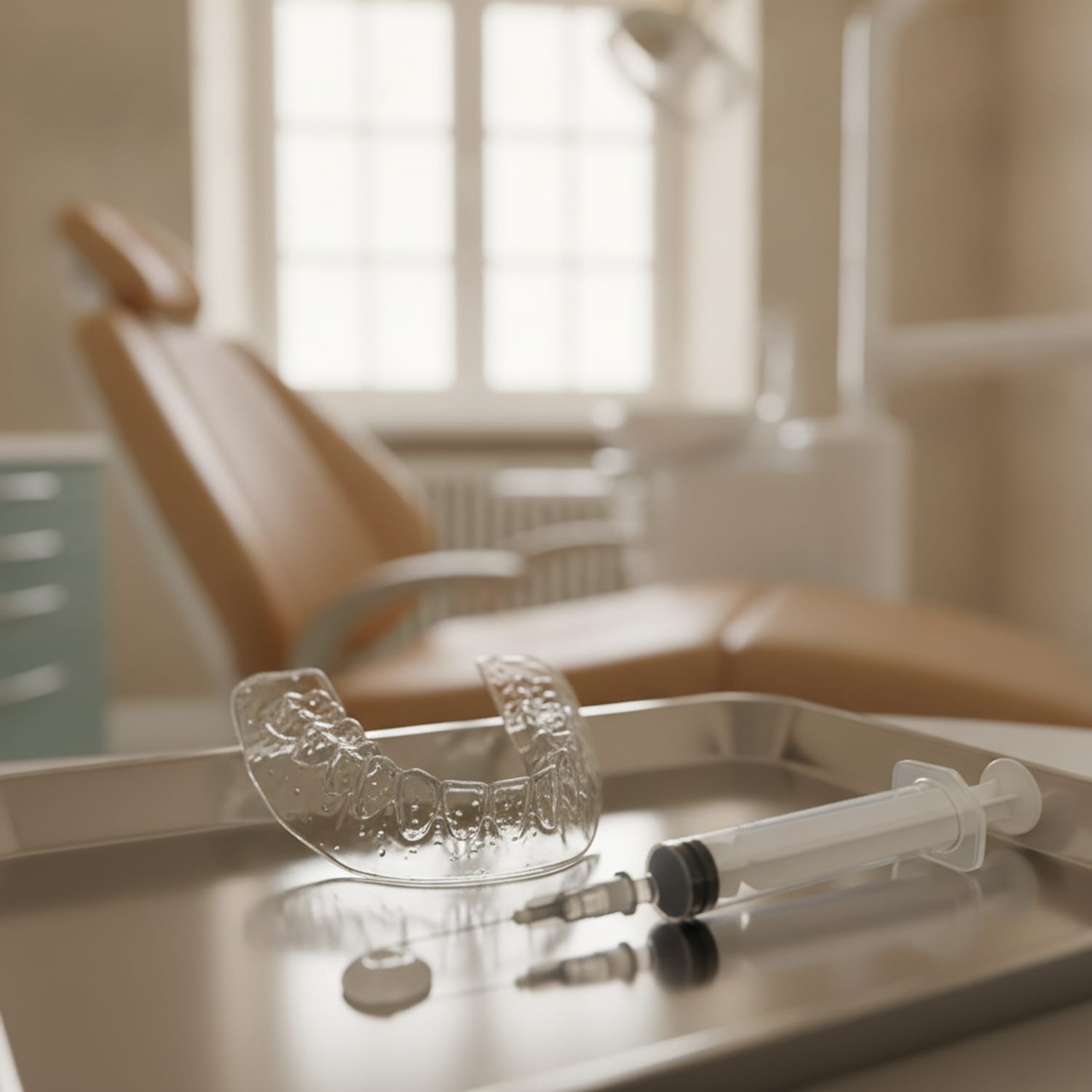
Whitening results are not permanent. Teeth continue to absorb pigment from food, beverages, and tobacco. A single in-office session typically maintains noticeable results for 1–2 years before touch-up treatment becomes relevant — shorter if consumption habits are high in staining agents. Custom take-home trays allow periodic touch-up with 16% carbamide peroxide gel applied 30–60 minutes per day for several days. Whitening carries an ongoing maintenance cost over the years — periodic tray refills and occasional in-office refresher visits — worth planning for as a maintenance routine rather than a one-time treatment. Drinking staining beverages through a straw reduces direct tooth contact. Professional cleanings remove surface buildup that accelerates shade regression. Patients who combine take-home tray use with regular cleanings sustain results significantly longer than those relying on a single in-office treatment.

Clinical Evidence

The Zoom Ultimate protocol — combining in-office and take-home treatment — averages 11.1 shades of improvement (Compendium of Continuing Education in Dentistry); sensitivity affects 43–80% of patients depending on gel concentration and exposure duration.

Timeline

Single visit, approximately 1 hour for in-office

Typical treatment duration

Explore the Cluster

Explore the full Cosmetic Dentistry

See all

Common Questions

Frequently Asked Questions

How does professional teeth whitening work?

Hydrogen peroxide gel penetrates enamel and oxidizes pigment molecules embedded in tooth structure. The Zoom activating light accelerates this chemical process. The result is a genuinely lighter internal tooth color — not a surface coating — which is why results do not wash off immediately. Multiple 15-minute gel intervals allow progressive shade change within a single appointment. Post-treatment, fluoride is applied to remineralize enamel and reduce sensitivity.

How long do whitening results last?

A single in-office session typically maintains noticeably lighter shade for 1–2 years, with regression speed driven by consumption habits. Heavy coffee, tea, and red wine drinkers will see results fade faster than light consumers. Take-home touch-up trays significantly extend longevity — patients who use them periodically and attend regular cleanings sustain results measurably longer. Some patients find annual in-office touch-ups sufficient; others manage with tray refills alone. We discuss realistic expectations based on your habits at the consultation.

Does teeth whitening cause sensitivity?

Yes — sensitivity is common, not rare. Clinical literature reports it affects 43–80% of patients depending on gel concentration and exposure time. It typically peaks within 24–48 hours of treatment and resolves without intervention for most people. Patients with pre-existing sensitivity receive a modified protocol: lower concentration, shorter intervals, and desensitizing agents applied before and after the session. We document your sensitivity history and adjust accordingly. Sensitivity reflects pulpal response to peroxide — it is not enamel damage, and it is temporary.

How much does professional whitening cost in NYC?

Zoom in-office whitening and custom take-home tray systems are priced differently, with in-office treatment costing more than take-home trays. The Zoom Ultimate protocol — in-office plus take-home trays — is bundled at some practices and produces better long-term results than either alone. Whitening also carries an ongoing maintenance cost — periodic tray refills and in-office touch-ups over the years. We provide clear, itemized pricing at your consultation with no surprises at checkout.

What stains will whitening not fix?

Whitening removes extrinsic staining — pigment absorbed from food, beverages, and tobacco over time. It does not resolve intrinsic staining from tetracycline antibiotics (gray-brown banding), dental fluorosis (white or brown spots from excess fluoride during tooth development), or trauma-related discoloration where internal bleeding has deposited minerals in the tooth structure. These require veneers, bonding, or other restorative approaches for meaningful correction. Identifying the type of staining at your consultation prevents investing in a treatment that will not address your specific concern.

How is professional whitening different from whitening strips?

Store-bought strips use peroxide at 6–10% without gum isolation. Coverage is uneven — edges and between-tooth surfaces are frequently under-treated. Professional systems use 25–40% hydrogen peroxide under controlled conditions with precise timing, gum protection, and light activation. Clinical comparison shows in-office 40% HP achieves Delta-E 3.3 immediately; at-home 16% carbamide peroxide achieves Delta-E 2.0 over time — the gap narrows long-term, but the professional session delivers far faster initial results. For patients where speed matters, or where gum geometry makes strip coverage unreliable, professional treatment is the better choice.

Is professional whitening safe for tooth enamel?

Research consistently supports that professionally supervised whitening, used as directed, does not measurably damage enamel structure. Sensitivity reflects temporary pulpal response to peroxide diffusing through enamel — not structural enamel loss. The risk profile changes with unsupervised, high-frequency use of strong gels, which is why over-the-counter products intentionally use lower concentrations and why professional application with controlled dosing and timing is the safer approach for achieving significant shade change.

Who is a good candidate for whitening?

Candidates have healthy teeth and gums with no active decay or gum disease — both must be treated before whitening proceeds. Whitening works best on extrinsic staining from aging and consumption habits. Patients with intrinsic staining from tetracycline, fluorosis, or trauma are not good whitening candidates and should discuss veneer or bonding options instead. Existing restorations do not whiten; if their current shade no longer matches after whitening, they may need replacement. We assess all of this at the initial consultation before booking a whitening appointment.

How do I maintain whitening results at home?

Custom take-home trays are the most effective tool for at-home maintenance — precision-fitted trays ensure even gel coverage without gum contact, outperforming any strip or pen. Reduce consumption of darkly pigmented beverages, or drink them through a straw to minimize direct tooth contact. Regular professional cleanings remove surface buildup that accelerates regression. Most patients find a combination of periodic tray touch-ups and annual in-office refreshers keeps results consistently visible between comprehensive whitening sessions.

Start Here

Your Smile Starts With a Conversation

Begin with a no-obligation consultation about teeth whitening (zoom). Dr. Shi reviews your 3D scan, walks through your options, and provides an honest investment range — no pressure, no obligation.

Extensive full-arch reconstruction experience by Dr. Shi

3D-guided implant precision, placed by an experienced surgeon

Bilingual care — English, Mandarin, Cantonese

Open Mon–Sat · 139 Centre St, Lower Manhattan, NYC