
Anesthesia-free cavity treatment for most patients. Less anxiety, faster healing.

Solea Laser Dentistry NYC — Most Procedures Without Needles or Drill

For most routine procedures, the Solea CO₂ laser replaces both the injection and the drill.
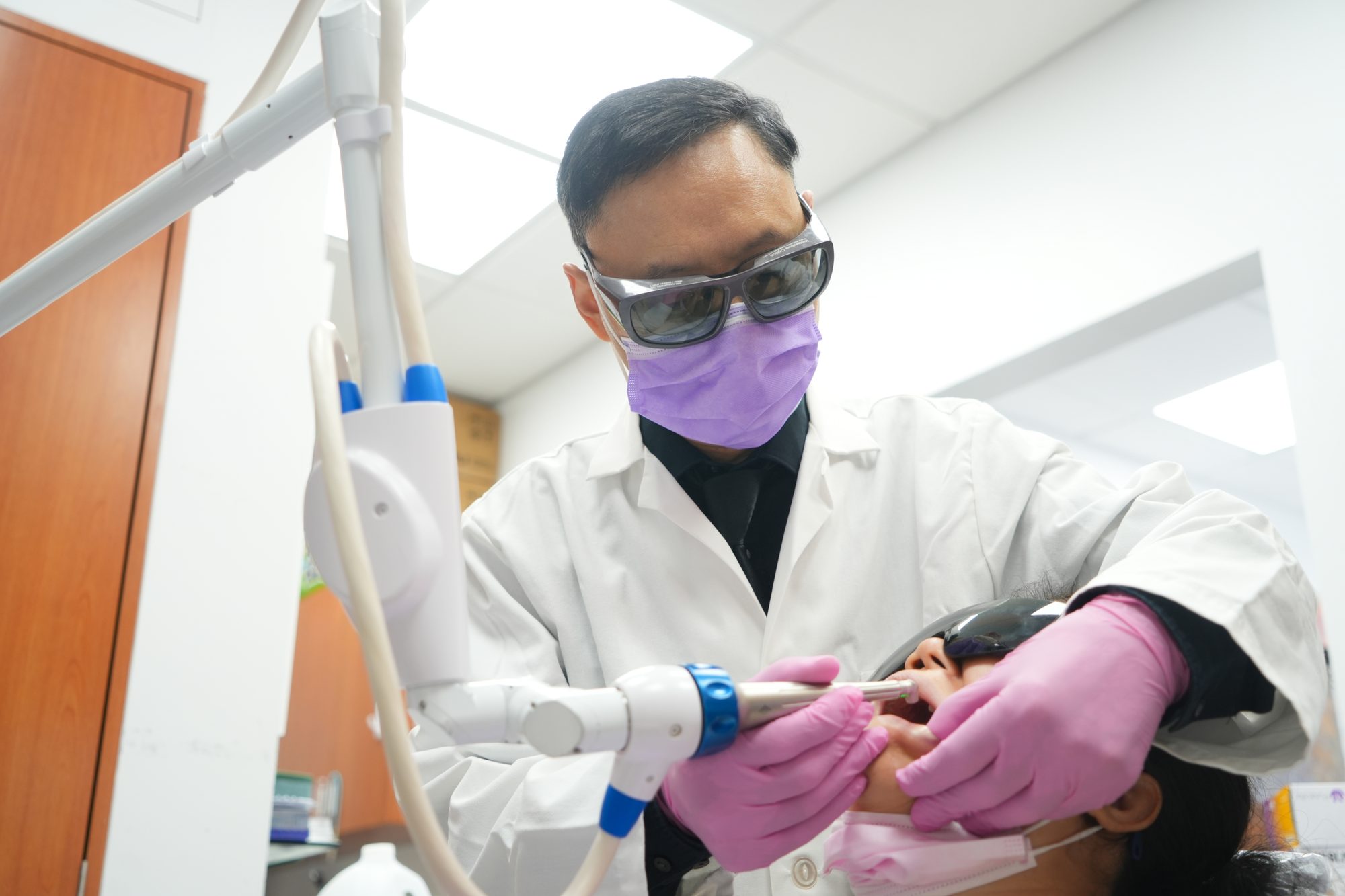
Solea laser dentistry in NYC, performed by Dr. John Shi — a precise, quiet alternative to the drill for many cavity preparations and soft-tissue procedures, frequently completed without local anesthetic.

Solea Laser Dentistry NYC | No Needles | Centre Dental - Anesthesia-free cavity treatment for most patients. Less anxiety, faster healing.

Why patients ask about laser dentistry

The questions we hear are rarely about wavelengths or absorption spectra. They come from patients for whom the injection, the sound of the handpiece, or years of accumulated avoidance stand between them and routine care. This page describes what the Solea laser does well, what it is not suited for, and how candidacy is determined — so the decision rests on clinical facts rather than marketing.

Injection avoidance

For a significant group of patients, the local anesthetic injection — and the hours of residual numbness that follow — is the primary barrier to completing routine restorative care.

Drill aversion

The sound and vibration of the conventional handpiece is a documented trigger for dental anxiety, and a common reason small restorations are deferred.

Deferred care compounds

A small carious lesion that could be treated conservatively becomes a larger restoration, and eventually a structural problem, when appointments are repeatedly postponed.
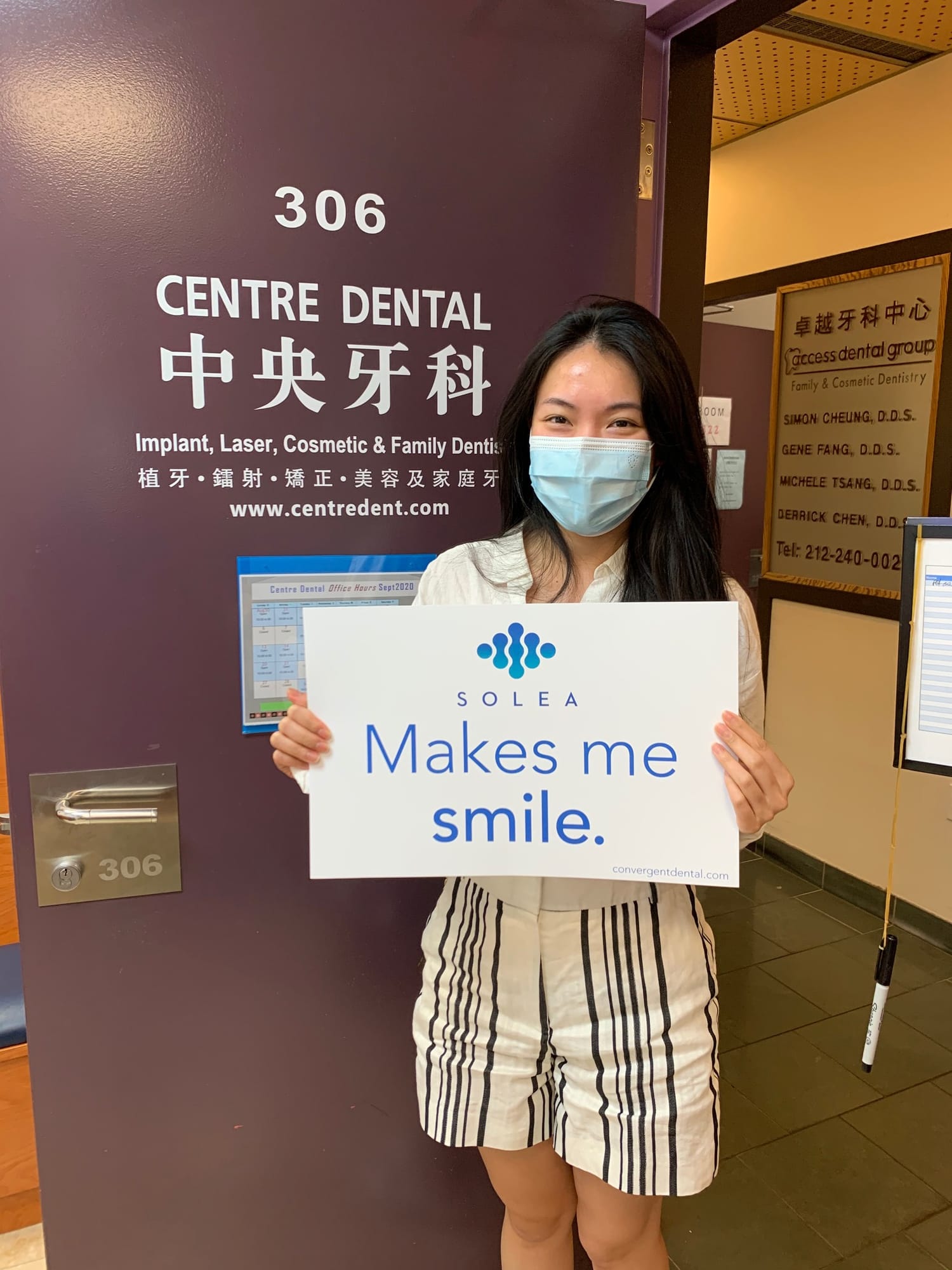
A happy Centre Dental patient after an anesthesia-free Solea laser visit — Centre Dental NYC
How can a dental laser help me?

Treatment without the two things you dread most.

The Solea laser removes decay and reshapes gum tissue using a precise beam of light instead of a spinning bur — so for many procedures there's no drill vibration and, frequently, no injection. It's a CO2 laser tuned to a wavelength that both tooth structure and soft tissue absorb, which is what lets one instrument handle a small filling and a gum recontouring alike. Less noise, less bleeding on soft-tissue work, and no waiting hours for numbness to fade before you get on with your day.

Ask about laser treatment

From our operatory

See the treatment, not just the words

The Solea laser treats both hard and soft tissue with one handpiece — most small fillings are completed without an injection, and soft-tissue work seals as it cuts.

Understand it fully

The clinical picture — light, tissue, and where the drill still wins

At a glance

15.3%1
of adults worldwide have dental fear
0 vs 5.272
laser vs drill pain (VAS), no anesthesia
Less bleeding3
laser vs scalpel on gum surgery

What the Solea laser actually is

Solea is an all-tissue dental laser built around a carbon dioxide (CO2) laser tuned to a 9.3-micron wavelength. That number matters clinically. Every laser is defined by the wavelength of light it emits, and every tissue absorbs some wavelengths strongly and ignores others. The 9.3-micron beam happens to be absorbed efficiently by both the hydroxyapatite mineral in your enamel and dentin and by the water in your gums, lips, and tongue — which is why a single instrument can prepare a small cavity and, minutes later, reshape gum tissue. It's used here by Dr. John Shi as part of the Centre Method, alongside the rest of our chairside technology.

Why 'all-tissue' is different from the diode laser down the street

A great many practices advertise 'laser dentistry,' but the common diode laser operates near 810–980 nanometers — a wavelength absorbed mainly by pigment in soft tissue. Diode lasers are genuinely useful for gum contouring, but they cannot remove tooth decay, because enamel and dentin don't absorb that wavelength meaningfully. The Solea CO2 wavelength does interact with mineralized tooth structure, which is what puts hard-tissue work — actual cavity preparation — within reach of the laser. When you compare offers, the honest question isn't 'do you have a laser,' it's 'is it a soft-tissue laser or an all-tissue one,' because the two do very different jobs.

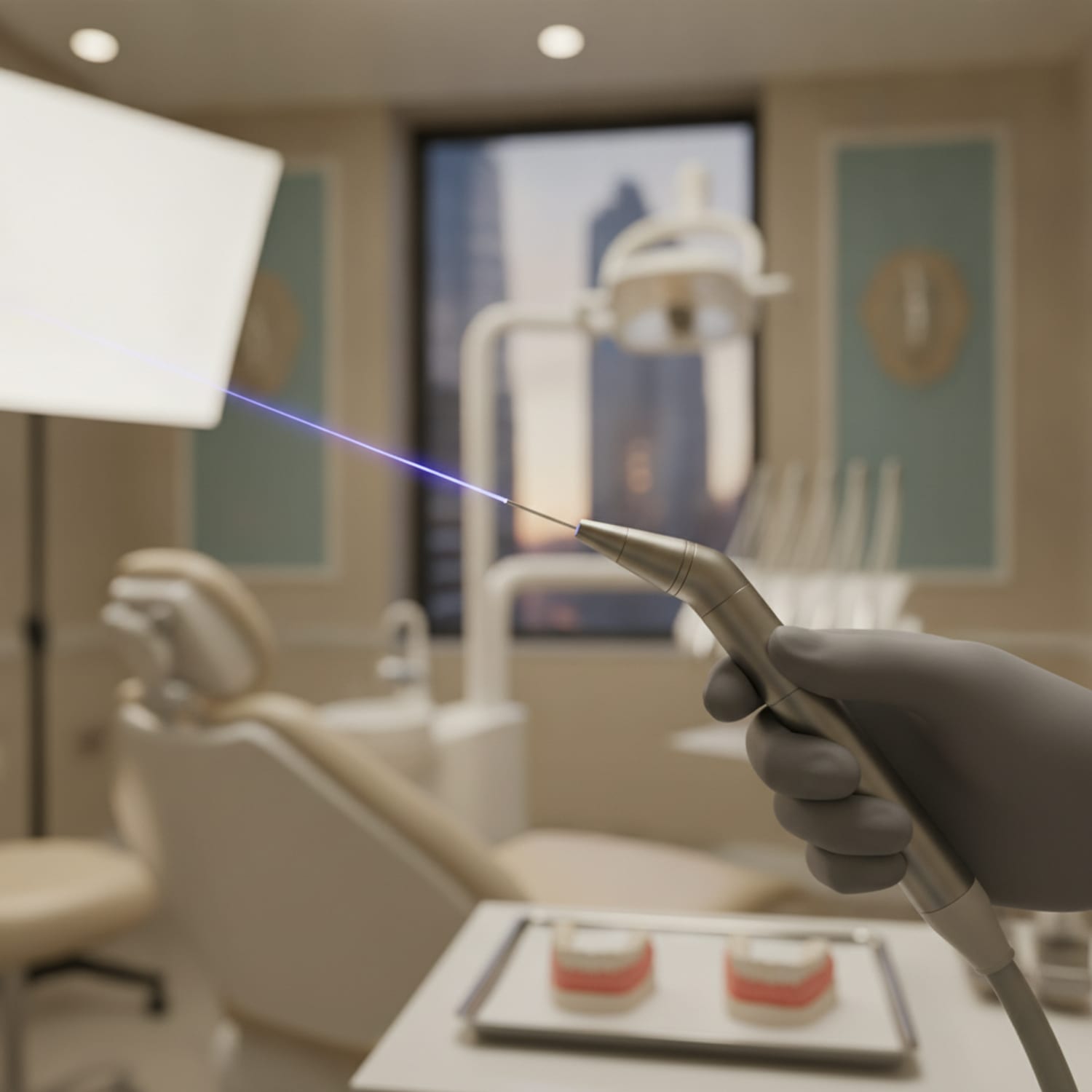
A modern dental laser handpiece with a focused light tip — Centre Dental NYC

Your next step

Wondering if solea laser dentistry is right for you?

A free consultation includes an exam and a written plan — no pressure, no upsell.

Why many procedures need no needle

Pain during drilling comes largely from two stimuli: vibration transmitted through the tooth, and heat. A laser removes tissue with pulses of light rather than a spinning bur, so there is essentially no vibration and — with proper water cooling — limited heat build-up. Remove those triggers and, for many small-to-moderate cavities, the sensation drops low enough that no anesthetic is needed. That's not just marketing: according to PubMed, a 2025 randomized clinical trial treating children's cavities without any local anesthesia recorded an average pain score of 0 on a 0–10 visual analog scale in the laser group, versus 5.27 with a conventional dental turbine. The trial used an erbium (Er:YAG) laser rather than Solea specifically, so we present it as evidence for the laser approach to painless hard-tissue work, not as a Solea-brand result — but the underlying principle, light instead of vibration, is the same one Solea relies on.

Soft-tissue work: a beam that seals as it cuts

Solea's soft-tissue applications are where the contrast with a traditional scalpel is clearest. As the laser divides gum tissue it simultaneously seals small blood vessels, so bleeding during the procedure is minimal and the field stays clean. According to PubMed, a 2024 randomized controlled trial comparing laser frenectomy to a surgical scalpel found the laser produced significantly lower intraoperative bleeding and significantly faster tissue healing at both 7 and 30 days. In practice this is why a gingivectomy, a frenectomy (tongue- or lip-tie release), or cosmetic gum recontouring done with the laser tends to mean a few days of mild soreness rather than a sutured wound — and why cosmetic margin changes are visible at the appointment itself, a useful adjunct in cosmetic dentistry and around new restorations.

What Solea can treat — and where the drill still wins

For hard tissue, the laser handles small-to-moderate cavity preparation in both baby and adult teeth, decay removal, and minor tooth shaping for a filling. For soft tissue, it manages gingivectomy, frenectomy, crown lengthening, treatment of aphthous (canker) sores, and gum recontouring. It is not a universal replacement, and we won't pretend otherwise: a heavily broken-down tooth that needs major reduction for a same-day crown, a surgical wisdom-tooth extraction, and very deep decay approaching the nerve are all better served — or safely completed — with conventional instruments, sometimes as part of root canal treatment. Dr. Shi confirms candidacy tooth by tooth. The laser is offered where it genuinely improves the experience, not stretched to cover cases it isn't suited to.

Who benefits most — and why anxiety is a clinical problem, not a personality trait

Dental fear is common and consequential. According to PubMed, a 2021 systematic review and meta-analysis of more than 72,000 adults estimated the global prevalence of dental fear and anxiety at 15.3%, with roughly 3.3% experiencing severe dental fear — the level that drives people to avoid care entirely until pain forces the issue. For that group, the injection is usually the trigger, and a needle-free appointment can be the difference between treatment and years of avoidance. That's why laser dentistry pairs naturally with our broader approach to dental anxiety and sleep dentistry options — and why a calmer first visit often matters more than the individual filling, because it changes whether you come back at all.

Children, and the appointments that shape a lifetime

The needle and the drill are the two most reliable sources of dental fear in kids, and a frightening early visit can set a pattern that follows a child for decades. A quieter, injection-free experience tends to produce a more cooperative young patient and far less anticipatory dread before the next appointment. The laser works on both primary (baby) and permanent teeth, and the randomized evidence for painless erbium-laser cavity treatment cited above was gathered specifically in children aged three to eight. Our team pairs the technology with age-appropriate explanation so a child understands what's coming — because with children, how the first cavity is treated can matter as much as that it's treated.

What recovery actually looks like

After a laser cavity, recovery is essentially immediate: with no injection there's no lingering numbness, so you can eat, drink, and get back to your day right away — no bitten cheek, no slurred afternoon. After soft-tissue procedures such as a frenectomy or gum recontouring, expect mild soreness for a few days; because the laser seals as it cuts, bleeding is minimal and the tissue tends to settle faster than after scalpel work, consistent with the healing advantage seen in the trial above. Aftercare is simple — gentle salt-water rinses, avoiding very hot or spicy food for a couple of days, and an over-the-counter pain reliever if you want one. Dr. Shi gives you specific instructions for whatever was done that day.

Sources: 1 · 2 · 3

Concerned about comfort, bone, or cost?

These are the questions a consultation answers directly. Dr. Shi reviews your 3D CBCT scan, evaluates your bone and candidacy, and outlines your options, treatment timeline, and estimated cost — including what your insurance may cover.

Schedule a consultation

Thinking about it

The questions we hear first

What is Solea laser dentistry?

Solea is an all-tissue dental laser built on a carbon dioxide (CO2) laser at a 9.3-micron wavelength — a beam absorbed by both hard dental tissue (enamel and dentin) and soft tissue (gum, lip, tongue). That dual absorption is what lets one instrument both prepare cavities and perform gum procedures, which the diode lasers used at many practices cannot do. Because it removes tissue with pulses of light rather than a vibrating bur, the sensation is greatly reduced, and many procedures can be done with no injection at all.

Does laser dentistry actually hurt, and will I need a needle?

For most small-to-moderate work, patients describe a mild warmth or light pressure rather than the sharpness and vibration of a drill. The reason is physical: a laser removes tissue with light, so the vibration and heat that trigger pain during drilling are largely absent, which is why many cavities and soft-tissue procedures are completed with no injection at all. According to PubMed, a 2025 randomized trial treating children's cavities with no local anesthetic recorded an average pain score of 0 out of 10 in the laser group versus 5.27 with a conventional drill (Dent Med Probl 2025). It isn't universal — deeper decay near the nerve, or simply your preference to be fully numb, may still call for anesthesia, and we never withhold it to force a needle-free result.

What's the difference between Solea and the 'laser' another office advertises?

It usually comes down to soft-tissue versus all-tissue. Diode lasers — the common kind — operate around 810–980 nanometers, a wavelength absorbed mainly by pigmented soft tissue. They're fine for gum contouring but physically cannot remove tooth decay. Solea's 9.3-micron CO2 wavelength is absorbed by tooth mineral as well as water, which is why it's used for actual cavity preparation. So when comparing practices, the question that matters isn't whether there's a laser, but whether it's an all-tissue laser or a soft-tissue one.

Which procedures can the Solea laser do?

On hard tissue: preparing small-to-moderate cavities in baby and adult teeth, removing decay, and minor tooth shaping. On soft tissue: gingivectomy, frenectomy (tongue- or lip-tie release), crown lengthening, treatment of canker sores, and cosmetic or restorative gum recontouring. Procedures that need major tooth reduction, surgical extraction, or that involve very deep decay near the nerve still call for conventional instruments. Dr. Shi confirms which approach fits your specific tooth.

Does laser treatment cost more?

At Centre Dental there's no separate laser surcharge — a laser-performed filling or gum procedure is provided at a cost comparable to the same procedure done conventionally. The value is in the experience: no injection, no numb afternoon, no waiting for sensation to return. Insurance is billed by the procedure, not the technology, so laser-performed fillings and soft-tissue work are covered the same way conventional treatment would be. You'll receive a written estimate for your specific case, and we're happy to review your insurance with you beforehand.

Is the Solea laser safe?

Yes. It's cleared for both hard- and soft-tissue dental use and is in service across many U.S. practices. The 9.3-micron wavelength is engineered for dental tissue and, used correctly with proper water cooling, doesn't damage adjacent structures. Both you and the clinical team wear protective eyewear throughout. Certain photosensitizing medications can be a consideration, which is one reason Dr. Shi reviews your full health history before any laser treatment.

Is it a good option for my child?

It's one of the better options for anxious children, because the needle and drill are the two things kids fear most, and the laser can often remove both from the appointment. A calmer first experience tends to make the next visit far easier — which matters over a lifetime of dental care. The technique works on both baby and permanent teeth, and the randomized evidence for painless laser cavity treatment we cite was gathered in children aged three to eight. Our team explains each step in child-friendly terms as we go.

What's recovery like afterward?

After a laser cavity, recovery is basically immediate — no anesthetic means no lingering numbness, so you can eat and drink right away. After soft-tissue procedures such as a frenectomy or gum recontouring, expect mild soreness for two to four days; because the laser seals as it cuts, bleeding is minimal and healing tends to be faster than after scalpel surgery, consistent with published trial data. Aftercare is simple: gentle salt-water rinses, avoiding very hot or spicy foods for a day or two, and an over-the-counter pain reliever only if you want one.

The path

Your journey, start to finish

01

Consultation and honest candidacy check

Dr. Shi examines the tooth or tissue in question and tells you plainly whether the laser is a good fit, whether an injection is likely, and what a conventional approach would involve instead. You leave with a written estimate and a clear plan — no pressure to laser something better handled another way.

02

A calm, drill-free appointment

For laser-suitable cases there's no needle to brace for and no drill whine — just a precise beam of light. Protective eyewear goes on for everyone, and Dr. Shi works tooth by tooth, checking in as he goes.

03

Treatment completed, often in one visit

Most laser cavities and soft-tissue procedures are done in a single appointment. Because the laser seals soft tissue as it cuts, gum work stays clean and controlled, and cosmetic changes are visible right there in the chair.

04

Get on with your day

With no anesthetic, there's no numbness to wait out — you can eat, drink, and head back to work immediately. For soft-tissue procedures you'll get simple aftercare instructions and a quick guide on what to expect over the next few days.

One laser, two jobs: hard tissue and soft tissue

The Solea laser at Centre Dental — a CO₂ system from Convergent Dental, FDA-cleared under 510(k) K152533 — cuts through enamel, dentin, and gum tissue with the same handpiece. For a small-to-medium filling, that often means no injection: the laser ablates decay precisely enough that most patients tolerate the procedure without local anesthesia. Patients leave the appointment without the numb-cheek hangover that traditional drilling carries.

On the soft-tissue side, Solea handles gingivectomy contouring before veneers, frenectomy releases, and biopsy excisions with minimal bleeding because the laser energy seals capillaries as it cuts. Recovery is typically faster than scalpel-based equivalents, and sutures are often unnecessary. For deeper soft-tissue work the practice also runs Waterlase iPlus and Epic X diode lasers — chosen by case rather than by default.

Explore the Cluster

Explore the full Same-Day Crowns

See all

Start here

Schedule your consultation

In a single visit, Dr. Shi reviews your 3D scan, assesses your candidacy for solea laser dentistry, and provides a written treatment plan with cost and insurance details — so you can decide with all the facts.

Extensive full-arch reconstruction experience by Dr. Shi

3D-guided precision, placed by an experienced surgeon

Bilingual — English, Mandarin, Cantonese

Live clinic hours · 139 Centre St, Lower Manhattan, NYC