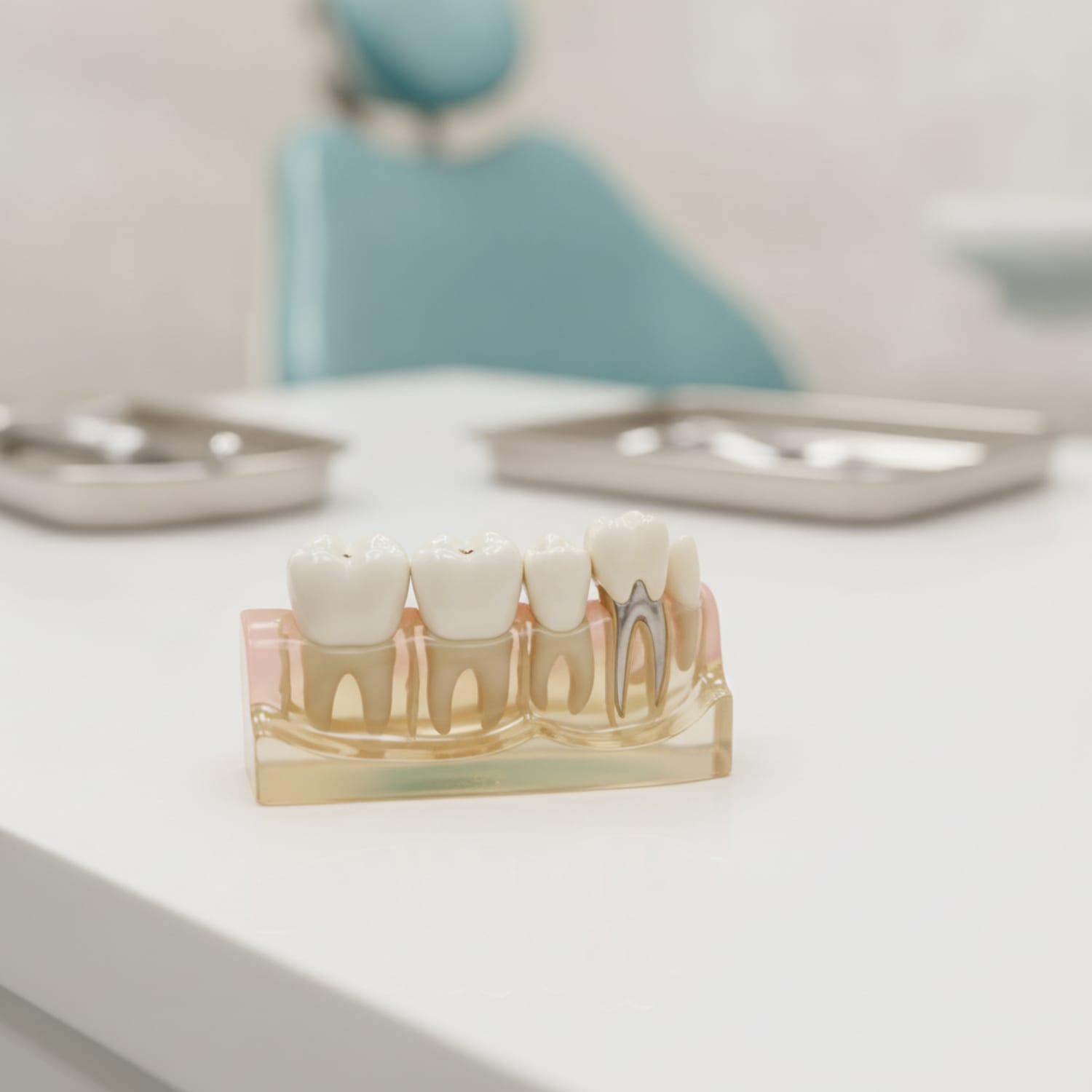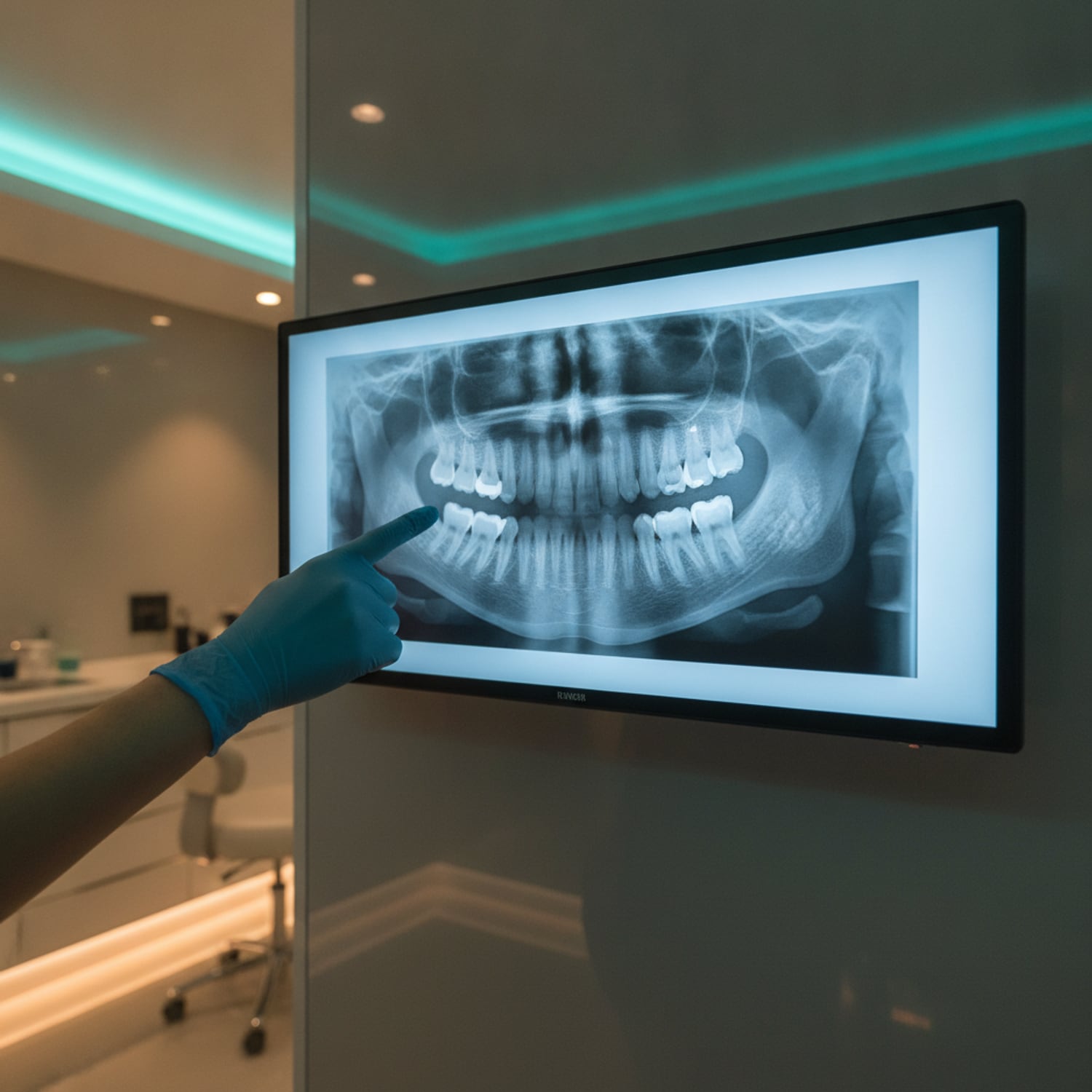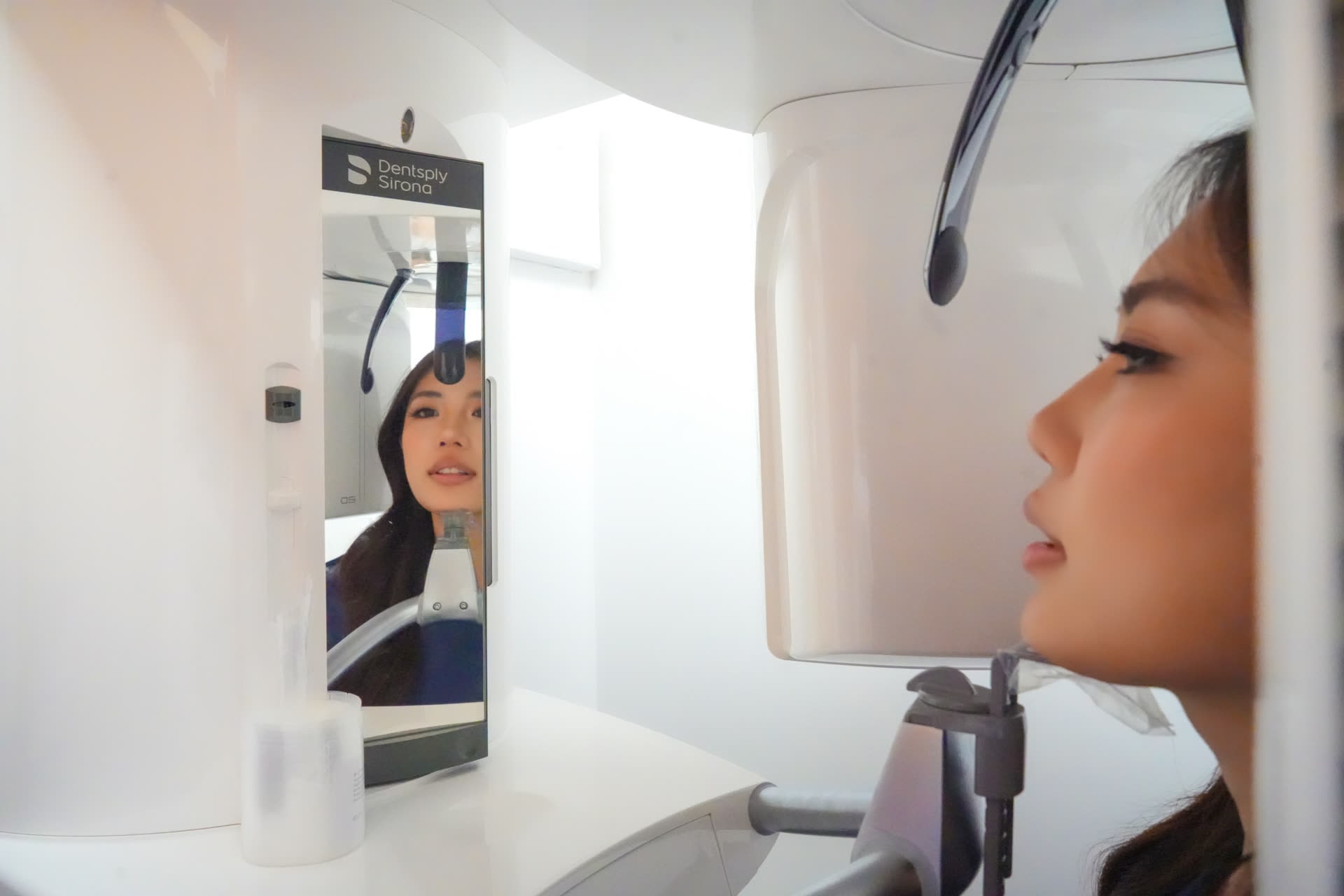

Precise nerve mapping before every surgical extraction. Minimal recovery protocols.
Wisdom Teeth Removal NYC — 3D Imaging & Comfortable Care
Wisdom teeth removal in NYC at Centre Dental uses CBCT 3D cone-beam imaging to map root anatomy and nerve proximity before surgical extractions, reducing the risk of complications....
DDS
Columbia University 1998
22+
Years on Centre St
5.0
150+ Google reviews
Overview
Wisdom Teeth Removal
Wisdom teeth removal in NYC at Centre Dental uses CBCT 3D cone-beam imaging to map root anatomy and nerve proximity before surgical extractions, reducing the risk of complications. Nitrous oxide is available for patients who need relaxation support.
- 3D CBCT imaging for precise nerve mapping before surgical extraction
- Expertise in partially and fully impacted wisdom teeth
- Minimal recovery protocols — cold therapy, gauze kit, written instructions
- Same-day consultation and extraction possible when scheduling allows
- Post-operative care kit provided at discharge
- 7-day follow-up appointment included
- Bilingual care in English and Mandarin
“Before any surgical wisdom tooth extraction, we take a CBCT 3D scan to map exactly where the roots sit relative to the inferior alveolar nerve. Permanent IAN nerve damage after wisdom tooth removal occurs in about 0.35% of cases — a low number, but not zero, and it's why 3D imaging before impacted extractions is standard of care, not optional. That planning step is what lets us work predictably rather than relying on two-dimensional guesses.”
How It Works
The Process
When to Remove and When to Watch
Third molars typically emerge between 17 and 25. Because modern jaws often lack space, they frequently become impacted — partially or fully trapped beneath gum and bone. Clinical indications for removal include recurrent pericoronitis (infection of the gum flap over a partially erupted tooth), decay on the adjacent second molar, cyst formation around an unerupted crown, and shifting of adjacent teeth. But not every wisdom tooth needs to come out. Fully erupted wisdom teeth that are properly positioned, cleanable with regular brushing, and not causing adjacent tooth damage can reasonably be monitored. The conversation shifts as patients age: root development completes in the mid-twenties, and denser surrounding bone in older patients increases both procedural difficulty and recovery duration. The late-teen and early-twenties window offers faster healing and lower complication risk for cases where extraction is appropriate.
CBCT 3D Imaging and the Extraction Process
The clinical approach depends on whether the tooth is fully erupted, partially impacted, or fully impacted beneath the bone. Simple extractions of fully erupted teeth proceed under local anesthesia. Surgical extractions of impacted teeth require an incision, possible bone removal, and frequently tooth sectioning for controlled removal. At Centre Dental, CBCT cone-beam computed tomography is used for all surgical cases to create a three-dimensional map of root anatomy relative to the inferior alveolar nerve — the structure governing sensation to the lip and chin. Permanent IAN nerve damage occurs in approximately 0.35% of cases; lingual nerve damage in about 0.69%, with most resolving within six months (PMC11989344). These are low numbers, but the 3D imaging step is what keeps them low. Five million wisdom teeth are removed annually in the U.S., and CBCT for impacted cases is now considered standard of care. Nitrous oxide is available for patients with dental anxiety.
Recovery Timeline and Dry Socket: What No One Tells You
The recovery pattern most patients don't know about: Day 3 is typically the worst, not Day 1. Swelling peaks around 48 hours and begins to improve by Day 4 or 5. Most patients feel well enough for desk work or school by Day 2 or 3. The complication patients fear most is dry socket — when the blood clot dislodges before the socket heals, exposing bone and causing significant pain beginning two to four days post-extraction. Published data puts dry socket risk at 15% for surgical extractions and up to 30% for impacted lower third molars (PMC11032735, 2024) — not the 2-5% figure commonly cited for simple extractions. Smokers face roughly 3x higher dry socket risk (Cleveland Clinic). Prevention is straightforward: no straws for five days, no smoking for at least 72 hours, no vigorous rinsing for the first 24 hours. Cold packs in 20-minute intervals for the first 24 hours reduce swelling. Soft foods for 48-72 hours protect the socket. Centre Dental includes a 7-day follow-up to confirm healing, and our team is reachable by phone before that appointment if concerns arise.
Clinical Evidence
Dry socket affects 15% of surgical extractions and up to 30% of impacted wisdom tooth cases (PMC11032735, 2024) — far higher than the 2-5% figure most patients are told, and the single most common post-operative complication.
Timeline
Single visit, 45–90 minutes; recovery 3–7 days
Typical treatment duration
Explore the Cluster
Explore the full Emergency Dental
Common Questions
Frequently Asked Questions
Do I actually need my wisdom teeth out?
Not necessarily. The indication for extraction is clinical: impaction causing recurrent infection (pericoronitis), decay on the adjacent second molar, cyst formation, or documented shifting of adjacent teeth. Fully erupted wisdom teeth that are properly positioned, cleanable, and not causing adjacent damage can be monitored rather than removed. The decision should be based on your specific anatomy and X-ray findings, not a blanket policy. If your dentist recommends removal, ask specifically which of these clinical indications applies to your case.
When should wisdom teeth be removed?
When clinical indications are present — impaction causing recurrent infection, adjacent tooth damage, or cyst formation — the late-teen to early-twenties window is generally optimal. Root development is incomplete, surrounding bone is less dense, and healing is faster. Waiting until the roots are fully formed or until significant symptoms develop typically increases procedural difficulty and recovery duration. Asymptomatic impacted teeth are commonly removed prophylactically in younger patients when long-term risk is clearly present.
Does wisdom tooth removal hurt?
The procedure is performed under local anesthesia, so most patients feel pressure and movement but not sharp pain. Nitrous oxide is available for patients with dental anxiety. Post-operatively, most patients describe the soreness as moderate and manageable with over-the-counter ibuprofen or a prescribed anti-inflammatory. Day 3 is typically the most uncomfortable — not Day 1. Swelling peaks around 48 hours and improves noticeably by Day 4 or 5.
What is dry socket and how likely is it?
Dry socket (alveolar osteitis) occurs when the blood clot in the extraction socket dislodges before the bone and tissue have healed, exposing bone and causing significant pain beginning two to four days post-extraction. Published data puts the risk at approximately 15% for surgical extractions and up to 30% for impacted lower third molars (PMC11032735, 2024) — substantially higher than the 2-5% figure commonly cited for simple extractions. Smokers face roughly 3x higher risk. Prevention: no straws for five days, no smoking for at least 72 hours, no vigorous rinsing for the first 24 hours. If you develop worsening rather than improving pain after Day 2, contact the practice promptly.
What sedation options are available?
Centre Dental offers local anesthesia and nitrous oxide (laughing gas) for wisdom tooth extractions. Nitrous oxide helps anxious patients stay relaxed and comfortable throughout the procedure. Your dentist reviews your medical history and discusses options before scheduling.
What is CBCT imaging and why does it matter for wisdom teeth?
CBCT (cone-beam computed tomography) is a 3D imaging technology that maps the exact position of wisdom tooth roots relative to the inferior alveolar nerve — the structure governing sensation to the lower lip and chin. Conventional 2D X-rays cannot reliably show nerve proximity in three dimensions. Permanent IAN nerve damage from wisdom tooth extraction occurs in approximately 0.35% of cases; lingual nerve damage in about 0.69%, most resolving within six months (PMC11989344). CBCT imaging before impacted extractions is standard of care specifically because it allows the dentist to plan the approach and minimize nerve proximity risk.
How long does recovery take?
Most patients feel well enough for desk work or school within two to three days. Swelling peaks around 48 hours and typically resolves by Day 5 to 7. Strenuous physical activity should be avoided for five to seven days to reduce the risk of dislodging the blood clot. Full tissue healing of the socket takes several weeks, though most patients stop noticing the extraction site within 10 to 14 days.
What can I eat after wisdom tooth removal?
For the first 24 to 48 hours: soft foods requiring minimal chewing — yogurt, scrambled eggs, mashed potatoes, soup cooled to room temperature. Smoothies are fine, consumed with a spoon rather than a straw. Avoid hard, crunchy, or spicy foods that could irritate the extraction site. Gradually reintroduce normal foods as comfort permits, typically by Day 4 or 5. No straws for the first five days — the suction pressure can dislodge the blood clot and trigger dry socket.
How much does wisdom tooth removal cost in NYC?
Wisdom tooth extraction cost depends on whether the removal is simple (non-surgical) or surgical, the degree of impaction, and the number of teeth removed in one session. A fully or partially impacted tooth that requires surgical extraction costs more than a simple removal. Most dental insurance plans that include surgical benefits cover a portion of impacted wisdom tooth extraction. Our team verifies your benefits and provides a written estimate before the procedure.
Can all four wisdom teeth be removed at once?
Yes, and for patients with four impacted teeth, a single session is often preferred over four separate recovery periods. Nitrous oxide is available for patients who want relaxation support during the procedure. Your dentist will assess overall complexity — if one or more teeth are particularly complicated, staging the extractions may be clinically appropriate. A single anesthetic event and a single recovery period is often less disruptive than multiple procedures spread across weeks.
Explore Further
Related Services
Wisdom Teeth Removal Near You in NYC
Start Here
Your Smile Starts With a Conversation
Begin with a no-obligation consultation about wisdom teeth removal. Dr. Shi reviews your 3D scan, walks through your options, and provides an honest investment range — no pressure, no obligation.
Extensive full-arch reconstruction experience by Dr. Shi
3D-guided implant precision, placed by an experienced surgeon
Bilingual care — English, Mandarin, Cantonese
Open Mon–Sat · 139 Centre St, Lower Manhattan, NYC