

Dental Implants New York City
Missing teeth can affect how you eat, speak, and feel about your smile. Dental implants provide a stable, long-term way to replace missing teeth with restorations designed to look, feel, and function naturally.
At Centre Dental, we provide personalized dental implant care in Lower Manhattan for patients throughout New York City. We evaluate your teeth, gums, jawbone, and overall oral health to determine which treatment may be right for you. When needed, 3D CBCT imaging helps us assess your jawbone and plan implant placement carefully.
Whether you need a single dental implant, several implants, or full mouth dental implants, your treatment is planned around your individual needs. For some patients, same-day dental implants may be possible, with a temporary restoration placed soon after dental implant surgery when the implant has sufficient initial stability.
Our goal is to make your options clear and help you choose a comfortable, natural-looking solution for your smile and everyday life.
- 3–6 months
- typical osseointegration
- 93–98%
- 5-year implant survival
- 4.9 ★
- 226 Google reviews
Why Choose Dental Implants?
A missing tooth can affect your ability to eat comfortably, speak clearly, and feel confident about your smile. A dental implant replaces the missing tooth root with an implant placed in the jawbone, providing a stable foundation for a custom restoration.
Unlike a removable denture, an implant is anchored in the jawbone. As the bone heals around it through osseointegration, the implant becomes a secure foundation for your replacement tooth.
A Natural-Looking Smile
A custom dental crown can be shaped and shade-matched to blend with your surrounding teeth, creating a natural-looking result.
Comfortable Everyday Function
Because an implant is fixed in the jaw, it can provide a stable replacement for a missing tooth without the movement associated with some removable dentures.
Support for Jawbone Health
After a tooth is lost, the surrounding jawbone can gradually deteriorate. Replacing the tooth root with a dental implant can help prevent bone deterioration around the implant site and support long-term oral health.
No Need to Alter Healthy Adjacent Teeth
A traditional bridge relies on neighboring teeth for support. A single dental implant is supported by the jawbone instead, so healthy adjacent teeth do not need to be reshaped to hold the replacement tooth.
A Long-Term Tooth Replacement
With proper oral hygiene and regular dental care, dental implants can provide a durable, long-term solution for missing teeth. Their long-term success depends on factors including healthy gums and bone, careful treatment planning, and good oral hygiene.
From our operatory
See the treatment, not just the words
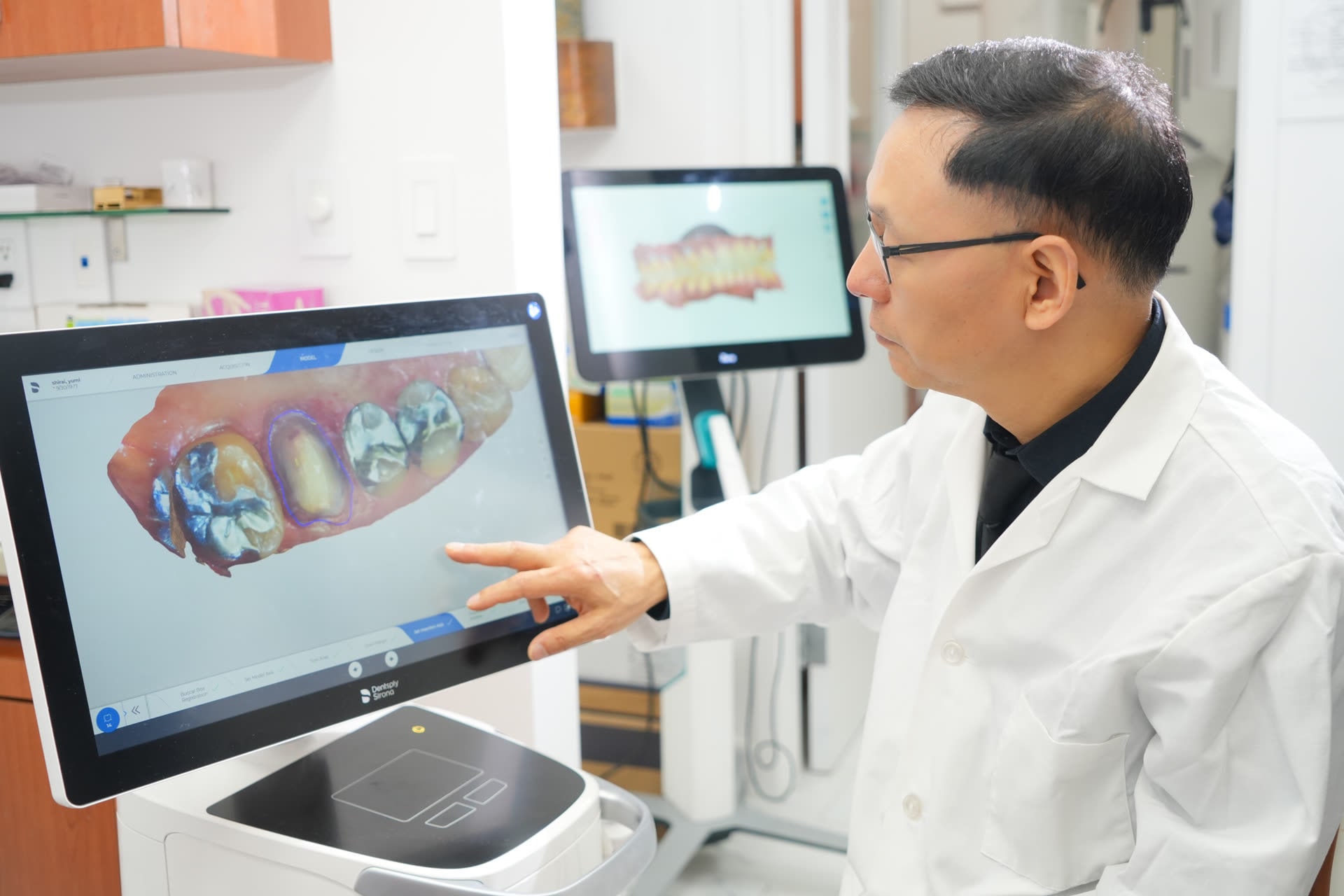
Watch how an implant surgical guide is planned and 3D-printed chairside — the step that translates your CBCT scan into millimeter-level implant placement on the day of surgery.
Understand it fully
The clinical picture, in full
At a glance
- 93–98%1
- 5-year implant survival
- 3–6 months2
- typical osseointegration
Dental Implants vs. Bridges vs. Dentures
| Dental Implant | Dental Bridge | Removable Denture | |
|---|---|---|---|
| How it works | Replaces the tooth root and supports a crown, bridge, or denture | Uses neighboring teeth to support replacement teeth | Replaces missing teeth with a removable appliance |
| Stability | Fixed in the jaw | Fixed in place | Can move or shift during eating or speaking |
| Natural teeth | A single implant does not require neighboring teeth for support | Neighboring teeth are typically used to support the bridge | Does not require neighboring teeth for support |
| Jawbone | Helps maintain bone in the area of the missing tooth | Does not replace the missing tooth root | Does not replace the missing tooth root |
| Care | Brushing, flossing, and regular dental visits | Brushing, flossing, and regular dental visits | Remove and clean as directed |
| Best suited for | Patients looking for a stable, long-term tooth replacement | Patients who may benefit from replacing several teeth with a fixed restoration | Patients who need a removable solution for multiple missing teeth |
Dental Implants
A dental implant replaces the missing tooth root and supports a custom restoration. Because it is anchored in the jawbone, an implant provides a stable foundation without relying on neighboring teeth.
Dental Bridges
A traditional dental bridge replaces one or more missing teeth by attaching a restoration to neighboring teeth. A bridge may be appropriate when the surrounding teeth are healthy enough to provide support.
Removable Dentures
Dentures replace multiple missing teeth with a removable appliance. They can restore chewing and speaking, although some patients find traditional dentures less secure during everyday activities.
Which Option Is Right for Me?
There is no single solution that is right for every patient. A dental implant, bridge, denture, or implant-supported restoration may be appropriate depending on your teeth, gums, jawbone, and treatment goals. Your consultation will help determine which option best fits your needs.
Dental Implant Solutions
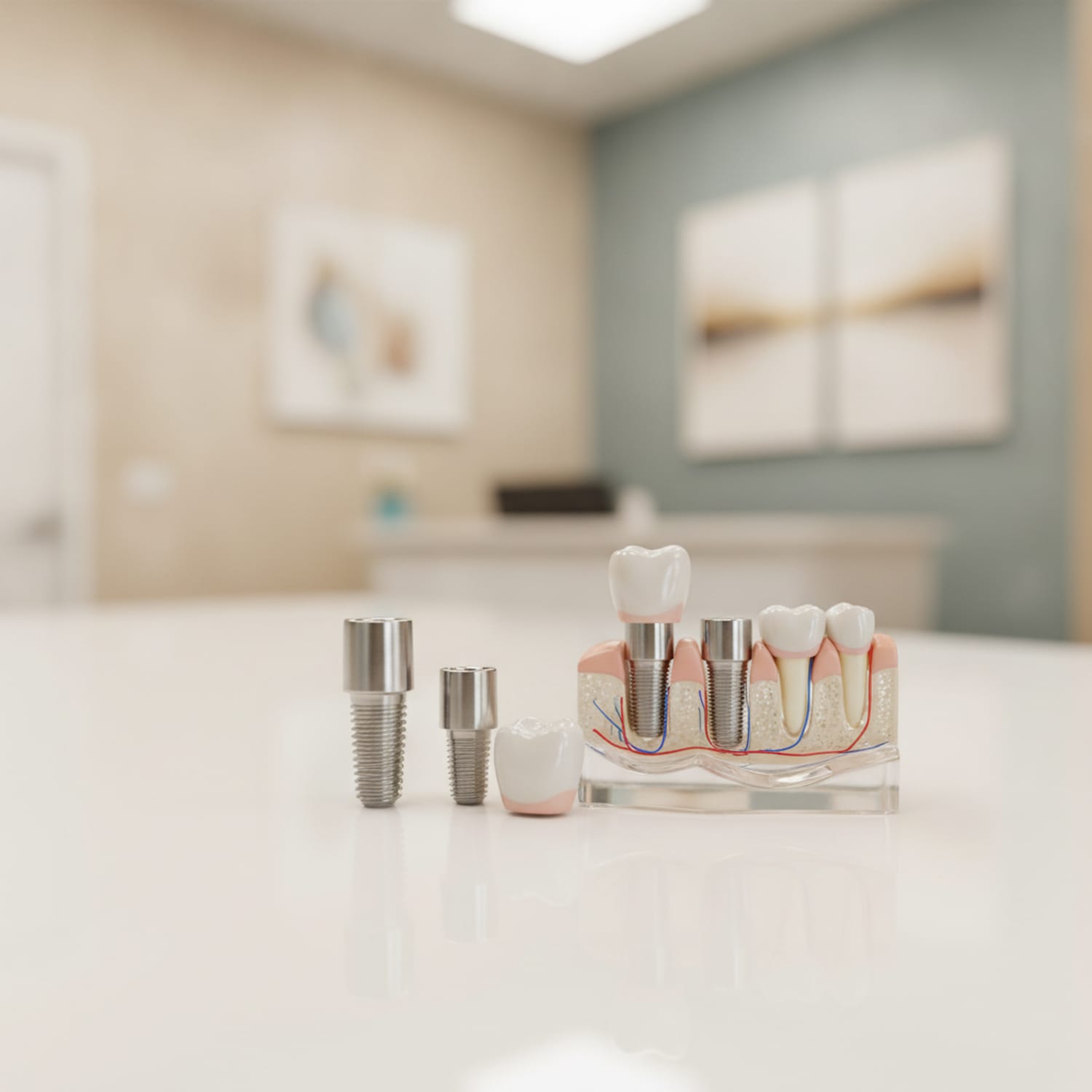
Dental implants can replace one tooth, several teeth, or most or all of your teeth. The right approach depends on the number of missing teeth, the condition of your remaining teeth and gums, your jawbone, and your treatment goals.
Single Dental Implant
A single dental implant can replace one missing tooth without relying on neighboring teeth for support. The implant supports a custom dental crown designed to blend with your natural teeth.
You may be considering a single implant if:
- You are missing one tooth
- A tooth cannot be restored
- You want a fixed replacement rather than a removable appliance
Implant-Supported Bridge
If you are missing several neighboring teeth, an implant-supported bridge can replace multiple teeth without requiring an implant for every missing tooth. The implants support a fixed bridge for greater stability when eating and speaking.
You may be considering an implant-supported bridge if:
- You are missing two or more neighboring teeth
- You have several consecutive missing teeth
- You want a fixed alternative to a removable partial denture
Full Mouth Implants and Full-Arch Dental Implants
If you have lost most or all of your teeth, full mouth dental implants can provide a stable alternative to traditional removable dentures. Several implants support a complete arch of replacement teeth for the upper or lower jaw.
Full-arch treatment may be an option if:
- You are missing most or all of your teeth
- You need to replace an entire upper or lower arch
- Your remaining teeth are severely damaged or cannot be restored
- You want a more stable alternative to traditional dentures
Implant-Supported Dentures
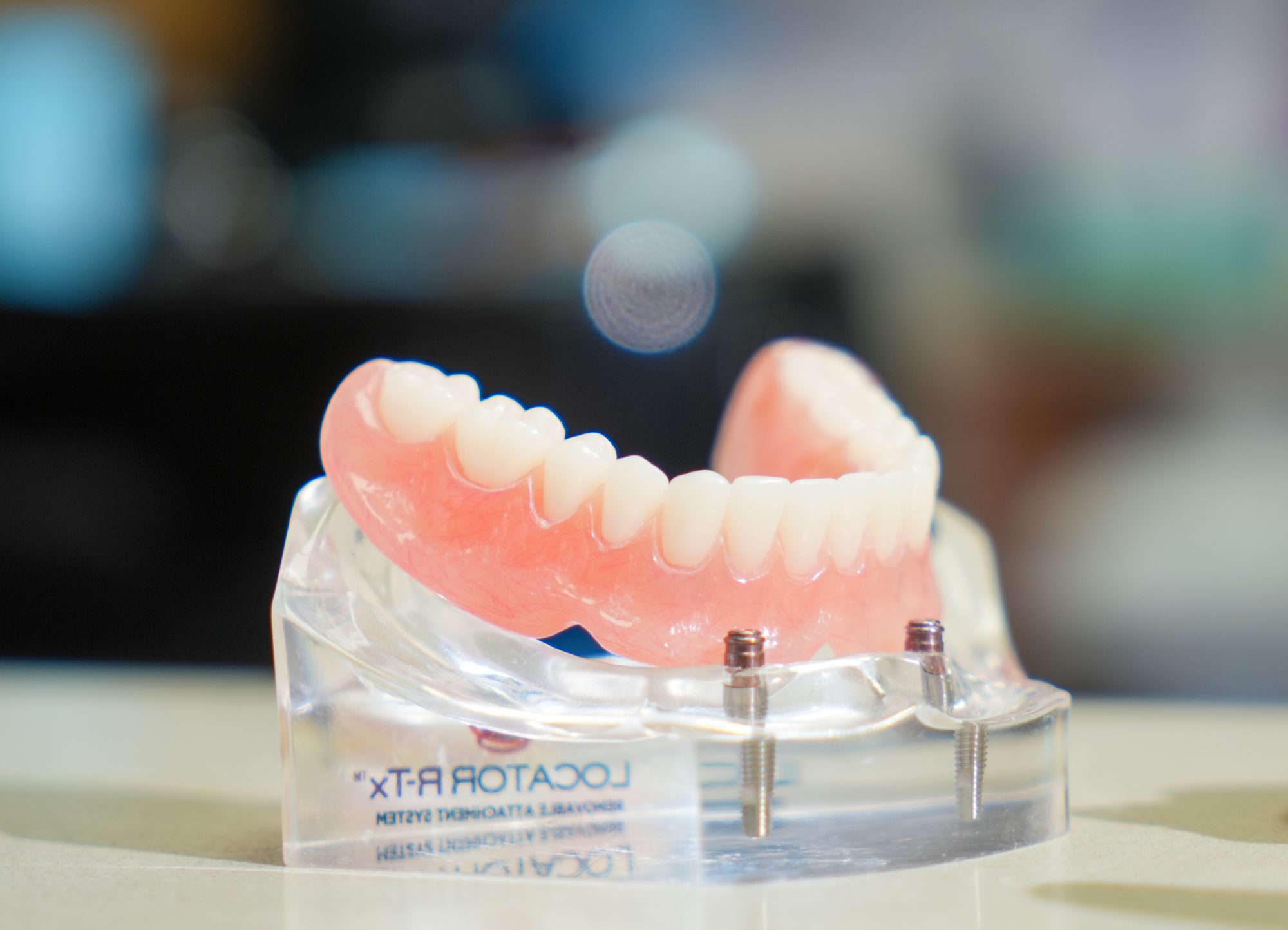
If your dentures slip, shift, or feel uncomfortable, implant-supported dentures may provide greater stability. Dental implants anchor the denture, reducing movement while eating or speaking.
You may be considering implant-supported dentures if:
- Your dentures feel loose or unstable
- Your dentures move when you eat or speak
- You want more stability than traditional removable dentures provide
Same-Day Dental Implants
For some patients, an implant and temporary restoration can be placed during the same visit. Same-day dental implants may be possible when the implant has sufficient initial stability and your bone and oral health are suitable for immediate loading.
Same-day treatment does not mean that every patient receives a permanent tooth in one day. The final restoration is generally placed after the implant has healed. Your treatment plan will determine whether this approach is appropriate for you.
Choosing the Right Implant Solution
Your implant treatment should match your oral health, needs, and goals. During your consultation, we will evaluate your situation and explain which options may be appropriate.
Are You a Good Candidate for Dental Implants?
Dental implants may be an option if you have one or more missing teeth and want a stable, long-term replacement. Candidacy depends on your gums, remaining teeth, jawbone, general health, and ability to heal.
Healthy Gums and Teeth
Healthy gums and good oral hygiene are important for successful implant treatment. If you have gum disease, tooth decay, or another dental problem, it may need to be treated before implant placement. Addressing periodontal problems first can help create a healthier foundation for treatment.
Adequate Jawbone
Dental implants need enough healthy jawbone and sufficient bone density to provide support. After a tooth is lost, the surrounding bone can gradually shrink. Bone loss does not necessarily rule out dental implants. If more bone is needed, a bone graft or other preparatory treatment may be recommended to provide adequate bone for implant placement.
Overall Health
Your general health and medical history can affect how your body heals after implant surgery. Your dentist will review relevant health conditions and medications as part of your treatment planning.
Smoking and Dental Implants
Smoking can interfere with healing and increase the risk of complications after implant surgery. If you smoke or use tobacco, discuss it with your dental provider before treatment so you understand how it may affect your recovery.
Age Is Not the Only Factor
Age alone does not determine whether dental implants are appropriate. Your oral health, jawbone, general health, and ability to heal are more important considerations.
How Do I Know If Dental Implants Are Right for Me?
A dental implant consultation is the best way to determine whether implants are right for you. Your teeth, gums, jawbone, and overall oral health can be evaluated, and you can discuss your goals, treatment options, expected timeline, and alternatives before making a decision.
The Dental Implant Process
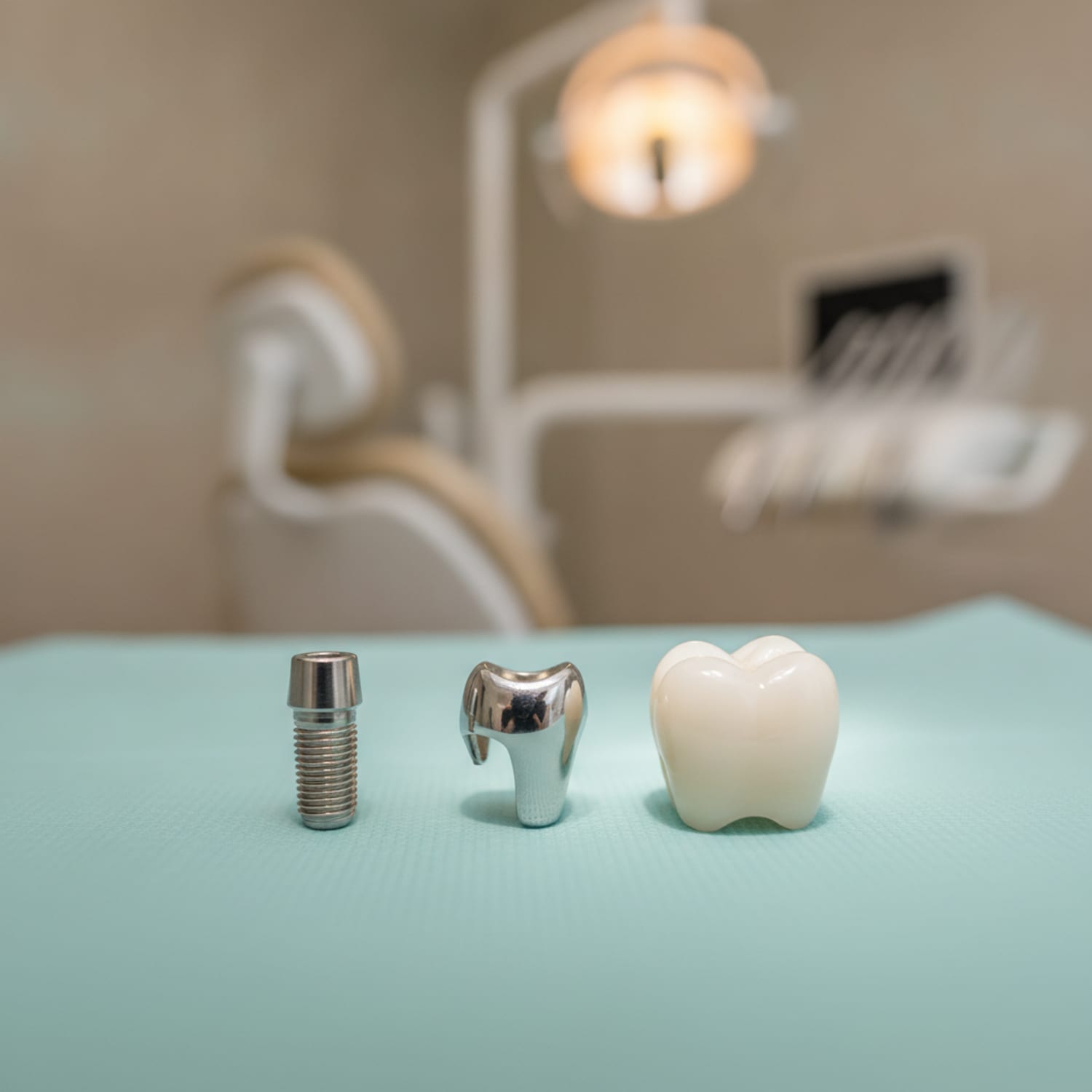
Getting dental implants is a process rather than a single appointment. Your treatment timeline depends on your oral health, the number of teeth being replaced, the condition of your jawbone, and whether you need an extraction, bone graft, or other preparatory treatment.
1. Dental Implant Consultation and Examination
Your treatment begins with a dental implant consultation. We will examine your teeth and gums, review your medical history, discuss your goals, and determine whether dental implants are appropriate for you.
2. 3D Imaging and Treatment Planning
When needed, CBCT 3D imaging provides a detailed view of your teeth, jawbone, nerves, and surrounding structures. This helps assess the available bone and plan implant placement carefully.
3. Tooth Extraction and Preparatory Treatment
If a damaged or unhealthy tooth needs to be removed, extraction may be completed before or as part of your implant treatment. In some cases, an implant can be placed immediately after an extraction.
If you have bone loss, a bone graft or another procedure may be recommended to create a suitable foundation for the implant. Not every patient needs additional treatment.
4. Dental Implant Placement
During dental implant placement, the implant is surgically placed into the jawbone to provide a stable foundation for the replacement tooth. The implant acts as an artificial tooth root and provides a stable foundation for your replacement tooth.
Local anesthesia is used to help keep you comfortable during the procedure.
5. Healing and Osseointegration
After implant placement, the jawbone gradually grows around the implant in a process called osseointegration. This creates the stable foundation needed to support the final restoration.
Healing time varies depending on your health, bone quality, number of implants, and whether additional procedures were needed.
6. Temporary or Same-Day Restoration
For some patients, a temporary tooth or provisional restoration may be placed on the same day as implant surgery. This is sometimes called immediate loading or same-day dental implants.
Same-day treatment is not appropriate for everyone. The implant needs sufficient initial stability, and your bone and oral health must be suitable for this approach.
7. Final Crown or Restoration
Once the implant has healed sufficiently, your final restoration can be placed. Depending on your treatment plan, this may be a custom dental crown, implant-supported bridge, full-arch restoration, or implant-supported denture.
How Long Does the Dental Implant Procedure Take?
Treatment time varies from patient to patient. Some patients may complete treatment in a few months, while others need additional healing time after bone grafting, tooth extraction, or other preparatory procedures.
Your treatment plan will outline the expected timeline and the steps involved.
What Happens After My Consultation?
Before treatment begins, we will review your recommended treatment plan, expected timeline, costs, and alternatives. You will have the opportunity to ask questions and decide how you would like to proceed.
Your next step
Wondering if dental implants is right for you?
A free consultation includes an exam and a written plan — no pressure, no upsell.
Recovery After Dental Implant Surgery
Recovery after dental implant surgery varies depending on the number of implants placed, the type of procedure, and whether you also need a tooth extraction, bone graft, or other treatment. Some swelling, tenderness, and minor bleeding are common during the first few days.
The First Few Days
Some soreness, swelling, or tenderness is normal after implant surgery. Rest as directed and follow your aftercare instructions. Take any prescribed or recommended medication as instructed.
If your symptoms become unusually severe or worsen rather than improve, contact our office.
Eating After Implant Surgery
You will generally begin with softer foods while the treatment area heals. Follow the dietary instructions provided by our team and gradually return to your normal diet as your recovery progresses.
Returning to Work and Normal Activities
Many patients can return to work and everyday activities relatively soon after dental implant surgery. Your recovery depends on the extent of your treatment. Multiple implants, tooth extraction, bone grafting, or other procedures may require additional recovery time.
Caring for Your Implant During Healing
Good oral hygiene is important while your implant heals. Follow instructions for brushing and cleaning around the treatment area, take medications as directed, and avoid smoking or tobacco products whenever possible.
Keep your recommended follow-up appointments so we can monitor your healing and support the healing process.
Does Getting a Dental Implant Hurt?
Local anesthesia helps keep you comfortable during implant placement. Some soreness, swelling, or tenderness afterward is normal and usually improves over the following days.
When Can I Eat Normally Again?
Your return to a normal diet depends on how your implant is healing and the type of treatment you received. We will let you know when it is appropriate to introduce firmer foods and return to your usual diet.
When Should I Contact the Office?
Contact our office if you experience unusual or worsening pain, significant swelling, persistent bleeding, fever, or another symptom that concerns you during recovery. If you are unsure whether something is part of normal healing, it is appropriate to ask.
Dental Implant Cost, Insurance & Financing
“How much do dental implants cost?” is one of the first questions many patients ask. The answer depends on your treatment. Replacing one tooth is very different from replacing several teeth or an entire arch.
The total cost may depend on the number of implants, type of restoration, condition of your teeth and gums, available jawbone, and whether additional procedures are needed.
What Affects the Cost of Dental Implants?
Number of Missing Teeth
Replacing one missing tooth requires a different approach than replacing several teeth or a full arch. The number of implants and type of restoration can affect the total cost.
Your Oral and Jawbone Health
Gum disease, bone loss, or other oral health concerns may need to be addressed before an implant can be placed. Additional treatment can affect both cost and treatment time.
Type of Restoration
Your restoration may be a dental crown, implant-supported bridge, full-arch restoration, or implant-supported denture. Full mouth implants require a different treatment plan from a single dental implant and therefore have different costs.
Additional Procedures
Some patients may need a tooth extraction, bone grafting, or other preparatory treatment before implant placement. If additional treatment is recommended, we will explain why it is needed and how it fits into your treatment plan.
Dental Insurance and Dental Implant Coverage
Dental insurance coverage for implants varies by plan. Some plans may contribute toward parts of treatment such as examinations, imaging, extractions, or the final restoration.
Our team can help you understand your dental insurance benefits and expected out-of-pocket costs.
Can I Finance Dental Implant Treatment?
Financing options may be available for qualified patients. Our team can explain available payment options and how they may apply to your treatment.
Will I Know the Cost Before Treatment Begins?
Before treatment begins, we will review your recommended treatment, estimated costs, insurance benefits, and available payment options so you understand the financial side of your care before moving forward.
Why Choose Centre Dental for Dental Implants?
Choosing where to have dental implant treatment is an important decision. At Centre Dental, we focus on careful treatment planning, modern imaging, and clear communication so you understand your options before treatment begins.
Personalized Treatment Planning
Every patient's needs are different. Your treatment depends on the number of missing teeth, the condition of your remaining teeth and gums, your jawbone, and your overall health. We use this information to develop a treatment plan suited to your situation.
Implant Dentistry and 3D Treatment Planning
Centre Dental uses CBCT 3D imaging when appropriate to create a detailed view of your teeth, jawbone, nerves, and surrounding structures. This helps us assess the implant site, evaluate available bone, and plan dental implant placement carefully.
Comprehensive Implant Care
Dental implant treatment can involve several stages, including tooth extraction, bone grafting, implant placement, healing, and the final restoration. We can guide you through the process and explain what to expect at each stage.
Same-Day and Immediate Implant Options
For appropriate candidates, an implant and temporary restoration may sometimes be placed during the same visit. This depends on factors such as bone quality, implant stability, and your overall treatment plan.
Dental Implant Specialist in NYC
Centre Dental has served patients in Chinatown, Lower Manhattan, and throughout New York City since 2004. We are committed to providing thoughtful dental care in a comfortable environment.
Care in English, Mandarin, and Cantonese
We provide dental care in English, Mandarin, and Cantonese, making it easier for patients and their families to ask questions, discuss concerns, and understand their treatment options.

Patient Reviews & Frequently Asked Questions
Dental implants are an important decision, and it is natural to have questions about treatment, recovery, and your options.
Patient Review
★★★★★
“Dr Shi is very knowledgeable and the office is high tech. He explained everything about how my 3 implants were going to be done. The procedure went well!”
Sandy H, June 2026
See What Our Patients Are Saying
Related at Centre Dental
What patients say
Reviewed, on Google
I came for an emergency root canal treatment and I did not regret choosing this place. It was quick and painless. Plus, everyone was very quite friendly.
I recently had a dental cleaning at Centre Dental, and I had a wonderful experience. The staff was friendly, professional, and welcoming. The cleaning was very thorough yet gentle, and everything was explained clearly th…
A skillful Dentist who goes the Extra Miles I have been flying to NYC from Florida multiple times to this dental office. Dr. Shi has been working on my upper full mouth teeth transplant for over half a year. So far I ha…
Concerned about comfort, bone, or cost?
These are the questions a consultation answers directly. Dr. Shi reviews your 3D CBCT scan, evaluates your bone and candidacy, and outlines your options, treatment timeline, and estimated cost — including what your insurance may cover.
Thinking about it
The questions we hear first
What are dental implants?
How much does it cost for one implant?
Am I a good candidate for dental implants?
What if I have bone loss?
What implant options do you offer?
What is 3D-guided implant placement?
Can I get a tooth the same day as implant surgery?
Can I get a dental implant after a tooth extraction?
Is the implant procedure painful?
How long does the whole process take?
How long do dental implants last?
How do implants compare to bridges and dentures?
I'm a smoker — can I still get implants?
I'm medically compromised — can I still get implants?
Does insurance cover implants?
What is recovery like? When can I eat normally?
I have lost all my teeth — what are my choices, and how do you do them?
When all of your teeth are missing or hopeless, there are many choices: a full denture, an overdenture (clicks onto 2–4 implants), a fixed denture (fixed onto 4–6 implants), or All-on-X (All-on-4) zirconia full-arch fixed bridges on implants. If some teeth can be saved, a partial denture or partial overdenture can also be a good option.
- Full denture: we make digital dentures that can be done in one day. Bringing your old denture helps speed up the process.
- Partial denture: we make either a denture with a metal frame or a flexible denture. It usually takes 2 visits over 2 weeks.
- Overdenture / partial overdenture: we need a CBCT to determine whether your bone is suitable for implants. If you're eligible, we place 2–4 implants in a jaw (and make a temporary denture during healing). In 6 months, a digital overdenture is made, and it clicks onto the implants.
- Fixed denture: if you don't like a removable denture or overdenture, but your bone is not strong enough for All-on-X, 4–6 mini-implants can hold a fixed denture. It won't move and doesn't need to be removed daily for cleaning.
- All-on-X (All-on-4): Centre Dental is very experienced in All-on-X. During the consultation, we verify whether you are medically, dentally, and financially eligible. If confirmed, it takes 3–4 visits to complete, which suits long-distance patients. Walk in with missing or failing teeth, and walk out with fixed teeth in one day.
Why choose Centre Dental for implants?
How do I book a consultation?
From CBCT scan to printed surgical guide
Centre Dental keeps a SprintRay chairside 3D printer in-house. After CBCT imaging captures the bone anatomy, Dr. Shi designs the implant position digitally, then prints the surgical guide in-office the same week. The printed guide locks the drill angle and depth to the planned position, removing the freehand variance that older implant workflows accepted as routine.
The same SprintRay unit produces study models, temporary prosthetics during the integration phase, and night-guard housings. Keeping production on-site means no week-long turnaround waiting for a third-party lab — patients move from CBCT scan to surgical day on a tighter clinical timeline, and any guide adjustments stay inside the office.
Why CBCT replaces standard panoramic X-rays for implant planning
Two-dimensional dental X-rays compress three-dimensional anatomy into a flat image, which forces guesswork on bone height, nerve canal proximity, and sinus floor depth. Centre Dental uses an in-house CBCT cone-beam scanner that captures a true volumetric model of the upper and lower jaws in roughly twelve seconds at a fraction of medical-CT radiation dose.
For implant patients the CBCT shows exactly where the inferior alveolar nerve runs in the lower jaw, where the maxillary sinus floor sits, and how much usable bone exists at each candidate site. That data drives the digital implant plan, which then becomes a SprintRay-printed surgical guide. For wisdom teeth and root canals the same scan reveals impacted-tooth angulation and accessory canals that flat X-rays miss.
Why in-office printing changes implant timelines
The clinical case for in-office 3D printing comes down to three measurable improvements: accuracy of the surgical guide (translates directly to implant angulation precision), turnaround speed (printing happens in hours instead of days at an external lab), and revision flexibility (if the digital plan changes, the next guide is ready the same afternoon).
For multi-implant cases like All-on-X and All-on-4, the printed guide also provides reference pins that lock the prosthetic position before bone reduction — a workflow that is effectively impossible with hand-fabricated guides.
Inside Our Practice
See it in action
Explore Further
Related Services
All-on-X Full-Arch
Replace a whole arch of teeth on as few as four to six implants.
Learn moreSame-Day Crowns
CEREC-milled permanent crowns in a single visit.
Learn more3D Imaging & Guided Surgery
The CBCT and surgical-guide workflow behind every implant.
Learn moreMeet Dr. John Shi, DDS
Columbia-trained, with extensive full-arch implant experience.
Learn moreDental Implants Near You in NYC
Start here
Schedule your consultation
In a single visit, Dr. Shi reviews your 3D scan, assesses your candidacy for dental implants, and provides a written treatment plan with cost and insurance details — so you can decide with all the facts.
Extensive full-arch reconstruction experience by Dr. Shi
3D-guided precision, placed by an experienced surgeon
Bilingual — English, Mandarin, Cantonese
Live clinic hours · 139 Centre St, Lower Manhattan, NYC