

A removable overdenture stabilized by implants — an option that can later be converted to a fixed overdenture

Implant-Supported Overdentures NYC — Centre Dental

Stop holding your lower denture in place — let implants do it.
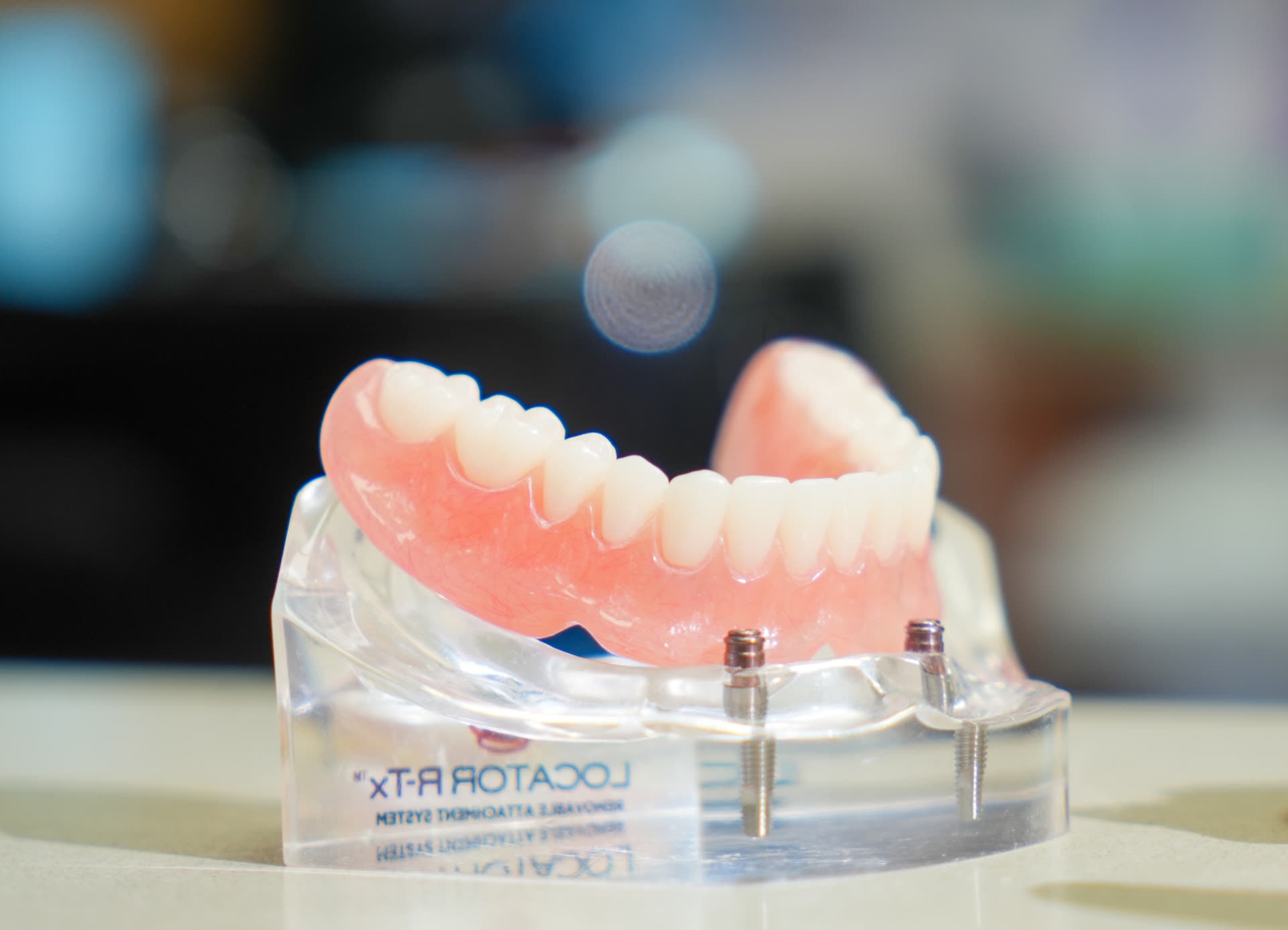
Implant-supported overdentures in NYC by Dr. John Shi. A denture that snaps firmly onto your own implants — removable for cleaning, but steady when you eat, laugh, and talk. And when you're ready, it can convert to a fixed overdenture on the same implants.

Implant-Supported Overdentures NYC | Centre Dental - A removable overdenture stabilized by implants — an option that can later be converted to a fixed overdenture

A loose lower denture runs your day.

Most people who come to us about overdentures aren't asking about locator attachments and torque values. They're tired of a bottom denture that lifts when they laugh, a mouth full of adhesive that still isn't enough, and avoiding the foods they used to love. If that's you — you're in the right place. Below is everything worth understanding before you decide, in plain language.

It won't stay down

A lower denture floats on a shrinking ridge — it lifts, clicks, and shifts at the worst moments, no matter how careful you are.

Adhesive isn't a fix

Paste and powder are a daily ritual that never quite holds, and you can taste it all afternoon. It manages the problem; it doesn't solve it.

The bone keeps shrinking

A denture that only rests on the gum doesn't stimulate the jaw, so the ridge underneath slowly resorbs — and the fit gets looser every year.
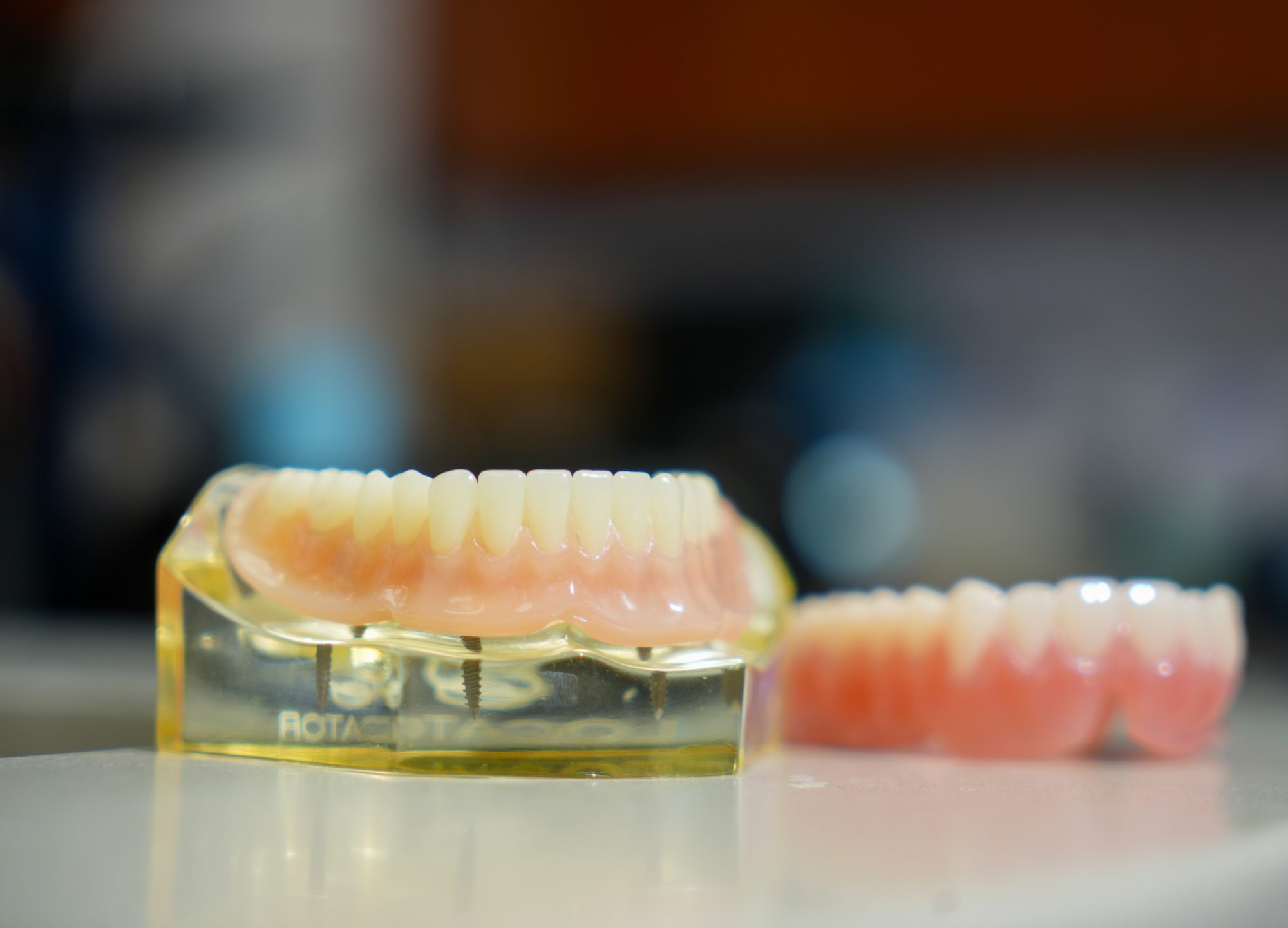
Implant-supported overdenture model retained on dental implants — Centre Dental NYC
How does an implant-supported overdenture help me?

A denture that clicks onto your own bone — and stays.

An implant-supported overdenture is a removable denture that snaps onto two or more dental implants placed in your jaw. Instead of floating on the gum, it's anchored to titanium posts your bone has grown onto — so it holds firm while you chew and speak, yet still lifts out for easy cleaning at night. Because the implants transmit bite force into the jaw the way natural roots did, they help slow the ridge resorption that keeps loosening a conventional denture. It's the highest-impact upgrade most long-term lower-denture wearers can make — and a more accessible entry point than a fully fixed full-arch reconstruction.

Schedule an overdenture consultation

Understand it fully

The clinical picture — from implant to attachment

At a glance

96.6%1
single-implant mandibular overdenture survival (mean 37 mo)
Standard of care2
2-implant lower overdenture (McGill Consensus)
No difference3
5-yr implant survival, single vs two-implant lower OD
45.1 → 25.74
OHIP quality-of-life score improved over 24 months

What an implant-supported overdenture actually is

An overdenture is a removable denture that draws its retention from something beneath it rather than resting only on the soft tissue. In an implant-supported (or implant-retained) overdenture, that something is two or more endosseous dental implants — titanium posts placed into the jaw that the surrounding alveolar bone grows onto through a process called osseointegration, first described by the Swedish physician Per-Ingvar Brånemark. Small connectors seat the denture onto the implants: most often locator (stud) attachments, or a bar splinting the implants together with clips inside the denture. The result sits squarely between two familiar options — a conventional full denture that rests only on the gum, and a fixed full-arch bridge that never comes out. It's placed and restored here by Dr. John Shi, using the process we call the Centre Method.

Who implant overdentures are for

Implant overdentures are an excellent choice for medically compromised patients, patients working within a budget, and patients with inadequate jawbone for a fully fixed reconstruction. They're especially valuable in the lower jaw, where a conventional denture has the least to hold onto and the most tendency to float. For someone who has struggled for years with a loose bottom denture and endless adhesive, adding as few as two implants to retain it is often the single highest-impact change available. There's strong professional backing for this: the landmark 2002 McGill Consensus concluded that a mandibular two-implant overdenture should be considered the first-choice standard of care for the edentulous lower jaw — not a compromise, but the recommended baseline. The honest read on your own candidacy comes from a 3D CBCT scan, not a guess.

Attachment systems — locators versus bars

How the denture connects to the implants shapes how it feels and how it's maintained. Locator (stud) attachments are individual snap connectors — a nylon insert inside the denture clicks onto a low-profile abutment on each implant; they're simple, low-profile, and easy to service, with the nylon inserts swapped periodically as they wear. A bar attachment splints the implants together with a custom bar, and clips in the denture grip it — this can improve load sharing and retention, at the cost of a little more room needed and more involved cleaning underneath. Neither is universally 'better': in comparative studies patient satisfaction between ball/stud and bar systems is similar, and preference splits roughly evenly. Dr. Shi matches the system to your bone, your implant spacing, your dexterity, and how much room the denture has — decided from your scan, not a default.

Stability, bite force, and bone preservation

A conventional denture rests entirely on the gum and the ridge beneath it, and because nothing loads that bone, it slowly resorbs — which is exactly why a denture that fit well a few years ago now lifts and rocks. Implant overdentures change the mechanics: the implants transmit chewing force into the jaw the way natural tooth roots once did, helping preserve bone at the implant sites and giving the denture a fixed anchor to snap onto. The functional payoff is measurable — a single mandibular implant alone has been shown to significantly improve chewing efficiency versus a conventional lower complete denture. You get a denture that stays put while you eat and speak, and still lifts out at night so the tissue can rest and the underside can be cleaned.

Convertible to a fixed overdenture later

One of the real advantages of starting with a removable implant overdenture is that it isn't a dead end. A removable overdenture can later be converted to a fixed overdenture — a non-removable restoration — once you're ready, clinically or financially, to take that step. The implants placed to retain the removable denture can carry that next stage, so the early investment carries forward rather than being discarded. This matters most for patients who need to stage care over time, or who want to start conservatively and upgrade later. Dr. Shi reviews whether your bone volume and implant positions will support a future conversion at the planning stage — so if a fixed All-on-X full-arch result is a goal down the road, the implants are placed with that path in mind from day one.

The planning technology behind precision

Every overdenture case at Centre Dental starts with a cone-beam CT (CBCT) scan — a 3D map of your bone volume, density, nerve position, and sinus anatomy that a flat X-ray simply can't provide. That data drives the plan for where each implant goes and how the attachments will seat, and where indicated a custom surgical guide is 3D-printed to channel each implant to its planned position, depth, and angle. You can read more about our imaging and guided-surgery technology. The scan also confirms whether you have enough bone for the number of implants planned, or whether a small graft is genuinely needed first — never as an upsell, only when the anatomy calls for it.

What the evidence shows — and honest maintenance

Implant overdentures are a well-documented, predictable treatment: implant survival supporting mandibular overdentures is high, and a recent 2025 meta-analysis of randomized trials found no difference in five-year implant survival between single- and two-implant mandibular overdentures — reassuring evidence that even conservative implant counts hold up. Quality-of-life gains are consistent too: two-implant bar-retained lower overdentures produced substantial, sustained improvement in patients' oral health–related quality of life over at least two years. The trade-off to know upfront is prosthetic maintenance — the attachment components are wear parts. Nylon locator inserts, O-rings, and clips are replaced periodically, denture bases are relined as the ridge changes, and fewer implants can mean slightly more prosthetic upkeep. We tell you this at the start so maintenance feels like routine care, not a surprise.

Sources: 1 · 2 · 3 · 4 · 5

Concerned about comfort, bone, or cost?

These are the questions a consultation answers directly. Dr. Shi reviews your 3D CBCT scan, evaluates your bone and candidacy, and outlines your options, treatment timeline, and estimated cost — including what your insurance may cover.

Schedule a consultation

Thinking about it

The questions we hear first

What is an implant-supported overdenture?

It's a removable denture that snaps onto two or more dental implants using locator attachments or a bar-and-clip system. The implants hold the denture firmly in place while you eat and speak, and you still remove it for cleaning. It sits between a conventional denture that rests only on the gum and a fixed full-arch bridge that isn't removable.

Who is a good candidate for an implant overdenture?

Implant overdentures are an excellent choice for medically compromised patients, patients working within a budget, and patients with inadequate jawbone for a fully fixed reconstruction — and they're especially valuable for a loose lower denture. Professional consensus supports them strongly: a two-implant lower overdenture is widely regarded as the standard of care for the edentulous mandible. The CBCT scan at your consultation confirms whether your bone supports the implants needed, and Dr. Shi reviews your medical history to confirm candidacy.

How is it different from my current denture, and from a fixed full-arch?

A conventional denture rests only on your gum and ridge, so it relies on suction and adhesive and tends to loosen as bone resorbs. An implant overdenture snaps onto implants, so it stays put while still lifting out for cleaning. A fixed All-on-X full-arch is a step further — permanently attached and never removed by you. The overdenture is the middle path: far more stable than a conventional denture, more accessible than a fixed arch, and convertible to fixed later.

Will it stop my denture from moving when I eat and talk?

That's the core benefit. Because the denture is anchored to implants rather than floating on the gum, it holds firm during chewing and speech instead of lifting or clicking. Research shows adding even a single mandibular implant significantly improves chewing efficiency compared to a conventional lower denture, and most patients tell us the difference in confidence — no more managing a denture mid-conversation — is what they notice first.

Can an overdenture be made permanent later?

Yes. A removable overdenture can be converted to a fixed overdenture once you're ready to move to a non-removable restoration. The implants placed to retain the removable version can support that conversion, so the earlier work carries forward rather than being replaced. Dr. Shi plans your implant positions with a possible future conversion in mind, so the path to a fixed result stays open.

How many implants will I need?

It depends on your jaw and your goals, and the number comes from your CBCT scan rather than a fixed formula. For a lower overdenture, two implants is the well-documented baseline, and a recent meta-analysis found no difference in five-year implant survival between single- and two-implant lower overdentures — though fewer implants can mean slightly more prosthetic maintenance. Upper overdentures often use more implants because the bone is softer. We walk you through the bone data before recommending a count.

Does it hurt, and how long does treatment take?

Implant placement is done under local anaesthesia, so you feel pressure and movement, not pain, and most patients find recovery milder than they expected. The overall timeline typically runs about three to six months: the implants need to osseointegrate with bone before the overdenture connects to them, and you're not left without a denture in the meantime. We map the exact schedule for your case at the consultation, including whether any grafting needs to happen first.

Can I afford it, and does insurance help?

Cost is the most common question we hear, so we're transparent about it — in person. At your consultation you'll leave with a written estimate for your specific case, a clear breakdown of what's included (implants, attachments, and the overdenture), and financing options. We'll also review what your insurance may contribute — some plans cover part of the denture or extractions even when they don't cover the implants themselves. You'll see the full picture in writing before you commit to anything.

The path

Your journey, start to finish

01

Consultation + 3D CBCT scan

A cone-beam CT scan maps your bone volume, density, and nerve position. Dr. Shi reviews your candidacy, whether two implants or more suits your jaw, the timeline, and a clear cost and insurance estimate.

02

Your plan — including a future fixed path, if you want one

A written treatment plan and timeline. Implant positions are planned so the overdenture seats well now and can convert to a fixed overdenture later. If bone is insufficient, we stage a small graft first — only when the scan genuinely shows it's needed.

03

Guided implant placement

The implants are placed under local anaesthesia, with a 3D-printed surgical guide where indicated to keep each one on its planned path. Placement is performed by Dr. Shi himself.

04

Osseointegration & connecting your overdenture

The implants fuse with bone over roughly three to six months. Then the attachments are fitted and your overdenture is adjusted to snap onto them — a denture that finally stays put, and still lifts out for easy cleaning at night.

Start here

Schedule your consultation

In a single visit, Dr. Shi reviews your 3D scan, assesses your candidacy for implant-supported overdentures, and provides a written treatment plan with cost and insurance details — so you can decide with all the facts.

Extensive full-arch reconstruction experience by Dr. Shi

3D-guided precision, placed by an experienced surgeon

Bilingual — English, Mandarin, Cantonese

Live clinic hours · 139 Centre St, Lower Manhattan, NYC