
Custom-fit oral appliances for snoring and mild-to-moderate obstructive sleep apnea

Sleep Apnea Oral Appliance NYC — Custom Mandibular Advancement Devices

You stop breathing dozens of times a night — and wake up exhausted without knowing why.

Custom oral appliance therapy for snoring and mild-to-moderate obstructive sleep apnea in NYC, coordinated with your sleep physician by Dr. John Shi. A quiet, wearable alternative when CPAP hasn't worked for you.

Sleep Apnea Oral Appliance NYC | Snoring Treatment | Centre Dental - Custom-fit oral appliances for snoring and mild-to-moderate obstructive sleep apnea

The snoring is the symptom everyone hears. The apnea is the part that's hurting you.

Most people who come to us aren't thinking about apnea-hypopnea scores and titration protocols. They're thinking about the elbow in the ribs at 3 a.m., the CPAP mask gathering dust in a drawer, and the fog that never quite lifts no matter how many hours they were in bed. If that's you — you're in the right place. Below is everything you'd want to understand before deciding, in plain language, without pretending a dental device is a cure-all it isn't.

You gave up on CPAP

The mask, the hose, the noise — you tried, honestly, and it's still in the closet. You're not alone, and you're not out of options.

You're tired no matter what

Eight hours in bed and still foggy, irritable, nodding off at your desk. Fragmented sleep doesn't feel like sleep.

Your partner isn't sleeping either

The snoring, the gasping, the moment they watch you stop breathing and wait for you to start again — it's their problem too.

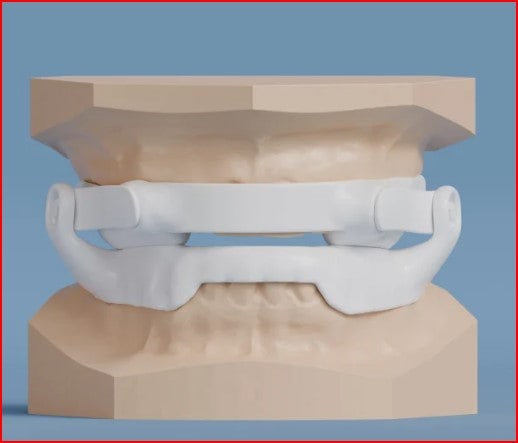
A custom sleep-apnea oral appliance in its case — Centre Dental NYC
How can an oral appliance help me?

A custom device that holds your airway open — the one you'll actually wear.

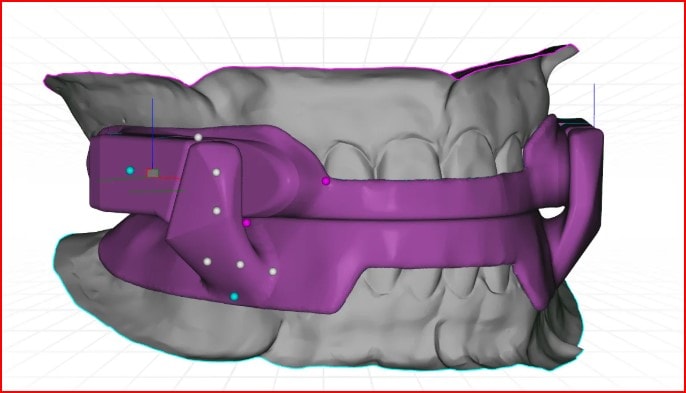
A mandibular advancement device is a two-piece, custom-fitted appliance that positions your lower jaw slightly forward during sleep, opening the airway behind the tongue so it doesn't collapse and block your breathing. It's silent, travels in a pocket, needs no power or hose, and — critically — it's the treatment patients keep using night after night. That last part matters more than it sounds: a treatment only works on the nights you wear it. For primary snoring and mild-to-moderate obstructive sleep apnea, and for people who genuinely can't tolerate CPAP, it's a recognized first- and second-line option we deliver, titrate, and verify against a real sleep test.

Schedule a sleep appliance consultation

Understand it fully

The clinical picture — from airway to appliance

At a glance

6.5 h/night1
mean oral-appliance adherence vs 5.2 h on CPAP
AHI 11.1 vs 4.51
MAD vs CPAP events/hour, similar 1-month health outcomes
−1.2 / −1.5 mm2
overbite / overjet change at 2 years — why we monitor the bite
HR 2.473
all-cause mortality in severe untreated OSA (HR 4.66 cardiovascular)

What obstructive sleep apnea actually is

Obstructive sleep apnea (OSA) is the repeated collapse of the upper airway during sleep. As the muscles of the pharynx relax, the soft palate, uvula, and the base of the tongue fall back and block airflow — sometimes partially (a hypopnea), sometimes completely (an apnea). Each event drops your blood-oxygen level and jolts your brain toward waking to reopen the airway, often without you ever remembering it. Snoring is the sound of that tissue vibrating as air forces past it; it's the audible warning sign, not the disease itself. The severity of OSA is measured by the apnea-hypopnea index (AHI) — the number of these events per hour of sleep — which is why a diagnosis has to come from a sleep study, not a guess. We treat the airway, not just the noise, and we do it alongside your sleep physician through the process we call the Centre Method.

When an oral appliance is the right tool — and when it isn't

Oral appliance therapy is recognized by the American Academy of Sleep Medicine as a first-line treatment for primary snoring and mild-to-moderate OSA, and as a second-line option for severe OSA in patients who cannot tolerate continuous positive airway pressure (CPAP). The honest framing matters: CPAP is more efficacious at lowering the AHI on average, especially in severe disease. An oral appliance is the right answer when your OSA is mild-to-moderate, when you snore without documented apnea, or when CPAP has genuinely failed despite real attempts to acclimate to it. It is not a replacement for CPAP in severe apnea that CPAP is successfully controlling. And it is never fitted for undiagnosed snoring treated as if it were apnea — a formal sleep study and a physician diagnosis always come first. If your evaluation points toward in-office sedation needs rather than sleep-disordered breathing, that's a different service entirely — see sleep dentistry.

Why the device you'll actually wear can outperform the more powerful one

There's a paradox at the heart of sleep-apnea treatment: the most effective device on paper isn't always the one that helps you most in real life, because effectiveness is efficacy multiplied by the nights you actually use it. In a randomized crossover trial published in the American Journal of Respiratory and Critical Care Medicine, CPAP reduced the AHI further than a mandibular advancement device (to 4.5 versus 11.1 events per hour), yet patients wore the oral appliance more — a mean of 6.5 hours per night versus 5.2 on CPAP — and important health outcomes after one month were similar between the two. That's the case for oral appliance therapy in a sentence: a good-enough opening you use all night can rival a better opening you abandon at 2 a.m. It's also why we don't oversell it — for the right severity of disease, adherence is the whole game.

How your appliance is designed and made

Everything starts with digital intraoral scans of your upper and lower arches — no gag-inducing impression trays and no goopy putty. A precise bite registration captures the exact protruded jaw position we're aiming for. The dental lab then fabricates a custom two-piece mandibular advancement device from durable thermoplastic that snaps over your teeth and connects so it holds the lower jaw forward while still allowing small side-to-side and opening movements, so it doesn't lock your jaw rigidly shut. Because it's built from a scan of your own dentition rather than a stock 'boil-and-bite' tray, it's thinner, retains a stable position all night, and is comfortable enough to wear consistently — which, as the adherence data shows, is the entire point.

Titration — dialing in the exact jaw position

A mandibular advancement device is not a one-and-done delivery. After you receive it, we titrate — making small, incremental forward adjustments, typically at about one-week intervals — until your snoring resolves and your morning symptoms clearly improve. Advance too little and the airway stays partly obstructed; advance too far, too fast, and you invite jaw soreness without added benefit. Most patients reach their therapeutic position within roughly four to six weeks. This slow, measured approach is deliberate: we're finding the smallest amount of advancement that fully opens your airway, because less protrusion means fewer long-term effects on your bite and better comfort over the years you'll wear it.

Verifying it works — because symptoms alone aren't proof

Feeling better is necessary but not sufficient in obstructive sleep apnea. Once your appliance is titrated, we coordinate with your sleep physician for a follow-up sleep test — a home sleep apnea test or an in-lab study — performed while you're wearing the device. The objective is a documented reduction in your apnea-hypopnea index, oxygen desaturation events, and arousals, not just a quieter bedroom. Without that measurement, we'd be guessing at whether your apnea is actually controlled, and untreated apnea carries real consequences. Patients with primary snoring and no documented apnea are reassessed differently — by symptom and bed-partner report at the four-week and three-month marks — because there's no apnea index to re-measure. This verify-or-it-doesn't-count standard is why we treat the appliance as medicine, not a gadget.

Side effects, bite changes, and honest long-term trade-offs

In the first weeks, expect a short adjustment period: morning jaw soreness, slight tooth tenderness, and extra salivation are common and usually settle within about two weeks of consistent use. The long-term consideration is genuine and we won't soft-pedal it — holding the jaw forward night after night can gradually move teeth and shift your bite. Controlled research measuring dental casts before and after treatment has documented small but real reductions in overbite and overjet over a two-year span, and cephalometric studies of patients wearing appliances for years show these tooth-position changes tend to be progressive over time. That's exactly why we monitor your occlusion at every six-month dental visit and act early: if your bite starts to shift, options include a morning repositioner to reset the jaw, reducing the advancement, or re-evaluating the therapy. These risks are real — and they're weighed against the cardiovascular and cognitive toll of untreated apnea, which is also real. If you also grind your teeth, a related but distinct appliance may be part of the picture; see night guard therapy for bruxism.

The bigger stakes — why treating apnea matters beyond the snoring

Untreated obstructive sleep apnea isn't merely a nuisance for your partner. It's an independent risk factor associated with hypertension, coronary artery disease, stroke, and increased mortality — the downstream result of nightly oxygen dips, surges in sympathetic nervous-system activity, inflammation, and endothelial stress. Cohort data show the mortality risk rises with apnea severity. That's the frame we bring to every consultation: an oral appliance is a comfortable, wearable device, but the reason we insist on a real diagnosis, careful titration, and objective re-testing is that we're managing a medical condition with a dental tool. Getting it right — and proving it's right — is what protects the health outcomes that actually matter. Routine bite and airway monitoring continues as part of your ongoing preventive dentistry visits.

Sources: 1 · 2 · 3 · 4

Concerned about comfort, bone, or cost?

These are the questions a consultation answers directly. Dr. Shi reviews your 3D CBCT scan, evaluates your bone and candidacy, and outlines your options, treatment timeline, and estimated cost — including what your insurance may cover.

Schedule a consultation

Thinking about it

The questions we hear first

Do I need a sleep study before getting an oral appliance?

Yes, if there's any suspicion of sleep apnea — which is most patients with a snoring complaint. A home or in-lab sleep study plus a physician diagnosis establishes whether you have primary snoring, mild-to-moderate OSA, or severe OSA, and each has a different first-line treatment. We won't fabricate an oral appliance for undiagnosed snoring treated as if it were apnea; that skips the step that tells us whether your airway is actually the problem and how severe it is.

How is an oral appliance different from a CPAP machine?

CPAP uses a mask and a pump to splint your airway open with a steady stream of pressurized air. An oral appliance is a small custom mouthpiece that holds your lower jaw forward so the airway behind your tongue doesn't collapse — no mask, no hose, no power, no noise. On average CPAP lowers the apnea-hypopnea index more, but many people can't tolerate it and stop using it. Because the device you actually wear every night is the one that helps, an oral appliance is often the better real-world choice for mild-to-moderate OSA and for CPAP-intolerant patients. We'll help you match the tool to your disease severity and what you'll realistically use.

How much does a sleep apnea oral appliance cost in NYC?

A custom mandibular advancement device is priced as a package that includes the appliance itself, the titration visits to dial in your jaw position, and follow-up. Over-the-counter 'boil-and-bite' devices are dramatically cheaper but don't hold a stable position and aren't a substitute for a custom-fit medical device. Because sleep apnea is a medical condition, this often runs through medical rather than dental benefits. You'll leave your consultation with a written estimate for your specific case, and we'll walk through your insurance and financing options together.

Does insurance cover oral appliance therapy?

Medical insurance — not dental — is usually the relevant coverage, and many plans do cover oral appliances for diagnosed OSA, particularly when CPAP has failed or been declined. Coverage generally requires the sleep study, physician documentation, and specific medical billing codes. Centre Dental provides all the required documentation, though reimbursement varies significantly by plan. We'll help you understand what your specific policy is likely to contribute before you commit — see insurance.

Will it move my teeth or change my bite?

It can, and we tell you that plainly. Holding the jaw forward each night can gradually shift tooth position and reduce overbite and overjet over years of use — controlled studies measuring dental models before and after treatment have documented small but real changes, and these tend to be progressive. That's why we titrate to the minimum effective advancement and check your occlusion at every six-month visit. If a shift begins, we have answers: a morning repositioner appliance to reset the bite, reducing the advancement, or re-evaluating therapy. The risk is real and is weighed candidly against the consequences of leaving apnea untreated.

How long until it actually works?

Delivery is just the start. Over roughly four to six weeks we make small weekly forward adjustments — titration — until your snoring resolves and your morning symptoms improve. Then, if you have documented apnea, we coordinate a follow-up sleep test while you wear the device to confirm your apnea-hypopnea index has actually dropped. So plan on about six to eight weeks from delivery to a fully titrated, verified result, and lifetime monitoring after that at your regular dental visits.

Can it cure my snoring?

Most patients with primary snoring see a substantial reduction or complete elimination of snoring once the appliance is properly titrated, usually confirmed by a bed-partner report at around four weeks. One caution we always raise: snoring isn't automatically harmless. Because loud snoring can be the audible sign of underlying apnea, we recommend a sleep study to rule out OSA before treating snoring as a purely cosmetic or social issue — quieting the sound without checking the airway can mask a medical problem.

I grind my teeth and snore — is that connected?

There's documented overlap between teeth grinding (bruxism) and obstructive sleep apnea; a meaningful share of patients have both. If you grind, snore, and wake unrefreshed, we'll recommend a sleep study to evaluate for OSA rather than treating the grinding in isolation. The devices are different — a night guard protects teeth from grinding forces, while a mandibular advancement device opens the airway — and treating the apnea sometimes reduces the grinding. Sorting out which problem is driving which is exactly what the evaluation is for.

The path

Your journey, start to finish

01

Consultation + sleep diagnosis review

We start by reviewing your sleep study and physician diagnosis — primary snoring, mild-to-moderate OSA, or severe OSA — because each points to a different first-line treatment. If you haven't had a sleep study, we coordinate one with a sleep physician before anything is made. You'll also get a clear written cost and insurance estimate.

02

Digital scans + custom fabrication

Digital intraoral scans replace messy impressions, and a precise bite registration captures your target jaw position. The lab builds a custom two-piece mandibular advancement device sized to your own teeth — thinner and more stable than any over-the-counter tray.

03

Delivery + titration

Dr. Shi fits the appliance, then titrates it with small weekly forward adjustments over four to six weeks until snoring resolves and morning symptoms improve — finding the smallest advancement that fully opens your airway.

04

Objective verification + ongoing monitoring

For diagnosed apnea, we coordinate a follow-up sleep test worn with the device to confirm your apnea-hypopnea index has dropped. Then we monitor your bite and airway at every six-month visit for the life of the appliance — because this is a medical condition, not a one-time fitting.

Start here

Schedule your consultation

In a single visit, Dr. Shi reviews your 3D scan, assesses your candidacy for snoring & sleep apnea, and provides a written treatment plan with cost and insurance details — so you can decide with all the facts.

Extensive full-arch reconstruction experience by Dr. Shi

3D-guided precision, placed by an experienced surgeon

Bilingual — English, Mandarin, Cantonese

Live clinic hours · 139 Centre St, Lower Manhattan, NYC