

Precise nerve mapping before every surgical extraction. Minimal recovery protocols.

Wisdom Teeth Removal NYC — 3D Imaging & Comfortable Care

Every surgical case here begins with a CBCT scan that maps the roots and the nerve — before any decision is made.
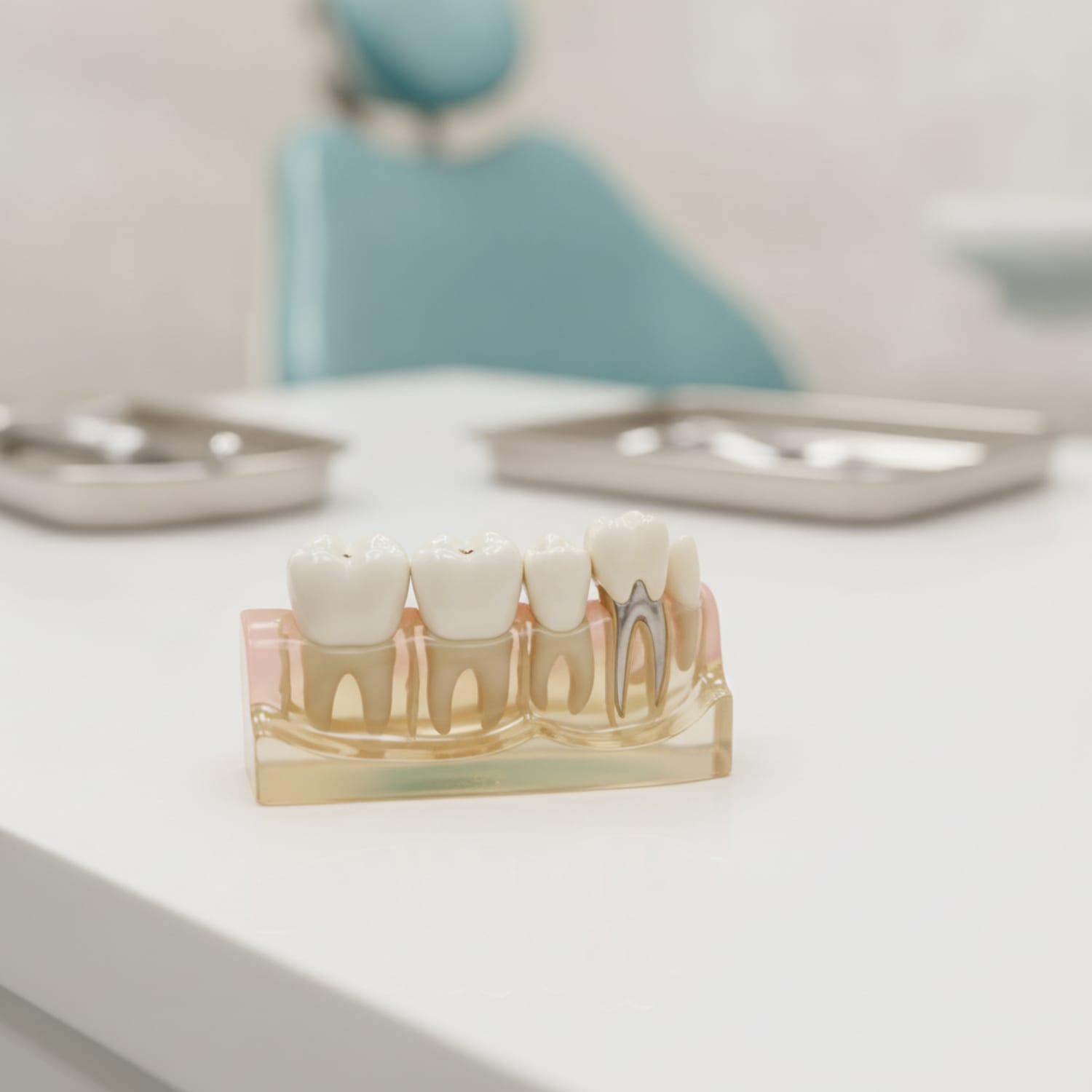
Wisdom teeth removal in NYC by Dr. John Shi — planned from a 3D CBCT scan that maps root anatomy and nerve position before treatment is recommended, so the surgery is measured rather than improvised.

Wisdom Teeth Removal NYC | 3D Imaging | Centre Dental - Precise nerve mapping before every surgical extraction. Minimal recovery protocols.

The presentations that bring patients in

Few patients arrive asking about impaction angles or nerve anatomy. They arrive with recurring soreness behind the last molar, a gum flap that repeatedly becomes inflamed, or a prior recommendation to extract that was never explained against an X-ray. Not every third molar requires removal; the clinical indications are specific, and the imaging determines them. The sections below set out when removal is indicated, when monitoring is the sounder choice, and how the procedure is performed.

Recurring soreness behind the last molar

A deep, intermittent ache that flares and settles — frequently associated with a partially erupted or impacted third molar.

Recurrent pericoronitis

A partially erupted tooth leaves a gum flap that traps food and debris; the resulting inflammation (pericoronitis) is painful and characteristically recurs until the cause is addressed.

A recommendation without an explanation

Extraction is sometimes advised as a blanket policy. The defensible indications are specific — recurrent infection, decay, cyst formation, or damage to the adjacent molar — and each is visible on imaging.
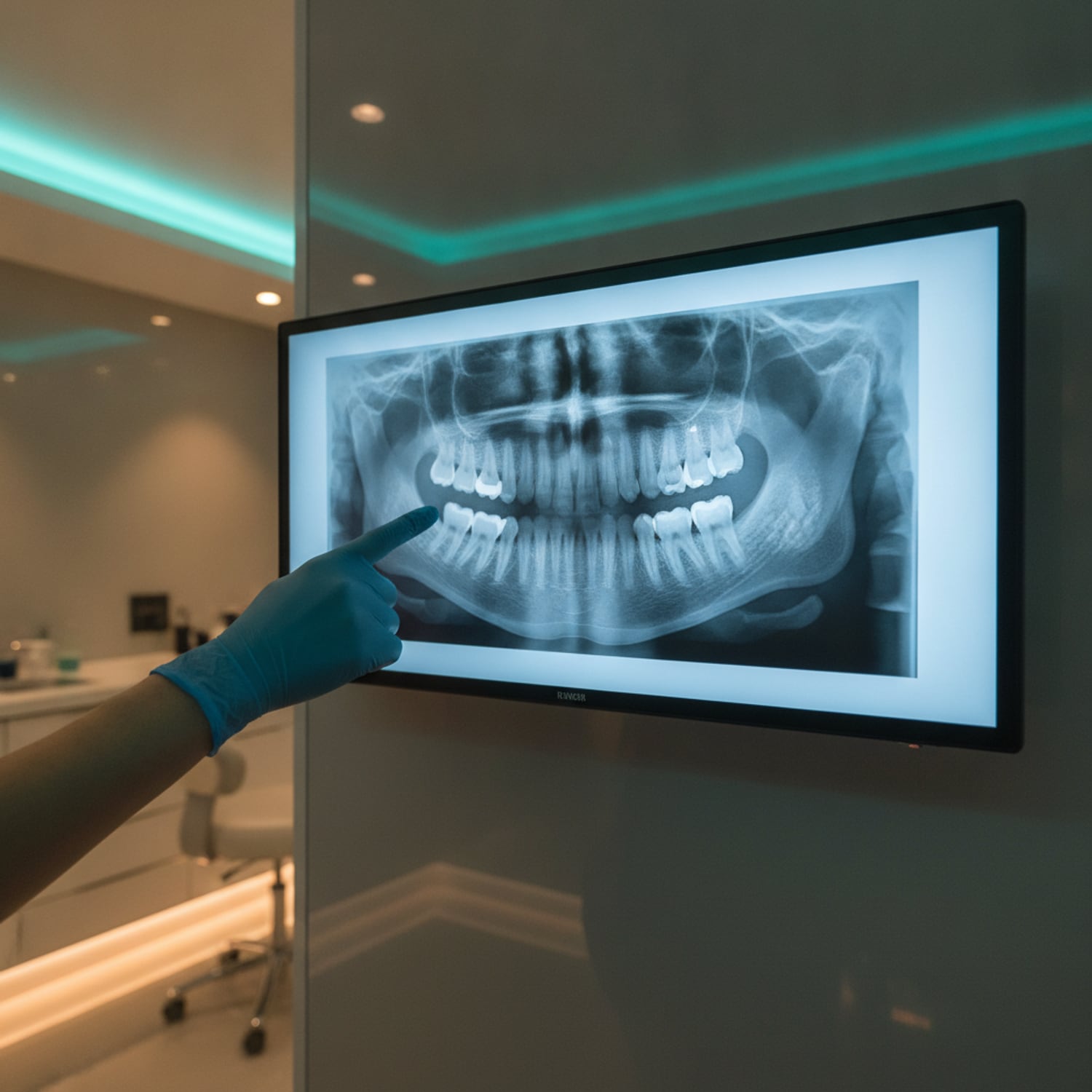
Panoramic dental X-ray showing the wisdom-tooth regions reviewed before removal — Centre Dental NYC
How does removing a wisdom tooth actually help?

It ends a recurring problem before it damages the tooth in front of it.

A third molar that's impacted or only partly erupted is hard to clean and prone to repeated infection, decay, and cyst formation — and it can quietly damage the healthy second molar beside it. Removing it, when there's a genuine clinical reason, stops that cycle. At Centre Dental the decision starts with a 3D scan, not a blanket policy: a well-positioned, cleanable wisdom tooth that isn't causing harm can often simply be watched. When extraction is the right call, mapping the roots and the inferior alveolar nerve in three dimensions first is what keeps the procedure predictable.

Book a wisdom teeth consultation

Understand it fully

The clinical picture — from impaction to healed socket

At a glance

13.2% vs 3.8%1
dry socket incidence — smokers vs non-smokers
>3x1
higher dry socket odds in smokers
7,115 teeth2
in the meta-analysis showing coronectomy lowers nerve-injury risk
What a wisdom tooth is — and why yours may be impacted

Wisdom teeth are the third molars, the last teeth to develop, usually emerging between 17 and 25. They're evolutionary leftovers from a larger ancestral jaw, and because modern jaws are often smaller, there frequently isn't room for them. When a tooth can't fully erupt into position, it becomes impacted — trapped partially or fully beneath gum and bone, sometimes angled forward against the second molar (mesioangular), sometimes horizontal, sometimes vertical. The angle and depth of that impaction largely determine how straightforward or involved the extraction will be, which is exactly what imaging is there to reveal before treatment is planned.

When to remove — and when it's smarter to watch

Not every wisdom tooth needs to come out, and we won't tell you it does. The genuine clinical reasons to remove one are specific: recurrent pericoronitis (repeated infection of the gum flap over a partly erupted tooth), decay on the tooth or on the adjacent second molar, a cyst forming around an unerupted crown, or damage and crowding pressure on neighbouring teeth. A wisdom tooth that is fully erupted, correctly positioned, cleanable with normal brushing, and causing none of those problems can reasonably be monitored over time. When there is a clinical indication, the late teens to early twenties is generally the easiest window — roots are often not yet fully formed, the bone is less dense, and healing tends to be faster. If a removal is recommended, it's fair to ask which specific indication applies to your case — and we'll show you on the scan.

CBCT 3D imaging: mapping the nerve before we begin

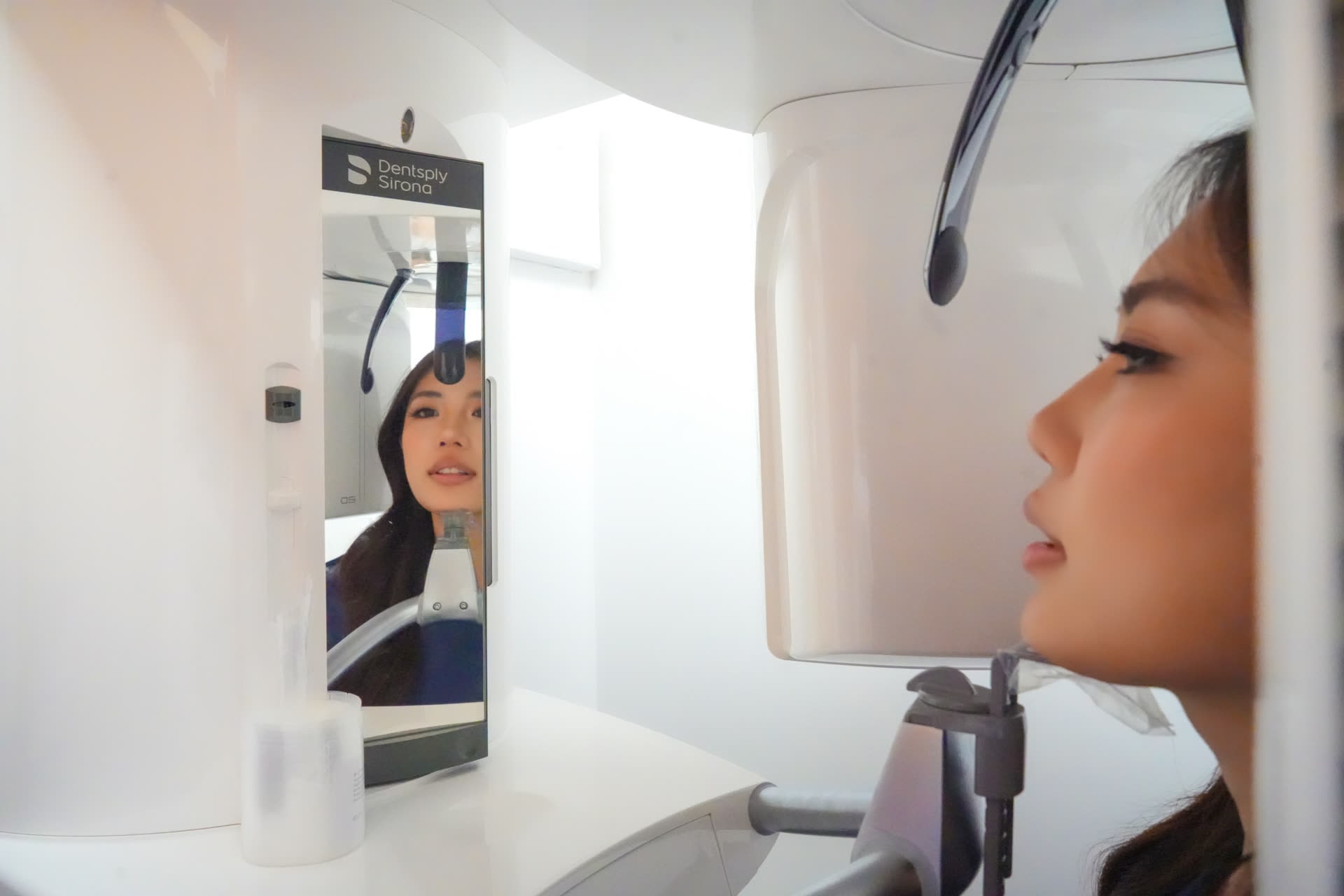
Every surgical wisdom tooth case at Centre Dental begins with a cone-beam CT (CBCT) scan — a three-dimensional map that a flat X-ray simply can't provide. The structure it matters most for is the inferior alveolar nerve, which runs through the lower jaw and governs sensation to your lower lip and chin; nearby runs the lingual nerve, which supplies the tongue. Seeing exactly where a root sits relative to that nerve canal in 3D is what lets Dr. Shi plan the approach rather than guess at it. You can read more about our imaging and guided technology. Where a lower root is genuinely wrapped around the nerve, this planning also flags when a nerve-sparing technique should be considered rather than a full extraction.

How the extraction is actually done

The technique follows the tooth. A fully erupted wisdom tooth is often a simple extraction under local anaesthesia — the tooth is loosened and lifted. An impacted tooth needs a surgical approach: a small incision to expose it, sometimes conservative removal of overlying bone, and often sectioning the tooth into pieces so each comes out along a controlled path with less force. Sectioning sounds dramatic but usually makes the procedure gentler on the surrounding bone and nerve. According to PubMed, a 2022 systematic review found local anaesthesia is generally preferable to general anaesthesia for lower third molar surgery on a risk-benefit basis, with several studies reporting lower nerve-injury incidence under local (Costantinides et al., Dental and Medical Problems 2022). Nitrous oxide is available here for anxious patients — and if dental anxiety is the real barrier for you, our dental anxiety care is built around exactly that.

Coronectomy: when leaving the roots is the safer choice

When a lower wisdom tooth's roots are intimately involved with the inferior alveolar nerve, taking the whole tooth out can put that nerve at real risk. Coronectomy — deliberately removing the crown of the tooth while leaving the deepest roots undisturbed away from the nerve — is an evidence-backed alternative in these specific high-risk cases. According to PubMed, a 2025 systematic review and meta-analysis of 7,115 wisdom teeth found coronectomy substantially lowered the risk of inferior alveolar nerve injury and lingual nerve injury compared with full extraction, at the cost of a small chance of later needing a second procedure if a retained root migrates (Kang et al., J Oral Maxillofac Surg 2025). It isn't for every case — but where the scan shows the nerve is in the line of fire, it's a genuinely gentler option we'll discuss with you.

Recovery, day by day — the part most offices skip

Here's the recovery reality patients are rarely told: Day 3 is often the worst, not Day 1. Swelling typically peaks around 48 hours and starts easing by Day 4 or 5, and most people manage desk work or school within two to three days. Discomfort is usually moderate and controlled well with ibuprofen. Protecting the blood clot that forms in the socket is the single most important thing you do: no straws, no smoking, no vigorous rinsing for the first day, and gentle care of the site. Cold packs in roughly 20-minute intervals for the first 24 hours help with swelling; soft foods for the first two to three days protect the socket. We include a 7-day follow-up to confirm healing, and you can reach us by phone before then if anything worries you.

Dry socket — the complication worth understanding

The complication patients fear most is dry socket (alveolar osteitis): the protective blood clot dislodges or breaks down before the socket heals, exposing bone and causing a distinct, worsening ache that typically begins two to four days after surgery. The clue is a pain that gets worse after Day 2 instead of steadily better — if that happens, call us rather than waiting. Smoking is the biggest modifiable risk. According to PubMed, a 2022 systematic review found tobacco smokers had more than triple the odds of dry socket, with a combined incidence of about 13.2% in smokers versus 3.8% in non-smokers (Kuśnierek et al., Dentistry Journal 2022). Oestrogen matters too: a meta-analysis found oral-contraceptive use raised dry-socket risk by roughly 80% (Xu et al., Int J Oral Maxillofac Surg 2015). Prevention is largely in your hands — no straws for five days, no smoking for at least 72 hours, and no forceful rinsing early on.

After healing — and whether the gap needs filling

A wisdom tooth socket closes over in the weeks after surgery, and most people stop noticing the site within a couple of weeks. Because a third molar sits at the very back of the arch, its space usually doesn't need to be replaced the way a missing front or middle tooth would. If, however, you've lost a more forward tooth to decay or a fractured wisdom tooth that took the neighbour with it, that's a different conversation — one where a dental implant restores the chewing tooth without disturbing the healthy teeth around it. And if grinding at night is part of why your back teeth are stressed, a custom night guard protects what you've kept.

Sources: 1 · 2 · 3 · 4

Concerned about comfort, bone, or cost?

These are the questions a consultation answers directly. Dr. Shi reviews your 3D CBCT scan, evaluates your bone and candidacy, and outlines your options, treatment timeline, and estimated cost — including what your insurance may cover.

Schedule a consultation

Thinking about it

The questions we hear first

Do I actually need my wisdom teeth out?

Not necessarily. Removal is warranted when there's a specific clinical reason: impaction causing recurrent infection (pericoronitis), decay on the wisdom tooth or the second molar beside it, cyst formation around an unerupted crown, or documented damage to adjacent teeth. A wisdom tooth that's fully erupted, well-positioned, cleanable, and causing none of those problems can reasonably be watched instead of removed. When there is a reason to remove one, the late teens to early twenties is generally the easiest window for healing. If removal is recommended, ask which indication applies to you — and ask to see it on the 3D scan.

Does wisdom tooth removal hurt?

During the procedure, no — it's done under local anaesthesia, so you feel pressure and movement but not sharp pain, and nitrous oxide is available if you're anxious. Afterward, expect moderate, manageable soreness that most patients control with over-the-counter ibuprofen. The part that surprises people: Day 3 is usually the most uncomfortable, not Day 1, and swelling peaks around 48 hours before improving. If your pain worsens after Day 2 rather than settling, that can signal dry socket — call us.

What is dry socket, and how do I avoid it?

Dry socket (alveolar osteitis) is when the blood clot protecting the healing socket dislodges too early, exposing bone and causing a distinct ache that starts two to four days after surgery. According to PubMed, smokers face more than triple the odds — roughly 13.2% incidence in smokers versus 3.8% in non-smokers (Kuśnierek et al., Dentistry Journal 2022). Prevention is mostly behavioural: no straws for five days, no smoking for at least 72 hours, no vigorous rinsing for the first 24 hours, and gentle care of the area. If you develop worsening rather than improving pain after Day 2, contact us promptly — dry socket is very treatable once we see it.

Why do you take a 3D CBCT scan first?

Because a flat 2D X-ray can't reliably show how close a lower wisdom tooth root sits to the inferior alveolar nerve — the nerve that supplies feeling to your lower lip and chin. A cone-beam CT scan maps that relationship in three dimensions, so Dr. Shi can plan the safest approach before making a single incision, and can flag when a nerve-sparing technique like coronectomy should be considered instead of a full extraction. For impacted lower molars, 3D imaging before surgery is considered standard of care precisely because it lets us work around the nerve rather than toward it. You can read more about our imaging technology.

What if a root is wrapped around the nerve?

That's exactly the situation where we consider a coronectomy — removing the crown of the tooth while intentionally leaving the deepest roots undisturbed, away from the nerve. According to PubMed, a 2025 meta-analysis of over 7,000 wisdom teeth found this approach markedly lowered the risk of nerve injury compared with full extraction, with the main trade-off being a small chance of needing a follow-up procedure if a retained root later migrates (Kang et al., J Oral Maxillofac Surg 2025). We only recommend it when the scan shows the nerve is genuinely at risk — and we'll walk you through why, using your own images.

How long does recovery take, and what can I eat?

Most patients feel well enough for desk work or school within two to three days. Swelling peaks around 48 hours and usually settles by Day 5 to 7; avoid strenuous exercise for five to seven days, since it can raise the risk of dislodging the clot. For the first day or two, stick to soft foods that need little chewing — yogurt, scrambled eggs, mashed potatoes, room-temperature soup. Smoothies are fine, but eat them with a spoon: no straws for the first five days, because the suction can pull the clot out and trigger dry socket. Reintroduce normal foods gradually, usually by Day 4 or 5, chewing on the opposite side while the socket settles.

Can all four be removed in one visit?

Often, yes — and for four impacted teeth, a single session with one recovery period is frequently preferable to four separate ones. Nitrous oxide is available if you'd like relaxation support. If one or two teeth are particularly complex or deeply impacted, Dr. Shi may recommend staging the extractions instead — a judgement made from your scan. The goal is the least disruptive path overall, which for many patients is one anaesthetic and one week of healing rather than several.

How much does wisdom tooth removal cost, and does insurance help?

Cost depends on whether the extraction is simple or surgical, the degree of impaction, and how many teeth are removed in one visit — a deeply impacted tooth requiring sectioning is more involved than a simple removal. We don't quote prices online because your case is specific to your anatomy; instead, you'll leave your consultation with a written estimate. Many dental plans with surgical benefits cover a portion of impacted extractions, and we verify your insurance benefits and review financing before anything is scheduled, so there are no surprises.

The path

Your journey, start to finish

01

Consultation + 3D CBCT scan

Dr. Shi reviews your symptoms and takes a cone-beam CT scan that maps each wisdom tooth's roots and their proximity to the nerve. You'll see the images and get an honest read on whether extraction is genuinely needed or whether watching is wiser.

02

Your plan and a written estimate

If removal is the right call, you get a clear plan — which teeth, simple or surgical, sedation options — plus a written cost and insurance estimate. If a root is wrapped around the nerve, this is where we'd discuss a nerve-sparing coronectomy.

03

The extraction

Performed by Dr. Shi under local anaesthesia, with nitrous oxide available if you're anxious. Impacted teeth are approached surgically and often sectioned for a gentler removal. You leave with a care kit and clear written aftercare.

04

Healing and your 7-day check

Swelling peaks around 48 hours and eases by Day 4 or 5; protect the clot and stick to soft foods early. We see you at a 7-day follow-up to confirm healing, and you can reach us by phone before then if anything concerns you.

Explore the Cluster

Explore the full Emergency Dental

See all

Start here

Schedule your consultation

In a single visit, Dr. Shi reviews your 3D scan, assesses your candidacy for wisdom teeth removal, and provides a written treatment plan with cost and insurance details — so you can decide with all the facts.

Extensive full-arch reconstruction experience by Dr. Shi

3D-guided precision, placed by an experienced surgeon

Bilingual — English, Mandarin, Cantonese

Live clinic hours · 139 Centre St, Lower Manhattan, NYC