

Root canal treatment in Chinatown, Lower Manhattan
The pain you're braced for is usually the infection — not the appointment that ends it.
- 97%
- 10-year tooth survival after root canal
- ~30%
- drop in patient anxiety after treatment
- 4.9 ★
- 226 Google reviews
The presenting symptoms — and what they mean
Persistent, escalating pain
A throbbing ache, sensitivity that lingers after hot or cold stimulus, or sharp pain on biting — the classic presentation of inflamed or infected dental pulp.
Anticipatory anxiety
The procedure's historical reputation causes more distress than the treatment itself. Under modern anesthesia, most patients report the experience is comparable to receiving a filling.
The alternative is losing the tooth
Untreated pulp infection progresses to abscess and, eventually, extraction. Root canal therapy exists to prevent that outcome — a retained natural tooth preserves bite function and the supporting bone.
It removes the infection and saves the tooth — in one or two comfortable visits.
Understand it fully
The clinical picture — from infected pulp to sealed, saved tooth
At a glance
- 97%1
- 10-year tooth survival after root canal
- ~30%2
- drop in patient anxiety after treatment
What's actually causing the pain in your tooth
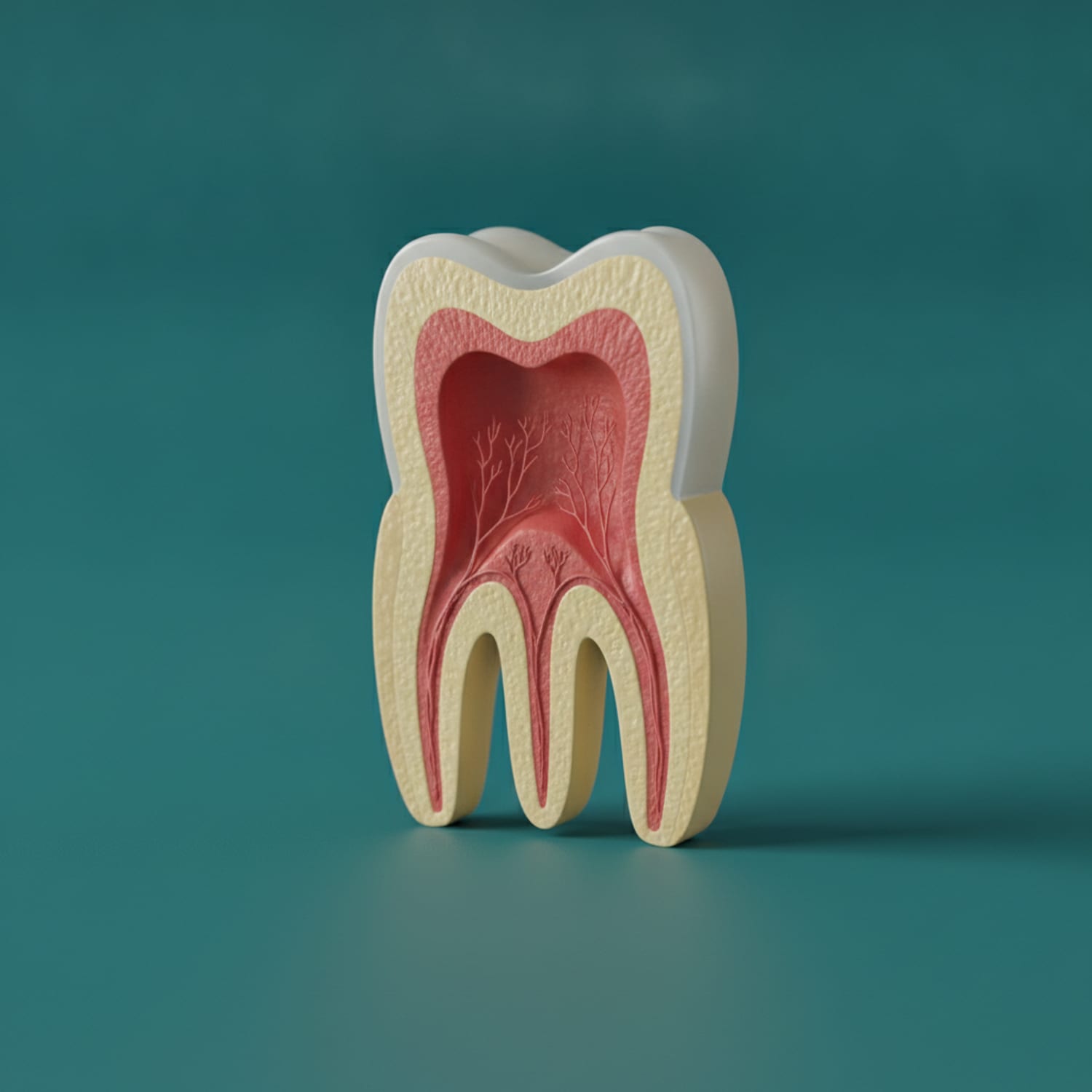
Every tooth has a hard outer shell of enamel and dentin, and a soft core called the dental pulp) — a bundle of nerves, blood vessels, and connective tissue that runs from the pulp chamber down through the root canals.
When deep decay, a crack, or repeated dental work lets bacteria reach that core, the pulp becomes inflamed. That's pulpitis, and it's what produces the throbbing pain and the hot-and-cold sensitivity that lingers well after the drink is gone.
Left alone, the pulp dies. The infection spreads to the bone at the root tip, and you get apical periodontitis — swelling, sometimes a small pimple-like bump on the gum, sometimes an abscess.
So the pain isn't coming from the outside of your tooth. It's coming from the inside. That's the part a root canal treats.
What a root canal actually treats — the pulp, not the whole tooth
Root canal treatment is a branch of dentistry called endodontics. All it removes is that diseased inner tissue.
The visible tooth you chew with stays put. Nothing is pulled and nothing is replaced. The hollow canals are cleaned, disinfected, and sealed so bacteria can't get back in.
That's the whole idea — treat the infection at the source and keep the natural tooth. We treat and restore it here, in one place, as part of the Centre Method.
If a dentist has told you that you need one, this is a tooth-saving procedure. It isn't a step toward losing the tooth.
Why the procedure has the reputation it does
The dread most people carry into this appointment is inherited from a pre-modern era — before profound local anesthesia, before flexible rotary instruments.
Here's the part that gets mixed up. The pain you remember as "root canal pain" was almost always the infection that drove you to the appointment in the first place. The treatment is what relieves it.
Measured before and after treatment, patient anxiety drops by roughly 30% (Khan et al., J Endod 2016) — not because anything was hidden, but because the experience turned out to be less threatening than people had been told to expect.
We'd rather set that expectation now than have you sit in the chair braced for something that isn't coming.
Does a root canal hurt?
For the large majority of patients, no — not the procedure itself.
Treatment begins with profound local anesthesia. Acutely infected teeth can resist a standard nerve block, so we use supplemental techniques — intraligamentary or intraosseous injections — to reach reliable numbness in nearly all cases.
Once the tooth is numb, what you feel is pressure and vibration rather than pain. Most patients tell us it felt like having a filling.
Afterward, mild soreness for two to four days is normal, and over-the-counter ibuprofen manages it for most people.
If dental visits make you anxious, say so when you book. Nitrous oxide is available, and there's more we can do about it than most people expect — see dental anxiety.

How the tooth is isolated and cleaned
After anesthesia, the tooth is isolated with a rubber dam — a thin sheet that keeps the tooth dry and stops bacteria-laden saliva from re-contaminating the canals. It has long been considered standard of care, and we don't skip it.
Dr. Shi then makes a small access opening and removes the infected pulp.
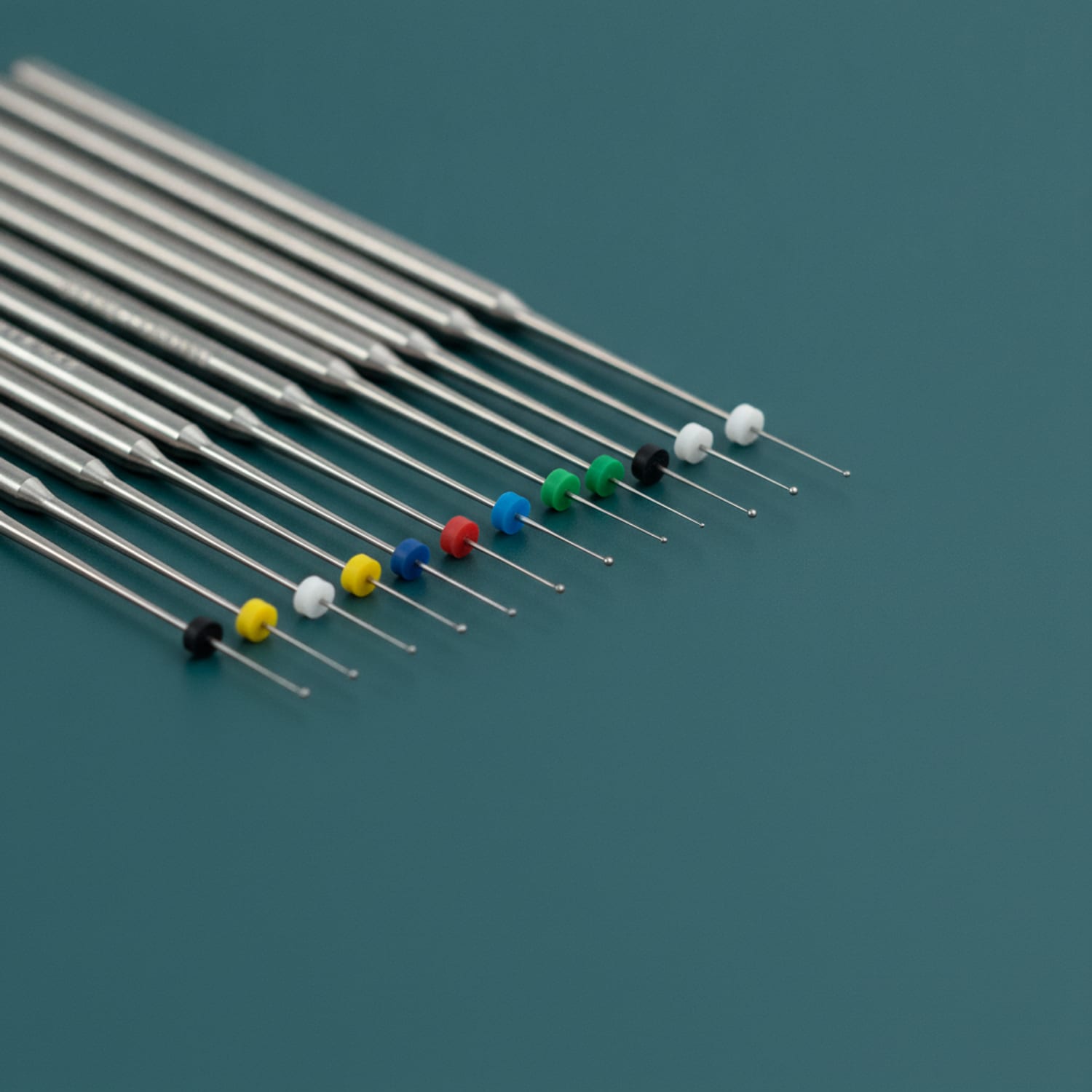
The canals are shaped with fine, flexible nickel-titanium rotary files, and their length is confirmed with an electronic apex locator rather than guesswork.
Throughout, the canals are irrigated — most often with sodium hypochlorite, the disinfectant chemistry that dissolves tissue and kills bacteria deep in the canal system.
How the canals get sealed — and whether you'll need a second visit
Once the canals are clean and shaped, they're filled and sealed with gutta-percha, a rubber-like material, plus a sealer. Nothing can re-enter.
Straightforward front teeth are often finished in a single visit. Complex molars with multiple canals may take two.
Each appointment runs roughly 60 to 90 minutes.
If your tooth is a two-visit tooth, we'd rather say so at the start than rush the disinfection to save you a trip.
When your tooth needs a 3D scan before we start
Not every root canal needs advanced imaging. Complex anatomy does.
A conventional 2D X-ray flattens a three-dimensional root system into a single plane, which can hide an extra canal or a curved root. A molar can carry three or four canals, sometimes with curves a flat film simply doesn't show.
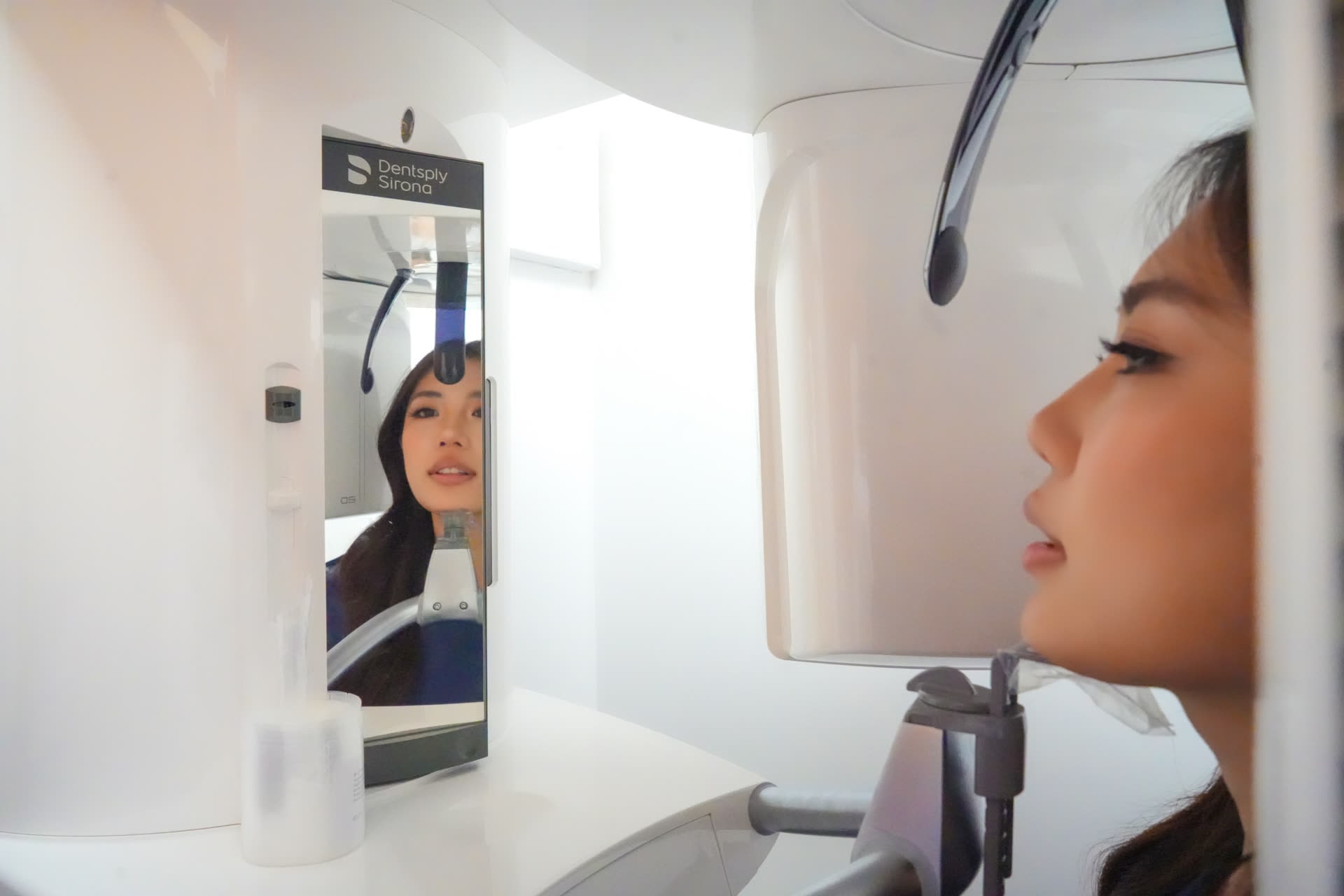
When your tooth's anatomy warrants it, we use cone-beam CT (CBCT) — a true 3D scan that reveals the number, shape, and curvature of the canals, and the extent of any infection at the root tip, before we begin.
That planning is the difference between finding every canal and missing one.
Your next step
Wondering if root canal treatment is right for you?
A free consultation includes an exam and a written plan — no pressure, no upsell.
Where the Solea laser fits in
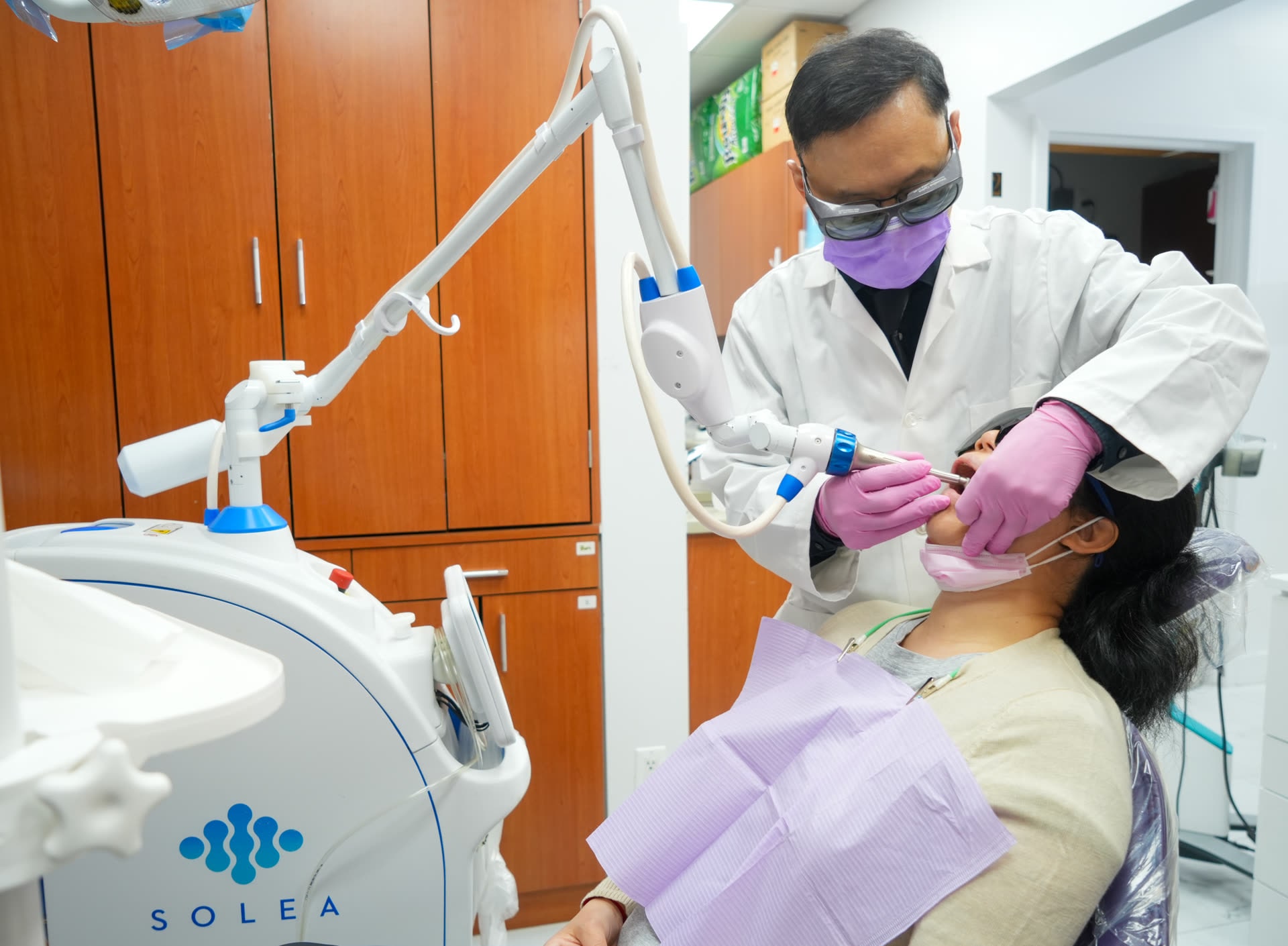
For appropriate cases we also offer the Solea laser as an adjunct — an erbium-family dental laser that can assist with disinfecting the canal system and reduce discomfort.
Adjunct is the honest word for it. An addition to careful work, not a replacement for it.
Neither the laser nor the 3D scan performs the treatment. What they do is make precise work more predictable — a smaller claim than dental technology usually gets sold with, and a truer one.
Is saving this tooth actually the right call?
It's the question patients rarely ask but should. In most cases, yes.
A root canal followed by a crown preserves your natural tooth roots. Those roots keep the surrounding bone stimulated and prevent the resorption that follows an extraction — the same bone loss that makes future dental implants more complicated.
Natural teeth also transmit bite forces in a way an implant approximates but never fully replicates.
So the default leans toward keeping the tooth. Not always, though.
When pulling the tooth is the honest answer
Extraction becomes the better path when a tooth is genuinely non-restorable — a vertical root fracture, too little sound structure left to hold a crown, or bone loss too advanced to justify treatment.
That's a clinical judgment Dr. Shi makes from the exam and the imaging together, never a default in either direction.
If extraction truly is the answer, we'll tell you plainly and walk through replacement options. We'd rather say it at the consultation than start a treatment that won't hold.
And if you're in acute pain or swelling right now, that's emergency care — call us instead of waiting for a consultation slot.
97%
How long does a root-canal-treated tooth last?
Often decades. This is one area of dentistry with genuinely long follow-up data behind it.
A retrospective study following 598 treated teeth reported cumulative survival of 97% at 10 years, 81% at 20 years, and 68% at 37 years (López-Valverde et al., Clin Oral Investig 2023).
Put in human terms: a tooth treated in your thirties and still working 37 years later carries you into your late sixties chewing on your own tooth.
Those are population numbers, not a promise about your tooth. What they do tell you is that a well-treated, well-restored tooth is a long-term asset rather than a patch.
What decides whether a treated tooth lasts
That same study identified the factors that most influenced whether a treated tooth was eventually lost: deep periodontal pockets, a pre-existing infection at the root tip, and — notably — the absence of a night guard in patients who grind.
So the outcome isn't only about the procedure. The quality of the final restoration and your ongoing care matter just as much.
Which is why we screen for grinding as part of the plan rather than after something cracks. If you grind, a night guard belongs in the plan from the start.
Same with the gums. Deep pockets around a treated tooth shorten its life whatever we did inside it, so that gets addressed too.
Why the crown afterward isn't optional
A root-canal-treated tooth has had its inner core hollowed out and an access hole cut through its biting surface. That leaves it more brittle and prone to fracture under normal chewing forces.
Fracture is the most common way a treated tooth is eventually lost. So for most back teeth a crown is part of the treatment plan rather than an add-on — it rebuilds the tooth's shape and armors it against cracking.
With our CEREC workflow that crown can often be milled and placed the same day, so you leave protected rather than walking around on a temporary.
Front teeth that haven't been heavily restored can sometimes be finished with a bonded filling and a post instead, depending on how much sound tooth remains. Dr. Shi recommends the restoration that gives the tooth the best chance of lasting the decades the survival data describes.
Asking your questions in your own language
Centre Dental sits in Lower Manhattan, steps from Chinatown. A large share of our patients would rather discuss a painful, anxiety-provoking procedure in Mandarin or Cantonese than in English.
Care here is delivered in English and 中文 — from the first phone call through consent, treatment, and aftercare instructions. Nothing about your diagnosis or your options gets lost in translation.
Dental fear thrives on uncertainty. Being able to ask every question in your own language, and get a straight answer, is part of how we lower it.
Booking a root canal in Chinatown
Your first appointment is an exam and a digital X-ray — plus a 3D CBCT scan when the canal anatomy calls for it — so we can confirm the pulp is truly involved before anything else happens.
You'll leave knowing what's going on in that tooth, whether it can be saved, and what it will cost. You get a written estimate, and we check what your insurance contributes before you commit to anything.
If you'd like to know who's treating you first, you can read about Dr. John Shi.
Most root canals are done in one to two visits. The sooner the infected pulp comes out, the less there is to manage.
Related at Centre Dental
What patients say
Reviewed, on Google
I came for an emergency root canal treatment and I did not regret choosing this place. It was quick and painless. Plus, everyone was very quite friendly.
I recently had a dental cleaning at Centre Dental, and I had a wonderful experience. The staff was friendly, professional, and welcoming. The cleaning was very thorough yet gentle, and everything was explained clearly th…
A skillful Dentist who goes the Extra Miles I have been flying to NYC from Florida multiple times to this dental office. Dr. Shi has been working on my upper full mouth teeth transplant for over half a year. So far I ha…
Concerned about comfort, bone, or cost?
These are the questions a consultation answers directly. Dr. Shi reviews your 3D CBCT scan, evaluates your bone and candidacy, and outlines your options, treatment timeline, and estimated cost — including what your insurance may cover.
Thinking about it
The questions we hear first
Does a root canal actually hurt?
How long does a root-canal-treated tooth last?
Is a root canal better than just pulling the tooth?
How many visits does a root canal take, and how long is each?
Do I really need a crown after a root canal?
What are the signs I might need a root canal?
How much does a root canal cost in NYC?
What's recovery like, and are antibiotics needed?
The path
Your journey, start to finish
Consultation + diagnosis
Comfortable anesthesia
Cleaning, shaping, and sealing
Protect it with a crown
Explore the Cluster
Explore the full Emergency Dental
Explore Further
Related Services
Emergency Dentist
In acute pain or swelling? Walk-ins welcome during clinic hours, bilingual staff, on-site digital X-rays for fast diagnosis.
Learn moreSame-Day Crowns (CEREC)
The crown that protects a treated tooth — milled and placed in one visit, no temporary required.
Learn moreSolea Laser Dentistry
An erbium dental laser used as an adjunct in appropriate cases for added comfort and canal disinfection.
Learn moreMeet Dr. John Shi, DDS
Columbia-trained, delivering bilingual English and 中文 endodontic care in Lower Manhattan.
Learn moreRoot Canal Treatment Near You in NYC
Start here
Schedule your consultation
In a single visit, Dr. Shi reviews your 3D scan, assesses your candidacy for root canal treatment, and provides a written treatment plan with cost and insurance details — so you can decide with all the facts.
Extensive full-arch reconstruction experience by Dr. Shi
3D-guided precision, placed by an experienced surgeon
Bilingual — English, Mandarin, Cantonese
Live clinic hours · 139 Centre St, Lower Manhattan, NYC