

Gum Disease Treatment NYC — Periodontal Therapy at Centre Dental
Bleeding gums aren't normal — and catching it now is what saves your teeth.
- 47%+
- of U.S. adults 30+ have periodontitis (64% of those 65+ moderate/severe)
- 0.43%
- HbA1c drop from treating gum disease in diabetics (3–4 mo)
- 4.9 ★
- 226 Google reviews
Gum disease is quiet until it isn't.
Your gums bleed
Pink in the sink when you brush or floss — the single most common early sign, and the one most people talk themselves out of worrying about.
Something feels off
Persistent bad breath, tender or receding gums, sensitivity at the gum line, or a tooth that feels faintly loose — small signals that add up.
You've been told to 'watch it'
A previous office mentioned 'a little gum disease' and left it there — no charting, no plan, no follow-up number. That's not a plan.
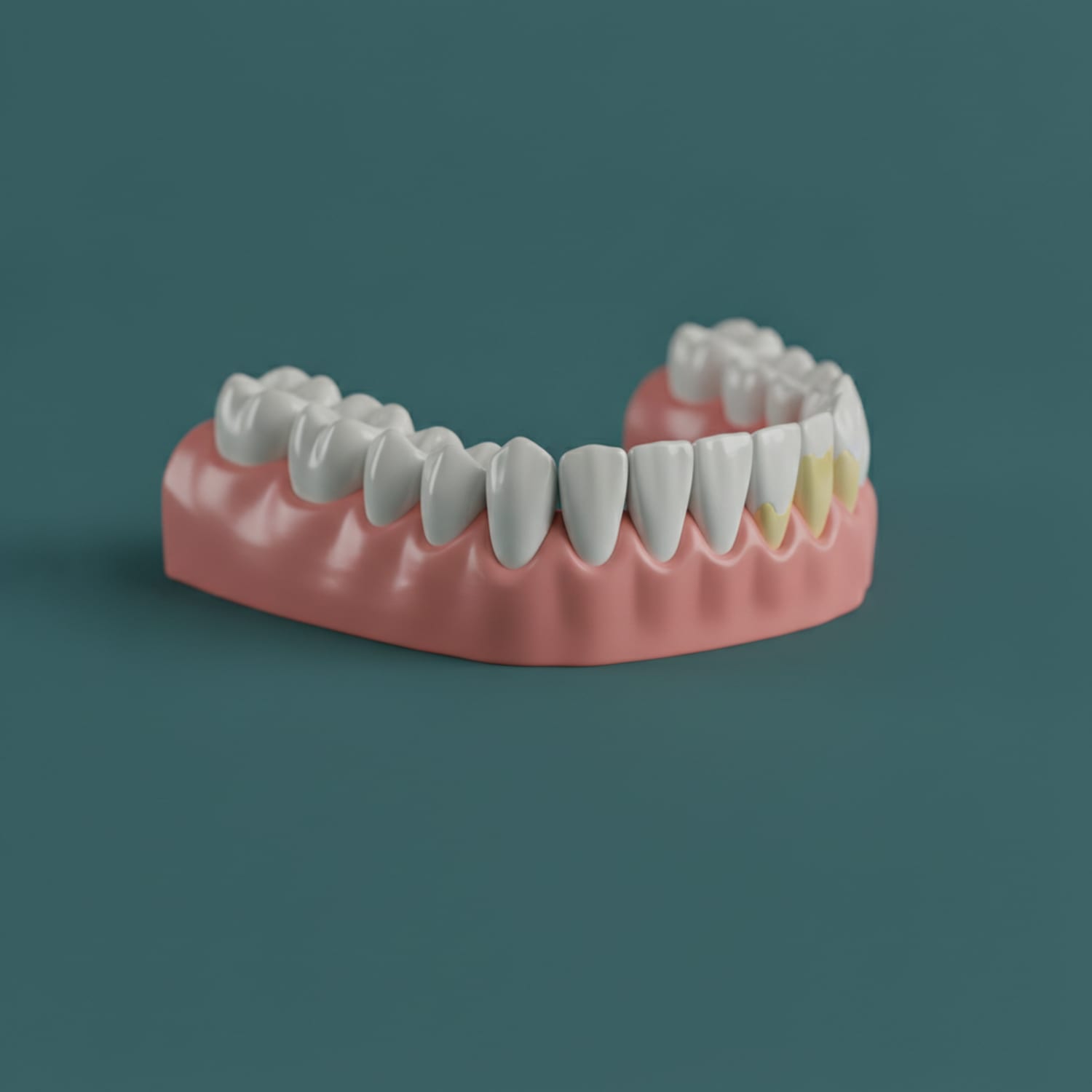
Stop the bone loss — and keep the teeth you have.
From our operatory
See the treatment, not just the words
How periodontal regeneration rebuilds the supporting tissue around teeth compromised by gum disease.
Understand it fully
The clinical picture — from bleeding gums to a stable mouth
At a glance
- 47%+1
- of U.S. adults 30+ have periodontitis (64% of those 65+ moderate/severe)
- 0.43%2
- HbA1c drop from treating gum disease in diabetics (3–4 mo)
- ~1.74×3
- odds of periodontitis from smoking (causal estimate)
Gingivitis vs. periodontitis — they are not the same
Why we chart before we treat — the number that matters
How scaling-and-root-planing works
Re-evaluation — proving the treatment worked
Your next step
Wondering if gum disease treatment is right for you?
A free consultation includes an exam and a written plan — no pressure, no upsell.
Periodontal maintenance — the long game
Your gums and the rest of your body
Risk factors — what makes gum disease worse
5 mm
When surgery becomes the right answer
Related at Centre Dental
What patients say
Reviewed, on Google
I came for an emergency root canal treatment and I did not regret choosing this place. It was quick and painless. Plus, everyone was very quite friendly.
I recently had a dental cleaning at Centre Dental, and I had a wonderful experience. The staff was friendly, professional, and welcoming. The cleaning was very thorough yet gentle, and everything was explained clearly th…
A skillful Dentist who goes the Extra Miles I have been flying to NYC from Florida multiple times to this dental office. Dr. Shi has been working on my upper full mouth teeth transplant for over half a year. So far I ha…
Concerned about comfort, bone, or cost?
These are the questions a consultation answers directly. Dr. Shi reviews your 3D CBCT scan, evaluates your bone and candidacy, and outlines your options, treatment timeline, and estimated cost — including what your insurance may cover.
Thinking about it
The questions we hear first
How do I know if I have gum disease?
How much does gum disease treatment cost in NYC?
Does insurance cover gum disease treatment?
Will the treatment hurt?
Can gum disease be cured?
How long until I know if the treatment worked?
Is gum disease linked to other health conditions?
Does smoking affect my gums and my treatment?
The path
Your journey, start to finish
Evaluation + full periodontal charting
Scaling-and-root-planing
Re-evaluation at 6–8 weeks
Periodontal maintenance
When regeneration becomes an option after periodontitis
When advanced gum disease destroys the bone holding teeth in place, scaling alone cannot rebuild what the infection took. Guided tissue regeneration uses a barrier membrane plus graft material (autograft, allograft, or xenograft) placed over the defect to give the body a protected scaffold to regrow bone and periodontal ligament around compromised teeth.
Centre Dental sequences regeneration cases carefully: first stabilizing the active disease with deep cleaning and antimicrobial protocols, then re-evaluating pocket depths after healing before committing to the regenerative surgery. Done at the right moment, the procedure can save teeth that older textbooks would have flagged for extraction.
Explore Further
Related Services
Teeth Cleaning
Routine prophylaxis for healthy gums — and the entry point where periodontal screening begins.
Learn morePinhole Gum Rejuvenation
Minimally invasive correction for receded gum tissue, without traditional grafting.
Learn morePreventive Dentistry
Comprehensive risk assessment that keeps stable periodontal patients stable.
Learn moreSolea Laser Dentistry
All-tissue laser that can assist decontamination of inflamed periodontal tissue.
Learn moreGum Disease Treatment Near You in NYC
Start here
Schedule your consultation
In a single visit, Dr. Shi reviews your 3D scan, assesses your candidacy for gum disease treatment, and provides a written treatment plan with cost and insurance details — so you can decide with all the facts.
Extensive full-arch reconstruction experience by Dr. Shi
3D-guided precision, placed by an experienced surgeon
Bilingual — English, Mandarin, Cantonese
Live clinic hours · 139 Centre St, Lower Manhattan, NYC