
Minimally invasive gum recession treatment — results visible the same day
Pinhole Gum Rejuvenation NYC — No Scalpels, Same-Day Results
Pinhole gum rejuvenation in NYC at Centre Dental treats receding gums without scalpels or sutures. The Pinhole Surgical Technique (PST) addresses recession through a single small e...
DDS
Columbia University 1998
22+
Years on Centre St
5.0
150+ Google reviews
Overview
Pinhole Gum Rejuvenation
Pinhole gum rejuvenation in NYC at Centre Dental treats receding gums without scalpels or sutures. The Pinhole Surgical Technique (PST) addresses recession through a single small entry point, repositioning existing gum tissue without grafts, incisions, or sutures.
- No scalpel incisions
- No sutures required
- Minimal post-operative downtime
- Immediate cosmetic improvement
- Multiple teeth treated in a single visit
- Collagen membrane reinforcement
- Reduced post-operative discomfort
- Bilingual care (English / 中文)
“Pinhole is not the right choice for every patient with recession — and I think it's important to say that clearly. PST is validated for Miller Class I and II recession. Patients with insufficient attached tissue volume, thin gingival biotype under two to three millimeters, or Class III and IV recession aren't candidates, and we tell them that at the consultation rather than discovering it later. For the patients who are good candidates, repositioning tissue through a single access point and avoiding a palatal donor site changes the recovery experience in a way that matters.”
How It Works
The Process
What Is PST and Who Is Actually a Candidate
The Pinhole Surgical Technique (PST) is a minimally invasive approach to gum recession developed by Dr. John Chao, DDS. Instead of harvesting tissue from the palate, PST uses a needle-sized entry point to loosen and reposition existing gum tissue coronally over the exposed roots. Collagen strips placed through the same entry point stabilize the repositioned tissue and serve as a scaffold for attachment — the collagen fully resorbs in three to four months. What the marketing for PST rarely mentions: candidacy is limited to Miller Class I and II recession. Class I has no bone loss interproximally; Class II involves recession to or beyond the mucogingival junction but still no bone loss. Class III and IV involve bone loss and are not appropriate for PST — those cases need conventional grafting or other approaches. Thin gingival biotype (less than two to three millimeters of attached tissue) is also a disqualifier — patients sometimes report being surprised when they're told they don't qualify after expecting to be candidates. Fewer than 3,000 practitioners worldwide are certified in PST (Chao Pinhole Academy), so clinician experience matters in the outcome.
Pinhole vs Conventional Grafting: Honest Comparison
Conventional connective tissue grafting remains the gold standard for root coverage with the deepest body of long-term evidence — decades of published outcomes across a wide range of recession presentations. It involves harvesting donor tissue from the palate and suturing it over the receded area. This palatal wound is the primary source of post-operative discomfort with conventional grafting. PST eliminates that second surgical site, which changes the recovery experience meaningfully for most patients. PST is validated for Miller Class I and II presentations. For cases where tissue volume is insufficient for repositioning — or where recession severity is Class III or IV — conventional grafting is the more appropriate choice. Insurance coding matters here: PST can be billed under periodontal procedure codes, with 50–80% PPO coverage when the treatment is medically necessary. Your consultation will include periodontal probing measurements and photographs to determine which approach fits your specific anatomy and recession classification.
Recovery, Long-Term Results, and Maintenance
Post-operative discomfort after PST is generally mild — manageable with over-the-counter analgesics for most patients. Swelling and tenderness are common in the first 48–72 hours. Soft-food dietary restrictions apply for one to two weeks while tissue integrates; strenuous activity is best avoided for a few days. Clinical follow-up within two weeks verifies tissue position and attachment stability. Long-term outcomes: Dr. Chao's own 14.5-year case publications document 77–99% root coverage retention across treated sites — durable for appropriately selected cases. The key word is maintenance. Recession recurs when the underlying causes aren't addressed: brushing technique, bite habits, periodontal health. Patients who skip periodontal maintenance appointments are the group most likely to see coverage loss over time. Gum recession affects approximately 88% of adults 65 and older and 50% of adults 18–64 (NHANES/CDC-AAP), so this is not a niche condition — but treatment should be calibrated to the specific recession type and patient anatomy, not offered uniformly.
Clinical Evidence
A 14.5-year case study by Dr. John Chao found 77–99% root coverage retention with PST at long-term follow-up — durable outcomes when patients are properly selected and maintenance is maintained.
Timeline
Single visit, 1–2 hours; results visible immediately
Typical treatment duration
Soft-tissue regeneration for receded gums
For patients whose gum disease has progressed to visible recession but whose bone support is still salvageable, the pinhole approach reframes traditional gum-graft surgery. Instead of harvesting palatal tissue and suturing it over the recession site, Dr. Shi releases the existing gum tissue through a small entry point and repositions it coronally, securing the new position with collagen strips placed through the same pinhole.
Recovery is typically shorter than traditional connective-tissue grafting because there is no donor site on the palate. For deeper underlying defects, the same visit can include guided tissue regeneration with a barrier membrane and graft material — same sequencing logic Centre Dental uses for surgical periodontal cases.
Inside Our Practice
See it in action
Explore the Cluster
Explore the full Same-Day Crowns
Common Questions
Frequently Asked Questions
Am I a candidate for Pinhole gum rejuvenation?
PST is validated for Miller Class I and II recession. Class I: recession that does not reach the mucogingival junction, no bone loss, 100% root coverage is achievable. Class II: recession at or beyond the mucogingival junction, no bone loss, full coverage remains possible. Class III and IV involve interproximal bone loss and are not appropriate for PST — those require conventional grafting or other approaches. Thin gingival biotype (less than two to three millimeters of attached tissue) is a disqualifier many patients don't expect. A clinical evaluation with periodontal measurements determines your Miller Classification before any treatment is discussed.
How does Pinhole compare to traditional gum grafting?
Both techniques aim to cover exposed root surfaces. Conventional connective tissue grafting has the deepest long-term evidence base and is effective across a wider range of recession presentations, including Class III and IV. Its primary drawback is the palatal donor wound, which is the main source of post-operative discomfort. PST eliminates that second surgical site and typically produces less post-operative pain — but it is limited to Class I and II recession in patients with adequate existing tissue volume. Neither technique is universally superior; the right choice depends on your recession classification and tissue anatomy.
Is Pinhole just marketing hype?
It is a fair question. PST has legitimate peer-reviewed support — Dr. Chao's own publications document 77-99% root coverage retention at 14.5 years, and multiple independent studies report favorable short-term outcomes. The concern is that it is sometimes marketed as appropriate for all recession, which it is not. It is also a certified technique with fewer than 3,000 practitioners worldwide (Chao Pinhole Academy), meaning outcomes vary by clinician experience. At Centre Dental, PST is offered only to patients who meet the Miller Class I or II classification criteria and have adequate tissue volume for repositioning.
Is the procedure painful?
Local anesthesia is administered before the procedure, so patients do not feel pain during treatment. Post-operative discomfort is generally mild to moderate soreness in the treated area for 48-72 hours. Most patients manage with over-the-counter analgesics. The absence of a palatal donor site means recovery is typically more comfortable than with traditional grafting — that second wound site is the primary driver of post-op pain in conventional procedures.
What does Pinhole gum treatment cost in NYC?
PST cost depends on the number of teeth treated and recession severity. Many PPO insurance plans cover PST under periodontal surgical codes at 50-80% when treatment is medically necessary — meaning the recession is causing documented sensitivity, root exposure, or functional concern. Our team verifies your benefits and submits documentation to support your claim. A written estimate is provided after your clinical evaluation.
How long do the results last?
Dr. Chao's published case data documents 77-99% root coverage retention at 14.5 years for properly selected cases. Long-term durability depends on addressing the factors that caused recession initially: brushing technique, bite forces, periodontal health, and compliance with maintenance appointments. Patients who attend regular periodontal cleanings and correct contributing habits sustain coverage most reliably. Recession can recur when underlying causes persist.
What does recovery look like after Pinhole treatment?
The first 48-72 hours typically involve tenderness and mild swelling. A soft diet is recommended for one to two weeks. Patients are asked to avoid vigorous rinsing and strenuous activity for the first few days. Most people return to normal routines within a day or two. A follow-up visit within two weeks confirms tissue position and attachment. The collagen strips placed during the procedure fully resorb in three to four months as they act as a scaffold for the tissue to attach.
Who is NOT a good candidate for Pinhole?
Patients who are not candidates include those with Miller Class III or IV recession (involving interproximal bone loss), thin gingival biotype under two to three millimeters of attached tissue, active uncontrolled periodontal disease, or insufficient existing tissue volume for repositioning. Systemic conditions affecting healing may also affect candidacy. These patients are better served by conventional connective tissue grafting or other approaches. Knowing these boundaries is what separates appropriate patient selection from overpromising.
Explore Further
Related Services
Pinhole Gum Rejuvenation Near You in NYC
Start Here
Your Smile Starts With a Conversation
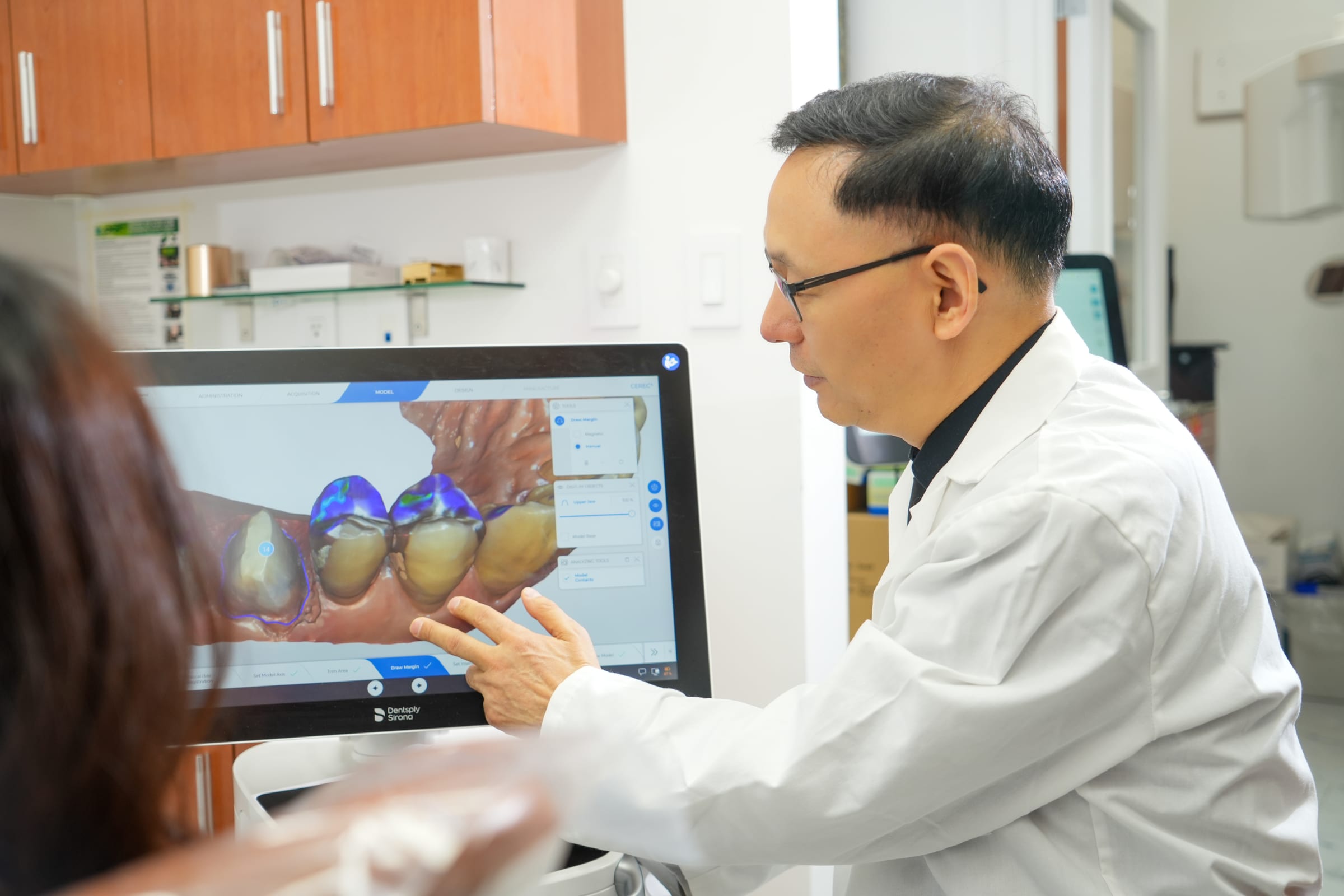
Begin with a no-obligation consultation about pinhole gum rejuvenation. Dr. Shi reviews your 3D scan, walks through your options, and provides an honest investment range — no pressure, no obligation.
Extensive full-arch reconstruction experience by Dr. Shi
3D-guided implant precision, placed by an experienced surgeon
Bilingual care — English, Mandarin, Cantonese
Open Mon–Sat · 139 Centre St, Lower Manhattan, NYC