
Solea Laser Dentistry NYC | No Needles | Centre Dental - Anesthesia-free cavity treatment for most patients. Less anxiety, faster healing.

Anesthesia-free cavity treatment for most patients. Less anxiety, faster healing.

Solea Laser Dentistry NYC — Most Procedures Without Needles or Drill

Solea laser dentistry in NYC at Centre Dental performs most procedures without needles, drills, or anesthesia. The Solea CO2 dental laser handles cavity preparation, soft-tissue pr...

InvisalignGuided
  • DDS

    Columbia University 1998

  • 22+

    Years on Centre St

  • 5.0

    150+ Google reviews

Overview

Solea Laser Dentistry

Solea laser dentistry in NYC at Centre Dental performs most procedures without needles, drills, or anesthesia. The Solea CO2 dental laser handles cavity preparation, soft-tissue procedures, and gum treatment — no injection means no numbness and no waiting for sensation to return after your appointment.

  • No needles required for most cavity treatments
  • No drill noise — quiet CO2 laser operation
  • Minimal bleeding during soft-tissue procedures
  • Faster tissue healing after gum treatment
  • Reduced procedural anxiety for needle-averse patients
  • Suitable for children and adults
  • Precise tissue removal with minimal healthy tissue loss
  • Bilingual care in English and Mandarin
The patients I think about most with Solea are the ones who haven't been to a dentist in years because of needle anxiety. Dental fear affects roughly a third of adults — and for some, it means complete avoidance. When I can treat a cavity without a needle and the patient leaves surprised by how ordinary it felt, that's a real outcome. The 9.3-micron wavelength is why this works differently from other dental lasers — it's optimized for both hard and soft tissue in a way that diode lasers simply aren't.
Dr. John Shi, DDS — Centre Dental NYC

How It Works

The Process

01 / 03

What Makes the 9.3-Micron Wavelength Different

Solea is the only FDA-cleared all-tissue CO2 dental laser operating at a 9.3-micron wavelength — a distinction that matters clinically. Diode lasers, which are more commonly advertised by dental practices, operate at wavelengths absorbed primarily by pigmented soft tissue. They are effective for gum procedures but cannot remove tooth decay. Solea's 9.3-micron wavelength is absorbed efficiently by hydroxyapatite in enamel and dentin as well as by water in soft tissue, which is why it is approved for both hard- and soft-tissue applications. That absorption profile means the laser can vaporize decay with minimal heat generation and essentially no vibration — the two primary stimuli that trigger pain in hard-tissue work. In a prospective study of 233 patients (Schuster et al., 2022), 93% of Solea hard-tissue procedures were completed without any anesthesia, and 98% of patients preferred laser treatment over traditional drilling. Seven percent still needed anesthesia — it is not universally needle-free, but it comes closer than any prior technology in general dentistry.

02 / 03

What Solea Can and Cannot Replace

Dental fear affects approximately 36% of U.S. adults, with 12% meeting criteria for severe dental phobia that leads to complete care avoidance. Solea is most valuable for patients in this group — the needle is typically the trigger, and removing it changes the appointment experience fundamentally. For soft tissue, Solea handles a wide range of procedures: gingivectomy, frenectomy, crown lengthening, aphthous ulcer treatment, and gum contouring for cosmetic or restorative purposes. For hard tissue, it manages small to moderate cavities in both primary and permanent teeth reliably. Where it cannot substitute for conventional instruments: heavily broken-down teeth requiring significant crown reduction, surgical extractions, and very deep caries approaching the pulp where precise mechanical shaping is needed. Your dentist confirms candidacy before proceeding — laser treatment is offered where it genuinely improves the clinical experience, not as a universal replacement for all instrumentation.

03 / 03

Soft Tissue Procedures: Faster Healing Without a Scalpel

Solea's soft-tissue applications are where the comparison with conventional scalpel work is most favorable. When the laser removes or reshapes gum tissue, it simultaneously cauterizes the cut edge — minimal bleeding during the procedure and significantly faster healing afterward. For a frenectomy (tongue or lip tie release), this typically means a few days of mild soreness instead of a sutured wound that takes one to two weeks to heal fully. Crown lengthening and gum recontouring for cosmetic purposes produce immediate, visible tissue margin changes at the appointment itself. Post-operative care after soft-tissue laser procedures is straightforward: mild salt-water rinses, avoidance of very hot or spicy foods for 48 hours, and over-the-counter analgesics if needed. Most patients describe the recovery as less disruptive than what they expected based on prior experiences with conventional gum procedures.

Clinical Evidence

A prospective clinical study (Schuster et al., 2022, n=233) found that 93% of Solea hard-tissue procedures required no anesthesia; 98% of patients preferred laser over traditional drill treatment.

Timeline

Single visit for most procedures

Typical treatment duration

One laser, two jobs: hard tissue and soft tissue

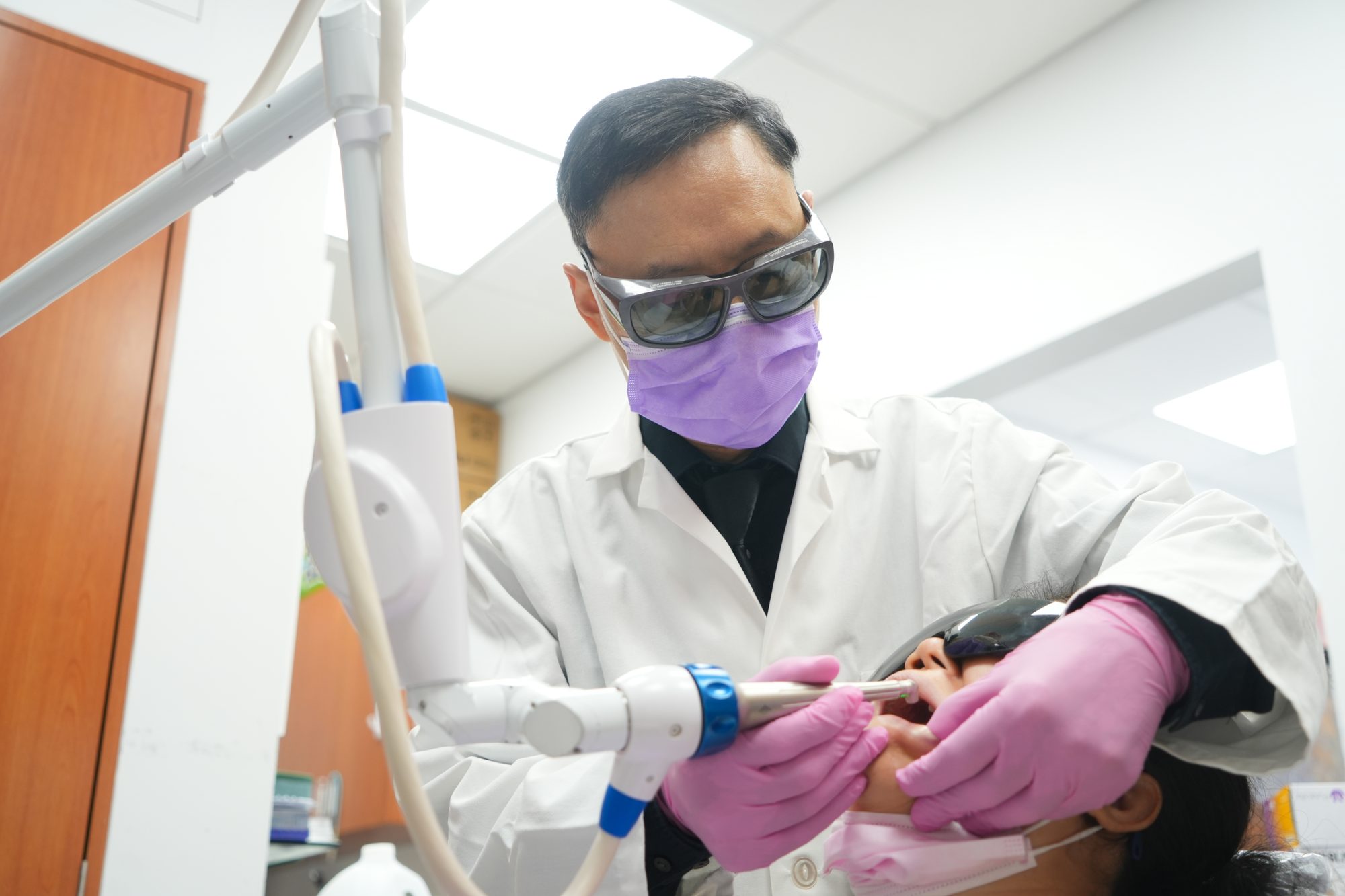
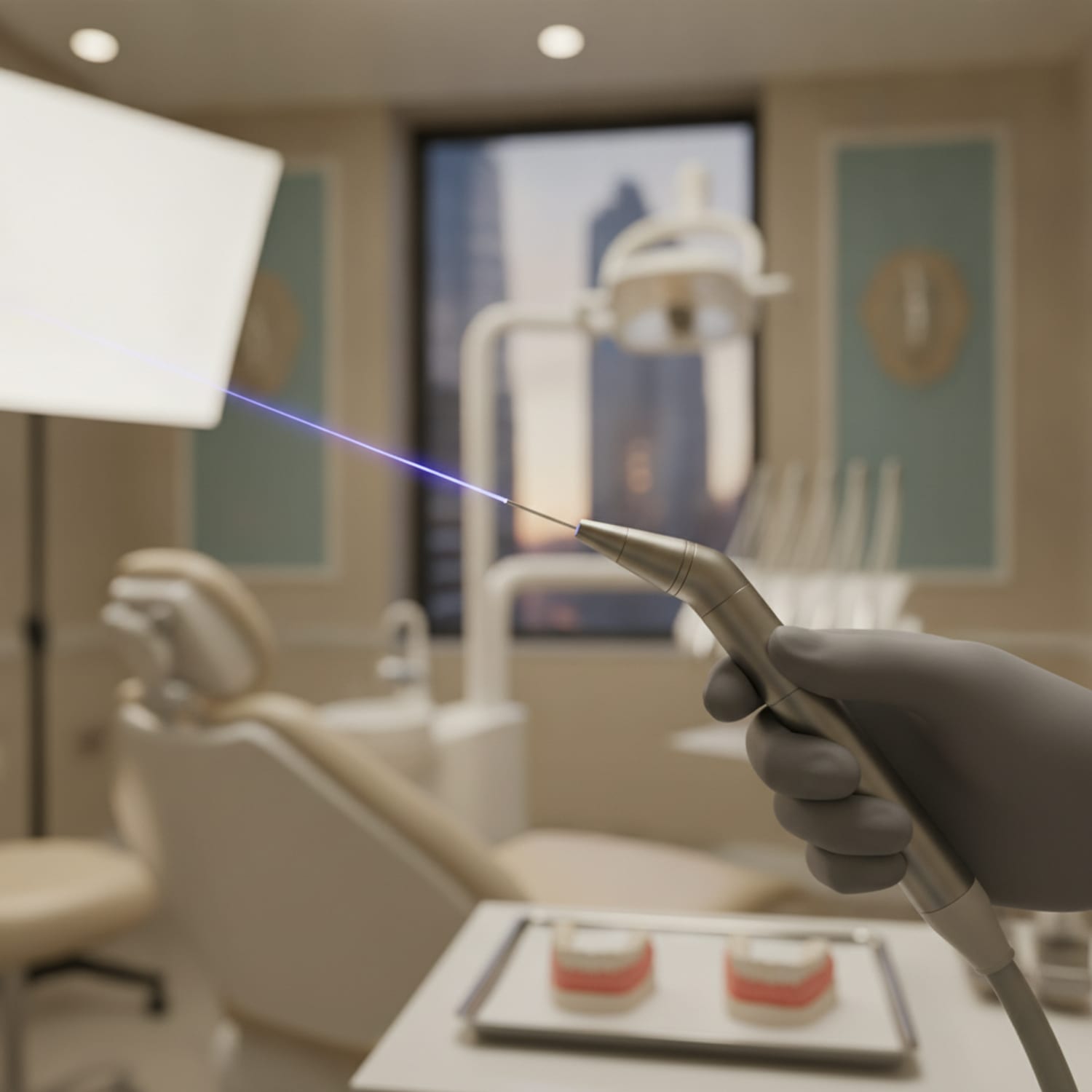
The Solea laser at Centre Dental — a CO₂ system from Convergent Dental, FDA-cleared under 510(k) K152533 — cuts through enamel, dentin, and gum tissue with the same handpiece. For a small-to-medium filling, that often means no injection: the laser ablates decay precisely enough that most patients tolerate the procedure without local anesthesia. Patients leave the appointment without the numb-cheek hangover that traditional drilling carries.

On the soft-tissue side, Solea handles gingivectomy contouring before veneers, frenectomy releases, and biopsy excisions with minimal bleeding because the laser energy seals capillaries as it cuts. Recovery is typically faster than scalpel-based equivalents, and sutures are often unnecessary. For deeper soft-tissue work the practice also runs Waterlase iPlus and Epic X diode lasers — chosen by case rather than by default.

Inside Our Practice

See it in action

Explore the Cluster

Explore the full Same-Day Crowns

See all

Common Questions

Frequently Asked Questions

What is Solea laser dentistry?

Solea is the only FDA-cleared all-tissue CO2 dental laser, operating at a 9.3-micron wavelength that is absorbed by both hard dental tissues (enamel, dentin) and soft tissues (gum, tongue, cheek). This is why it can treat cavities and perform gum procedures — diode lasers used at other practices cannot do both. Because the laser removes decay with minimal vibration and heat, the sensation is reduced enough that a prospective study of 233 patients found 93% required no anesthesia. For patients with dental anxiety, removing the needle changes the entire experience.

Does laser dentistry hurt?

Most patients describe Solea treatment as minimal sensation — a mild warmth or light pressure without the vibration or sharpness associated with a drill. In the Schuster et al. 2022 study (n=233), 93% of hard-tissue procedures were completed without any anesthesia, and 98% of patients preferred laser over traditional treatment. Seven percent still needed anesthesia — results vary by tooth, depth of decay, and individual sensitivity. Anesthesia remains available for anyone who wants it or for deeper procedures.

Is Solea laser treatment safe?

Solea is FDA-cleared for both hard- and soft-tissue applications and has been used across thousands of U.S. dental practices. The 9.3-micron wavelength is engineered for dental tissue and does not penetrate bone or damage adjacent structures when used correctly. Protective eyewear is worn by both the patient and clinician throughout treatment. The laser is not appropriate for patients on certain photosensitive medications — your dentist reviews your health history before proceeding.

What is the difference between Solea and a diode laser?

This distinction matters when evaluating what a dental practice actually offers. Diode lasers operate at wavelengths around 810-980 nanometers, absorbed primarily by pigmented soft tissue. They are effective for gum contouring but cannot remove tooth decay. Solea operates at 9.3 microns, a wavelength absorbed efficiently by both hydroxyapatite in enamel and water in soft tissue. That is why Solea is approved for cavities — it is genuinely an all-tissue laser, not a soft-tissue laser rebranded as 'laser dentistry.'

Which dental procedures can be done with the Solea laser?

Hard-tissue applications include cavity preparation for composite fillings, decay removal in primary and permanent teeth, and minor tooth preparation for inlays or onlays. Soft-tissue applications include gingivectomy, frenectomy (tongue or lip tie release), crown lengthening, aphthous ulcer treatment, and gum recontouring for cosmetic or restorative purposes. Procedures involving extensive crown preparation, surgical extractions, or very deep caries approaching the pulp still require conventional instrumentation. Your dentist confirms which approach is appropriate for your specific case.

Does laser dentistry cost more?

At Centre Dental, Solea laser treatment is provided at a cost comparable to conventional treatment for the same procedure — there is no added laser surcharge. The value is in the experience: no injection, no numbness, no waiting for sensation to return. Insurance covers laser-performed fillings and soft-tissue procedures the same way it covers conventionally performed work — the coding is procedure-based, not technology-based.

Is Solea suitable for children?

Solea is particularly useful for pediatric patients because the needle is the most consistent source of dental fear in children. A quieter, needle-free appointment experience tends to produce more cooperative patients and less anticipatory anxiety at future visits — which matters over a lifetime of dental care. The technique is effective on both primary (baby) teeth and permanent teeth. Our team uses child-appropriate communication to help younger patients understand what to expect before and during treatment.

What is the recovery like after a laser procedure?

After Solea cavity treatment, recovery is essentially immediate — no anesthesia means no lingering numbness, and patients can eat and drink normally right away. After soft-tissue procedures such as frenectomy or gum recontouring, mild soreness for two to four days is typical. Because the laser cauterizes as it cuts, bleeding is minimal and tissue heals noticeably faster than after conventional scalpel procedures. Your dentist provides specific post-operative instructions based on the procedure performed.

Start Here

Your Smile Starts With a Conversation

Begin with a no-obligation consultation about solea laser dentistry. Dr. Shi reviews your 3D scan, walks through your options, and provides an honest investment range — no pressure, no obligation.

Extensive full-arch reconstruction experience by Dr. Shi

3D-guided implant precision, placed by an experienced surgeon

Bilingual care — English, Mandarin, Cantonese

Open Mon–Sat · 139 Centre St, Lower Manhattan, NYC