

Teeth Whitening NYC — Zoom Professional Results in One Visit
A brighter smile you don't have to hide behind a closed-lip photo.
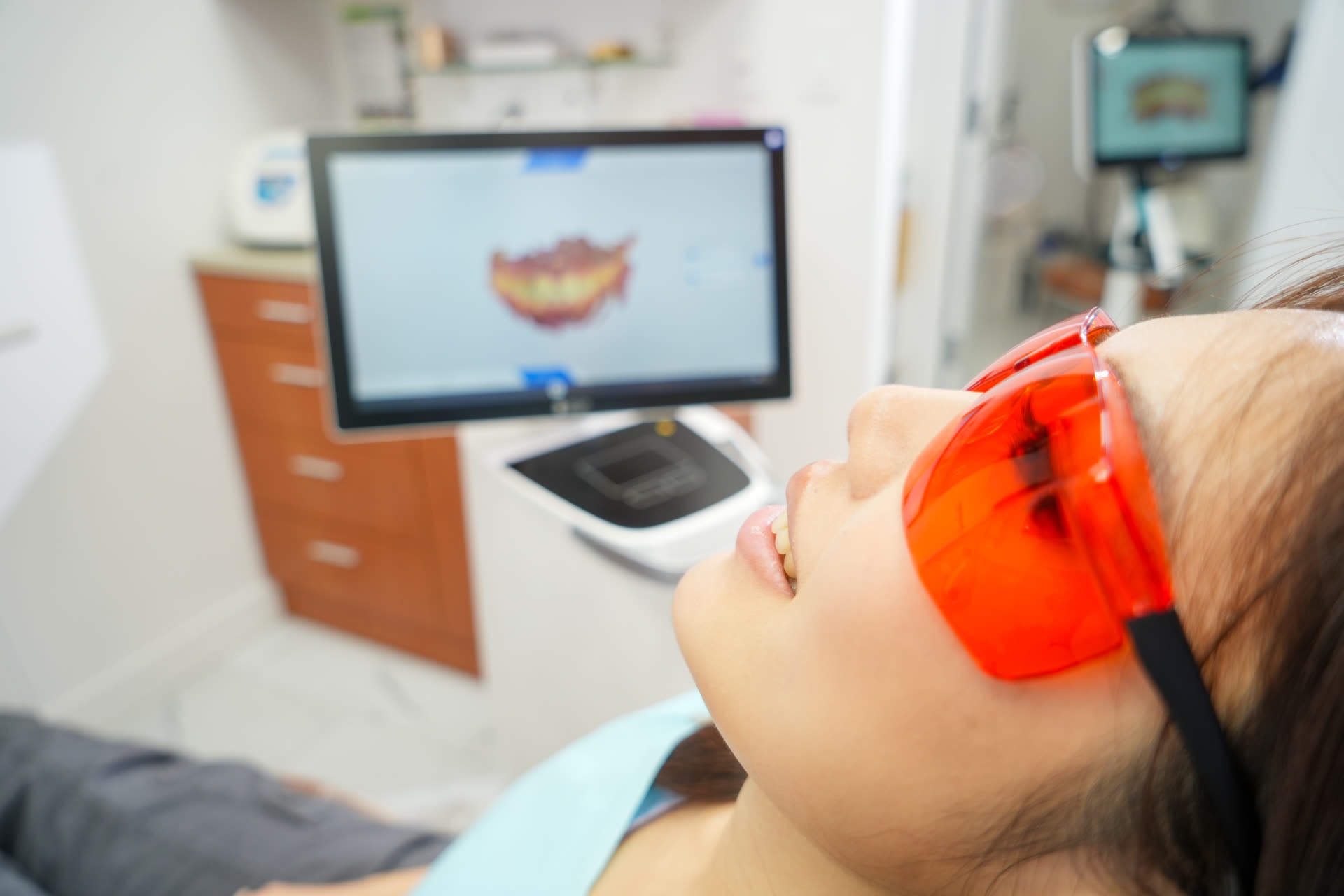
Professional Zoom teeth whitening in NYC at Centre Dental — clinically dosed hydrogen peroxide, gum protection, and a shade change you can see the same day, planned around your enamel and your sensitivity history.

Yellowing that no toothpaste seems to touch.
Most people who ask us about whitening aren't chasing a Hollywood glare — they just want their teeth to look as healthy as they feel. Years of coffee, tea, red wine, and simple aging have dulled the shade, and the drugstore strips either did nothing or left them wincing at cold water. Here is what professional whitening can and cannot do, in plain language, before you spend a dollar.
Strips that disappoint
Uneven coverage, missed edges, and a barely-there result — the gap between the box promise and the mirror.
You've stopped smiling wide
Closed-lip photos, a hand over the mouth — a shade you're quietly self-conscious about every day.
Whitening that hurt
A previous kit left teeth zinging at cold air or ice water, and you'd rather not repeat that.
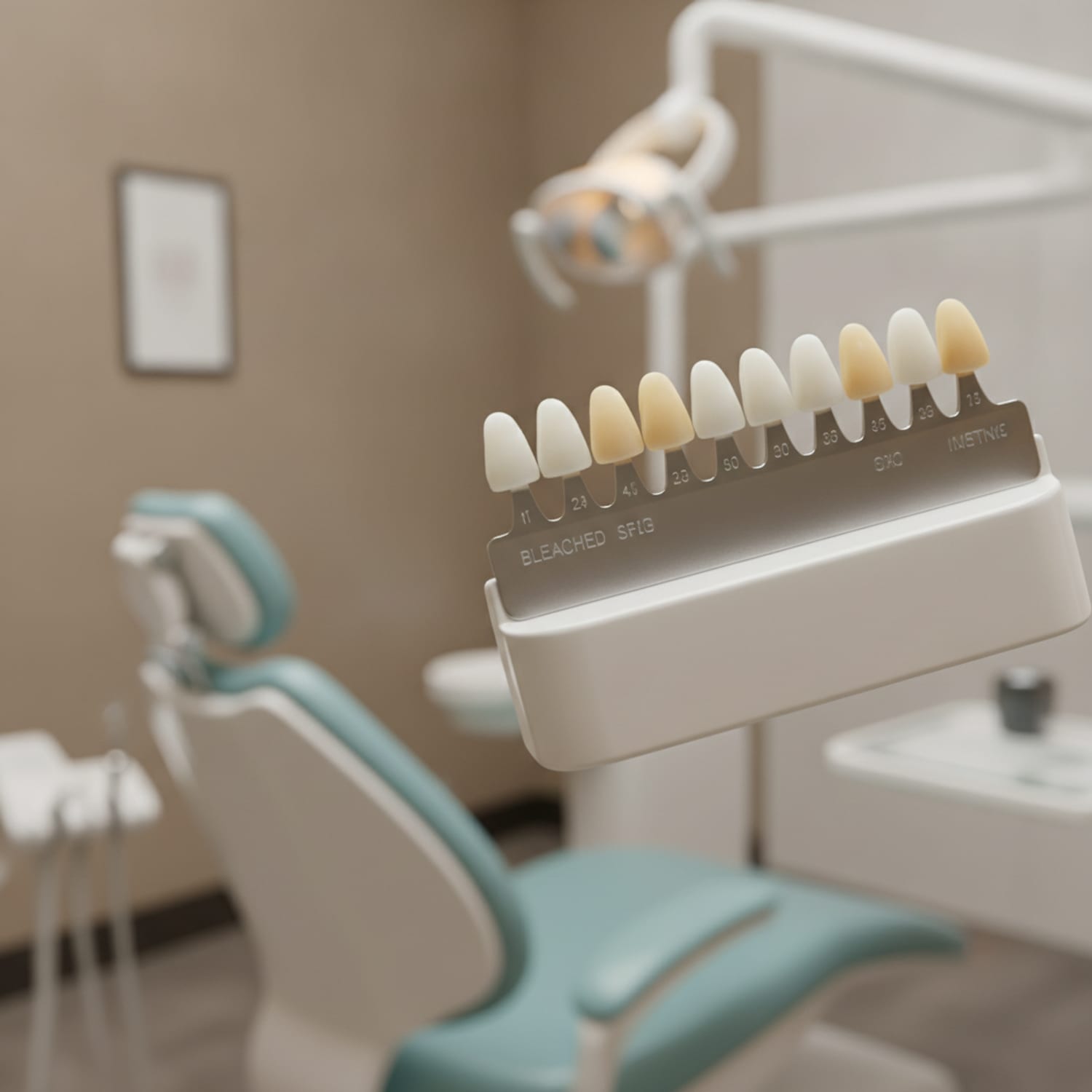
A visible, controlled shade change — done right, and matched to your teeth.
Professional whitening lifts the pigment that has soaked into your enamel over the years, rather than painting a coating on top — so the color change is genuine and lasts. The difference from a drugstore kit is control: your gums are isolated and shielded, the peroxide is dosed to your starting shade and sensitivity history, and the whole result is measured against a before photo. In-office Zoom delivers a same-day change; custom take-home trays extend and maintain it. If your discoloration is the kind whitening can't fix, we tell you before you book — not after.
Schedule a whitening consultationUnderstand it fully
The clinical picture — from stain to shade
At a glance
- ~6 shades1
- improvement, in-office 35% HP
- ~60%1
- report temporary sensitivity
- 24–48 hrs1
- typical sensitivity window, then resolves
- No change3
- in enamel microhardness after HP bleaching
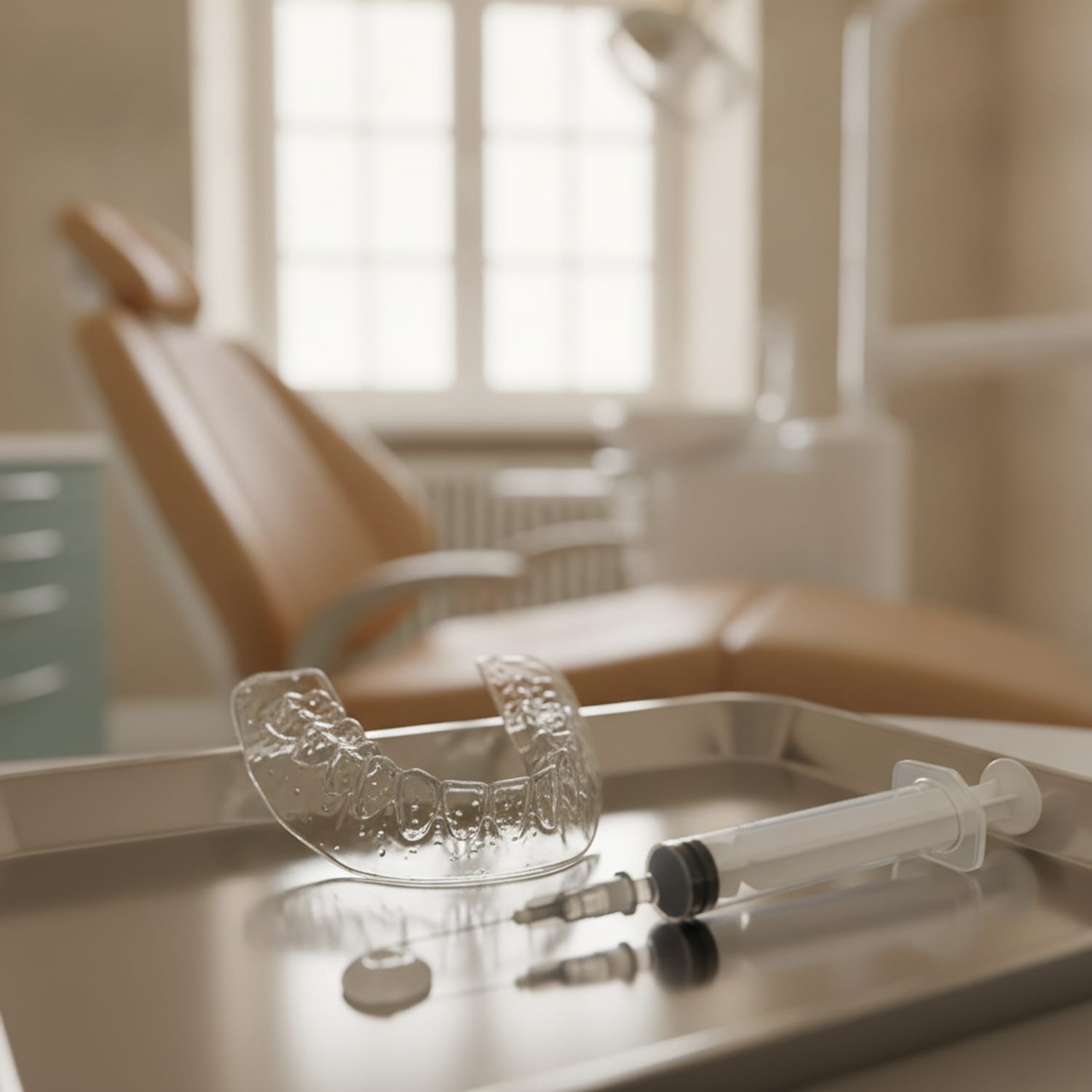
How whitening actually works — oxidation, not a coating
Professional whitening relies on hydrogen peroxide (or carbamide peroxide, which breaks down into hydrogen peroxide and urea) diffusing through the enamel and into the underlying dentin. There it oxidizes the large, darkly pigmented molecules — chromophores — that have accumulated from coffee, tea, wine, tobacco, and aging, breaking them into smaller, lighter, less light-absorbing fragments. The result is a genuinely lighter internal tooth color, not a surface film that rinses away. Because the peroxide is working on your own tooth structure, existing restorations — crowns, porcelain veneers, and composite fillings — will not change shade, which is why we map them before treatment and why whitening is always completed before any cosmetic bonding or veneer shade is finalized.
What whitening can and cannot lighten
Whitening is highly effective on extrinsic and age-related discoloration — the pigment absorbed into enamel over time. It is far less effective, and sometimes ineffective, on intrinsic discoloration built into the tooth during development or after injury: tetracycline staining (gray-brown banding from the antibiotic taken during tooth formation), dental fluorosis (white or brown mottling from excess fluoride), and trauma-related darkening where internal bleeding has deposited pigment inside the tooth. No peroxide concentration reliably resolves these — they are addressed with veneers or bonding instead. Sorting extrinsic from intrinsic staining at your consultation is the single most important step in avoiding a treatment that can't deliver what you're hoping for.

Your next step
Wondering if teeth whitening (zoom) is right for you?
A free consultation includes an exam and a written plan — no pressure, no upsell.
The Zoom in-office visit, step by step
An in-office Zoom appointment begins with a standardized shade assessment, photographed as your before-and-after baseline. Your lips and cheeks are retracted and a light-cured resin barrier is painted along the gumline so the concentrated gel never touches soft tissue. Professional-strength hydrogen peroxide gel is then applied in a series of short timed intervals — typically three to four — with the Zoom lamp directed at the teeth during each one. Worth knowing: a systematic review of randomized trials found that light activation is not required to achieve the esthetic color result — the gel is what whitens, though the light may modestly influence sensitivity. After the final interval, a fluoride or potassium-nitrate desensitizing gel is applied to soothe the teeth and support enamel remineralization. Plan on roughly an hour of active whitening within a 90-minute visit.
How much lighter — setting a realistic number
The honest answer is that shade change varies with your starting color, the pigment involved, and the protocol used. In a controlled randomized trial of in-office 35% hydrogen peroxide, patients gained roughly six shade-guide units of improvement — a clearly visible jump, measured on a standardized value-ordered shade guide rather than by eye. Deeper starting shades often show the most dramatic change; teeth that are already fairly light have less room to move. Combining an in-office session with custom take-home trays generally produces a greater and more durable result than either alone. We photograph and shade-match your teeth before and after so the change is documented, not just felt.
In-office vs. take-home vs. drugstore strips
All three use peroxide chemistry, but the control differs enormously. Store-bought strips use low-concentration gel with no gum isolation, so coverage is uneven and the between-tooth surfaces and gumline are frequently under-treated. Custom take-home trays — precision-fitted from an impression or digital scan — hold a lower-concentration carbamide-peroxide gel evenly against every tooth for a set daily wear time over one to two weeks, giving a gradual, even result you control at home. In-office Zoom uses professional-strength gel under gum protection for the fastest visible change in a single visit. Many patients do best with the combined approach: an in-office session to set the shade, then trays to deepen and maintain it.
Sensitivity — common, dose-related, and temporary
Transient tooth sensitivity is the most common side effect of whitening, and it's important to expect it rather than be alarmed by it. In a randomized in-office bleaching trial, roughly 60% of participants reported some sensitivity, which typically peaks within the first 24-48 hours and resolves on its own. A Cochrane systematic review confirms that sensitivity and mild gum irritation rise with higher peroxide concentrations but are generally mild and short-lived. This is a pulpal response to peroxide diffusing through the tooth — not enamel damage. If you have a history of sensitive teeth, we lower the concentration, shorten the intervals, and apply desensitizing agents such as potassium nitrate or fluoride before and after; for chronic sensitivity we may also look at whether bruxism or a worn bite is contributing.
Is whitening safe for your enamel?
Used under professional supervision with controlled dosing and timing, whitening does not measurably weaken enamel. Laboratory studies measuring enamel microhardness after hydrogen-peroxide bleaching have found no significant change in hardness, though very high concentrations can cause minor, temporary surface-texture changes that saliva and fluoride help reverse. The risk profile shifts with unsupervised, high-frequency use of strong over-the-counter gels — which is exactly why professional application, gum protection, and a dentist-set protocol are the safer route to a significant shade change. A healthy mouth is the prerequisite: active decay or gum disease is treated first, because peroxide on inflamed or exposed tissue is neither comfortable nor advisable.
Making it last — maintenance is part of the plan
Whitening results are not permanent, because teeth keep absorbing pigment from everything you eat and drink. A single in-office session typically holds a noticeably brighter shade for one to two years, shorter if you're a heavy coffee, tea, or red-wine drinker. Custom take-home trays let you touch up periodically with a low-concentration gel, and simple habits help — drinking staining beverages through a straw, rinsing after, and keeping up with professional cleanings that remove the surface buildup that speeds regression. Think of whitening as a maintenance routine rather than a one-time event, and plan for occasional tray refills or a refresher visit to keep the result you paid for.
Related at Centre Dental
Concerned about comfort, bone, or cost?
These are the questions a consultation answers directly. Dr. Shi reviews your 3D CBCT scan, evaluates your bone and candidacy, and outlines your options, treatment timeline, and estimated cost — including what your insurance may cover.
Thinking about it
The questions we hear first
How does professional teeth whitening work?
Hydrogen peroxide gel diffuses through the enamel and oxidizes the pigment molecules embedded in the tooth, breaking them into smaller, lighter fragments. The result is a genuinely lighter internal tooth color, not a surface coating that washes off. With the in-office Zoom system, the gel is applied in several short timed intervals with the activating lamp directed at the teeth; afterward a fluoride or desensitizing gel is applied to soothe the teeth and support enamel remineralization. Custom take-home trays use the same chemistry at a lower concentration over a longer period.
How much whiter will my teeth actually get?
It depends on your starting shade and the type of staining. In a controlled clinical trial of in-office 35% hydrogen peroxide, patients gained roughly six shade-guide units — a clearly visible change measured on a standardized shade guide. Deeper starting shades usually show the biggest jump; teeth that are already light have less room to lighten. We photograph and shade-match before and after so your result is documented rather than guessed at, and we'll give you a realistic expectation at the consultation based on what we see.
Does teeth whitening cause sensitivity?
Often, yes — sensitivity is the most common side effect, not a rare one. In a randomized in-office bleaching trial, about 60% of participants reported some sensitivity, and clinical evidence shows it rises with higher peroxide concentrations but is generally mild and temporary. It usually peaks within 24-48 hours and settles on its own. If you have sensitive teeth, we use a modified protocol — lower concentration, shorter intervals, and desensitizing agents before and after — and document your history so we adjust for it. Sensitivity is a temporary pulpal response to peroxide, not enamel damage.
Is professional whitening safe for my enamel?
Yes, when it's professionally supervised with controlled dosing and timing. Laboratory studies measuring enamel hardness after hydrogen-peroxide bleaching have found no significant change in microhardness; very strong gels can cause minor, temporary surface-texture changes that saliva and fluoride help reverse. The higher-risk scenario is unsupervised, high-frequency use of strong over-the-counter products — which is precisely why a dentist-set protocol with gum protection is the safer path to a real shade change. We also confirm your mouth is healthy first, treating any decay or gum disease before whitening.
What stains will whitening not fix?
Whitening lightens extrinsic and age-related staining — the pigment absorbed from food, drink, and tobacco over time. It does not reliably resolve intrinsic discoloration: tetracycline staining (gray-brown banding from the antibiotic during tooth development), dental fluorosis (white or brown mottling from excess fluoride), or trauma-related darkening from internal bleeding inside the tooth. Those are corrected with veneers or bonding instead. Identifying the type of staining at your consultation prevents investing in a treatment that can't address your specific concern.
How is in-office Zoom different from take-home trays or drugstore strips?
All three use peroxide, but control differs. Drugstore strips use low-concentration gel with no gum isolation, so coverage is uneven and edges are under-treated. Custom take-home trays are precision-fitted to hold gel evenly against every tooth for a set daily wear time over one to two weeks — a gradual, even result you manage at home. In-office Zoom uses professional-strength gel under gum protection for the fastest same-day change. Interestingly, a systematic review found the activating light isn't required for the color result — the gel does the whitening. Many patients get the best outcome by combining an in-office session with take-home trays.
How long do whitening results last?
A single in-office session typically keeps teeth noticeably brighter for one to two years, though heavy coffee, tea, red-wine, or tobacco use shortens that. Whitening isn't permanent because teeth continually reabsorb pigment. Custom take-home trays let you touch up periodically and meaningfully extend the result, and regular professional cleanings remove the surface buildup that accelerates fading. Most patients maintain their shade with a combination of occasional tray touch-ups and a periodic in-office refresher. We'll set realistic expectations based on your habits at the consultation.
Who is a good candidate for whitening, and does insurance help with cost?
Good candidates have healthy teeth and gums with no active decay or gum disease — both are treated first, since peroxide on inflamed or exposed tissue is neither comfortable nor advisable. Whitening works best on extrinsic and age-related staining; intrinsic discoloration (tetracycline, fluorosis, trauma) is usually better served by veneers or bonding, and existing crowns or fillings won't whiten. Because whitening is elective cosmetic treatment, dental insurance generally doesn't cover it — but we're transparent in person: you'll leave your consultation with a written estimate for your specific plan (in-office Zoom, take-home trays, or the combined approach) and a clear picture of ongoing maintenance before you commit to anything.
The path
Your journey, start to finish
Consultation + shade assessment
We examine the nature of your staining, confirm it's the kind whitening can lighten, map any existing restorations that won't change shade, and record your sensitivity history. You'll get a written estimate and a realistic expectation for your case.
Your protocol — matched to your teeth
Based on your starting shade and sensitivity, we choose in-office Zoom, custom take-home trays, or the combined approach — and pre-treat with desensitizing agents if your history calls for it. Any decay or gum disease is handled first.
Whitening + gum protection
For in-office Zoom, your gums are isolated with a light-cured barrier and professional-strength gel is applied in timed intervals, photographed against your baseline. A desensitizing fluoride gel finishes the visit. Take-home trays are fitted and dispensed with clear wear instructions.
Maintenance & touch-ups
Sensitivity, if any, settles within a day or two. We review straw use, staining beverages, and cleaning cadence, and set you up with take-home touch-up gel so the shade you achieved is one you can keep — not one that fades unmanaged.
Explore the Cluster
Explore the full Cosmetic Dentistry
Explore Further
Related Services
Cosmetic Dentistry
Evidence-based smile planning — from whitening to veneers to full-mouth reconstruction.
Learn morePorcelain Veneers
The right correction for intrinsic staining whitening can't lift — chips, gaps, and deep discoloration.
Learn moreInvisalign Clear Aligners
Straighten before you whiten — clear aligner therapy planned with 3D iTero scanning.
Learn moreTeeth Cleaning & Prevention
Professional cleanings that remove surface buildup and help your whitening result last longer.
Learn moreTeeth Whitening (Zoom) Near You in NYC
Start here
Schedule your consultation
In a single visit, Dr. Shi reviews your 3D scan, assesses your candidacy for teeth whitening (zoom), and provides a written treatment plan with cost and insurance details — so you can decide with all the facts.
Extensive full-arch reconstruction experience by Dr. Shi
3D-guided precision, placed by an experienced surgeon
Bilingual — English, Mandarin, Cantonese
Live clinic hours · 139 Centre St, Lower Manhattan, NYC

