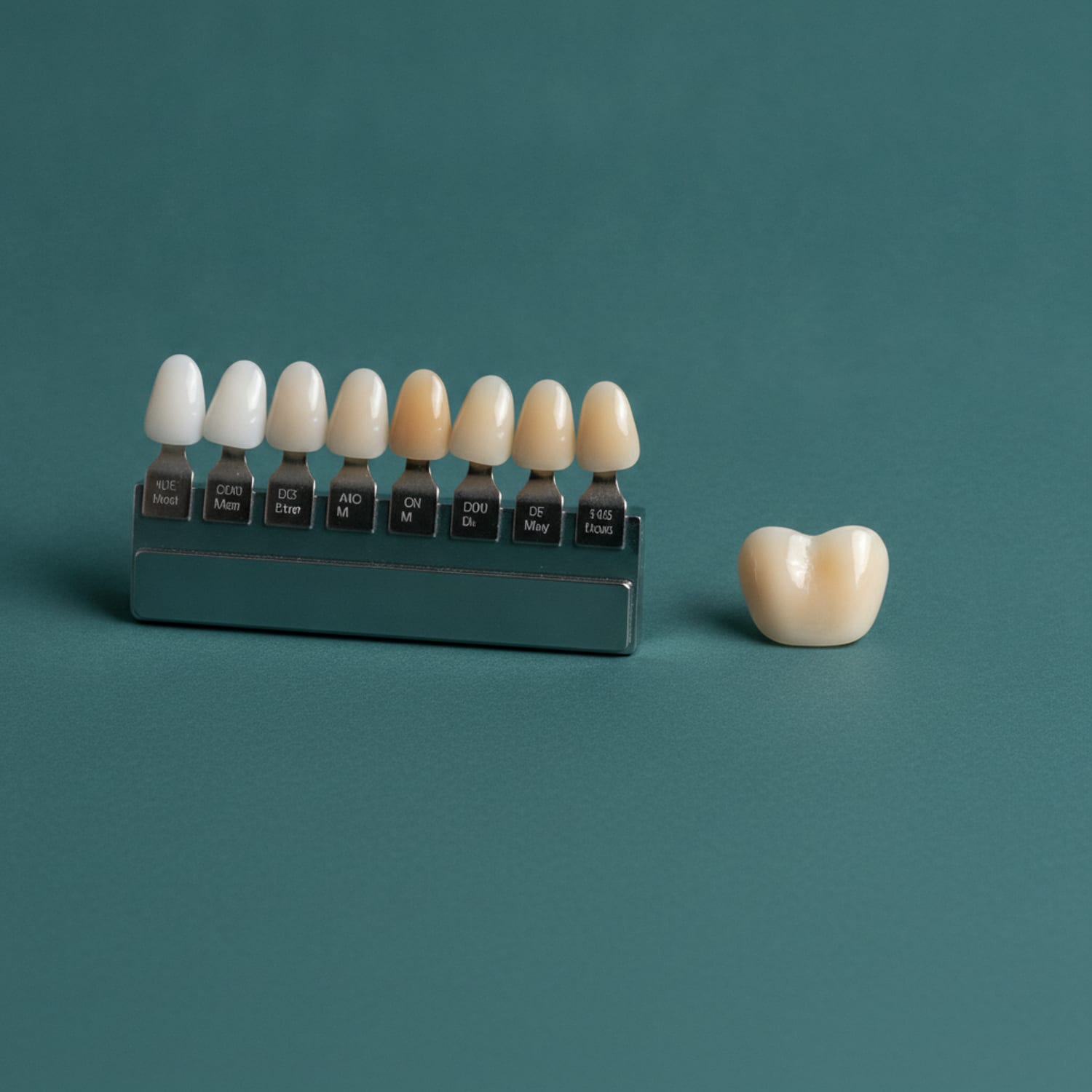

Thin ceramic restorations that correct chips, gaps, and discoloration with minimal tooth preparation
Veneers NYC — Precise Color and Shape Correction
Veneers in NYC at Centre Dental provide precise color, shape, and alignment correction using thin ceramic shells bonded to the front surface of teeth. They are a durable, stain-res...
DDS
Columbia University 1998
22+
Years on Centre St
5.0
150+ Google reviews
Overview
Porcelain Veneers
Veneers in NYC at Centre Dental provide precise color, shape, and alignment correction using thin ceramic shells bonded to the front surface of teeth. They are a durable, stain-resistant option for discoloration, chips, uneven edges, or spacing. Both conventional and CEREC same-day veneers are available, with digital smile preview before preparation.
- Ultra-thin porcelain construction
- Minimal tooth preparation
- Color-matched to adjacent teeth
- Stain-resistant surface
- Corrects chips, gaps, and discoloration
- Digital smile preview before preparation
- CEREC same-day veneer option
- Bilingual care (English / 中文)
“When a patient comes in asking for veneers, one of the first things I ask is whether we have looked at bonding. Not because veneers are wrong, but because they are irreversible. Removing enamel is a one-way door. If bonding can accomplish what the patient wants — and often it can — that should be the first conversation, not the second thought.”
How It Works
The Process
What Veneers Actually Do — and What They Cannot
A porcelain veneer is a thin ceramic shell — typically 0.3–0.7 mm thick — bonded to the front surface of a tooth. It can change color permanently, correct chips and uneven edges, close minor gaps, and standardize length across teeth. What it cannot do: straighten significant misalignment, replace missing biting-surface structure, or be placed on teeth with insufficient healthy enamel for bonding. Here is what most patients are not told before they commit: veneer preparation removes 0.3–0.7 mm of enamel. That enamel does not grow back. Once it is removed, you are committed to some form of artificial covering on that tooth for the rest of your life — through multiple replacement cycles over decades. A 30-year-old patient who gets 8 veneers is not paying once; veneers carry a 12–15 year replacement cycle, so the real cost is the upfront set plus several replacement rounds over a lifetime. That is not an argument against veneers — they are the right choice for many patients. It is the conversation that should happen before any enamel is touched.
The Preparation Step: Why Bonding Substrate Matters
The technical outcome of veneer placement depends heavily on what the veneer bonds to. Enamel-bonded veneers — where sufficient healthy enamel remains on the preparation — show 99% survival at 10 years. When preparation extends into dentin, that rate drops to 91% (Journal of Prosthetic Dentistry, 2024). This is why over-aggressive preparation is a clinical error, not a stylistic choice. The conventional process requires two appointments. At the first, photographs, impressions, and digital records are taken; enamel is then removed from each tooth under local anesthesia, and temporary veneers are placed. At the second appointment 2–3 weeks later, final ceramic veneers are evaluated for fit, shade, and bite before permanent bonding. CEREC same-day veneers use in-office milling to eliminate the temporary phase — the same principles apply; the workflow is compressed. No-prep veneers add 0.3–0.5 mm of bulk to the tooth — for normal-sized or large teeth, this creates a protrusive, artificial appearance. Most patients are not good candidates; a clinical assessment determines suitability.
Night Guards, Bruxism, and Protecting Your Investment
If you grind or clench at night, this is the most important piece of information about veneer longevity: a night guard is not optional. Porcelain is fracture-resistant under normal occlusal forces, but bruxism generates forces far outside normal range. A single grinding episode can catastrophically fracture a veneer that would otherwise last 15 years. A custom night guard distributes those forces across all teeth rather than concentrating them at veneer margins. Beyond the night guard, maintenance is straightforward: soft-bristle toothbrush, non-abrasive fluoride toothpaste, daily flossing, and six-month professional cleanings. The bonding margin at the gumline can accumulate stain from dark beverages over time — this is addressed at routine cleanings. Avoid biting fingernails, opening packaging with teeth, or biting into very hard foods directly. The veneer surface itself is stain-resistant; the margin is not.
Clinical Evidence
Enamel-bonded veneers show 99% survival at 10 years; dentin-bonded veneers drop to 91% (Journal of Prosthetic Dentistry, 2024) — which is why preparation depth and bonding substrate are the two most consequential technical decisions in veneer placement.
Timeline
2 visits over 2–3 weeks (or same-day with CEREC)
Typical treatment duration
Veneers designed and milled in-house on CEREC Primemill
For veneer cases that suit a same-day workflow, Centre Dental uses the same CEREC Primemill platform that powers the same-day crown service. The case begins with a 3Shape TRIOS scan of the prepared anterior teeth, followed by digital design where shade, contour, and translucency are matched to adjacent natural enamel. Lithium disilicate (Emax) blocks are typically chosen for anterior veneers because the material refracts light closer to natural enamel than denser zirconia.
For complex multi-tooth smile-design cases, Dr. Shi may still send the design to an external high-aesthetics lab where a ceramist hand-layers porcelain over a milled framework. The decision between in-house Primemill and external lab is made case by case — single-veneer corrections suit Primemill; eight-to-ten unit smile makeovers often benefit from hand-layering.
Inside Our Practice
See it in action
Explore the Cluster
Explore the full Cosmetic Dentistry
Common Questions
Frequently Asked Questions
What are porcelain veneers and what can they fix?
Porcelain veneers are thin ceramic shells bonded to the front surface of teeth to permanently alter their color, shape, or length. They correct intrinsic staining that whitening cannot resolve, chipped or worn edges, minor length discrepancies, and small gaps. They are not suitable for significant misalignment, teeth with insufficient enamel, or structurally compromised teeth that need full crown coverage. Decay and gum disease must be fully treated before veneers are placed — cosmetic work on an unhealthy foundation fails. The irreversible nature of enamel preparation means the consultation process matters as much as the procedure itself.
How much do veneers cost in NYC — including over a lifetime?
Porcelain veneers are priced per tooth, so the cost of a full set depends on how many teeth are treated. Veneers also carry a 12–15 year replacement cycle, which means a younger patient is looking at the upfront set plus several replacement rounds over a lifetime — the real number is larger than the first invoice. This is not a reason to avoid veneers when they are the right clinical choice — it is information that belongs in the consultation. We provide a written, itemized treatment plan with per-tooth costs and discuss how many teeth genuinely need veneers vs. which concerns bonding could address at a fraction of the cost.
How long do porcelain veneers last?
A 2021 systematic review (PMC8184312) reports veneer survival rates of 95.5% at 10 years. Enamel-bonded veneers achieve 99% at 10 years; dentin-bonded veneers drop to 91% (Journal of Prosthetic Dentistry, 2024) — which is why preparation depth is a consequential clinical decision, not an aesthetic one. Individual longevity depends on preparation quality, bonding technique, and patient habits. The single biggest risk factor for premature failure is unprotected bruxism. Patients who grind and wear a night guard consistently have outcomes far closer to the published survival data than those who do not.
Are veneers reversible?
No. Conventional veneer preparation removes 0.3–0.7 mm of enamel — that structure does not regenerate. Once preparation is complete, you are committed to some form of artificial covering on those teeth for the rest of your life, through multiple replacement cycles. This is the most important fact to understand before agreeing to veneer placement. No-prep veneers exist for patients whose tooth geometry allows added thickness without bulk, but the majority of patients are not candidates. We evaluate every patient for bonding suitability before recommending any preparation — if bonding can accomplish the goal, it should be the first option.
What is the difference between prep veneers and no-prep veneers?
Conventional veneers require removing 0.3–0.7 mm of enamel to create space for the ceramic layer. No-prep veneers add 0.3–0.5 mm of thickness to the existing tooth surface without removing material. The tradeoff: no-prep is reversible and avoids sensitivity, but that added bulk makes teeth look larger — which is acceptable for patients with small teeth and not acceptable for those with normal or large teeth. Most patients are not good no-prep candidates. A clinical assessment with digital preview determines whether the outcome would be natural-looking or protrusive before any decision is made.
Is the veneer preparation process uncomfortable?
Local anesthesia is used during preparation, so the procedure itself is not painful. After anesthesia wears off, some sensitivity around the prepared teeth — particularly to cold — is common and typically resolves once final veneers are bonded. Temporary veneers protect the teeth between appointments and reduce, though may not eliminate, sensitivity during the interim period. Patients with a history of high sensitivity should discuss this before the preparation appointment so the protocol can be adjusted.
Do I need a night guard after getting veneers?
If you grind or clench at night, a night guard is essential — not optional. Bruxism generates occlusal forces well beyond what normal function produces, and porcelain is not designed to withstand them indefinitely. Without a night guard, a bruxing patient risks catastrophic veneer fracture that may not be repairable, requiring full replacement. A custom night guard fits over the veneers and distributes force across all teeth rather than concentrating it at ceramic edges. For non-bruxers, a night guard is still recommended as a precaution if you experience any jaw tension or morning jaw soreness.
Will my veneers stain?
The porcelain surface itself is highly stain-resistant. The bonding margin at the gumline — where veneer meets tooth — is more porous than the ceramic and may accumulate discoloration from coffee, tea, and red wine over time. This is addressed during professional cleanings. Using abrasive toothpaste on veneers can create micro-scratches that trap pigment; non-abrasive fluoride toothpaste is recommended. Surface staining that develops from wear is different from internal discoloration — only the former can be polished away at a routine visit.
How are veneers different from crowns?
A veneer covers only the front and edge of a tooth with minimal preparation. A crown encases the entire visible tooth and requires significantly more reduction — typically removing 1–2 mm from all surfaces. Crowns are clinically appropriate when a tooth is structurally compromised: heavily filled, cracked, or damaged by decay. Veneers are appropriate for structurally sound teeth requiring aesthetic correction. Placing a crown on a tooth that could be treated with a veneer removes tooth structure unnecessarily. We document the clinical rationale for whichever restoration is recommended.
Does insurance cover porcelain veneers?
Dental insurance rarely covers veneers because they are classified as elective cosmetic procedures. Partial coverage may apply in limited cases where the veneer also serves a restorative function — for example, covering a tooth with documented structural damage where a veneer is the least invasive full-coverage option. We document clinical rationale and submit to your insurer before treatment begins. If no coverage applies, financing options are available and treatment can be phased across appointments to distribute costs.
Explore Further
Related Services
Porcelain Veneers Near You in NYC
Start Here
Your Smile Starts With a Conversation
Begin with a no-obligation consultation about porcelain veneers. Dr. Shi reviews your 3D scan, walks through your options, and provides an honest investment range — no pressure, no obligation.
Extensive full-arch reconstruction experience by Dr. Shi
3D-guided implant precision, placed by an experienced surgeon
Bilingual care — English, Mandarin, Cantonese
Open Mon–Sat · 139 Centre St, Lower Manhattan, NYC